

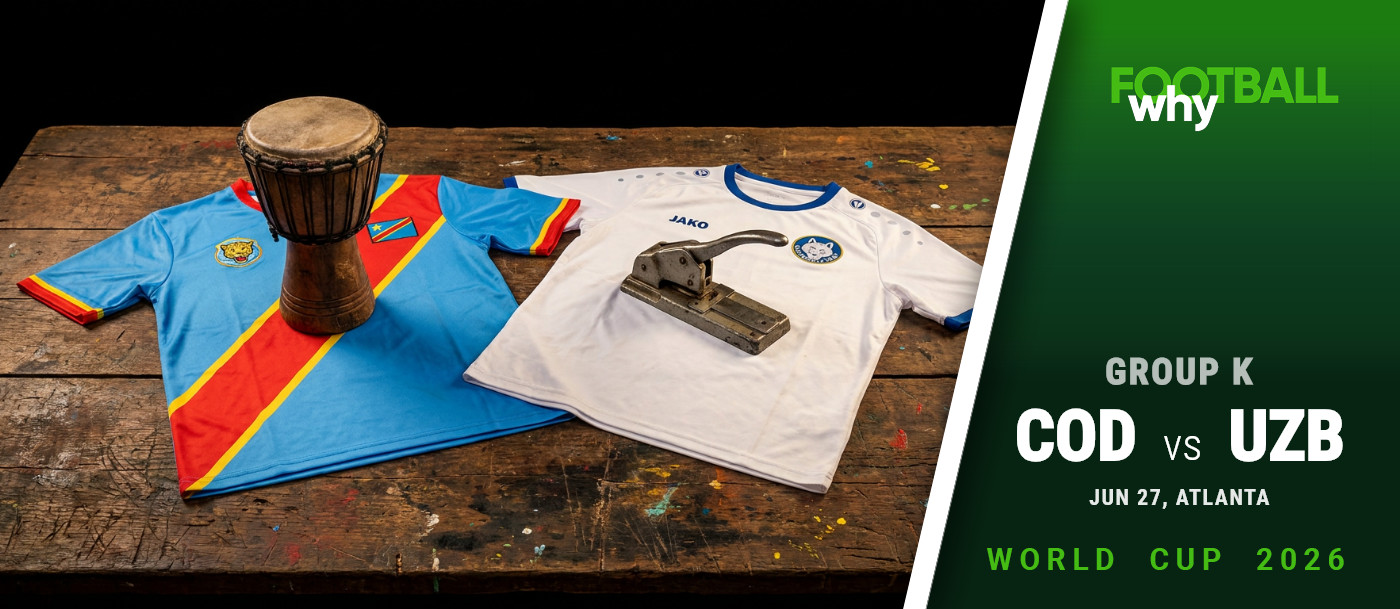
The World Cup Qualification Decider
Saturday, 27 June

Mercedes-Benz Stadium, Atlanta

DR Congo vs Uzbekistan FIFA World Cup 2026 Group Stage Match Blunt force melts the tactical blueprints Forecast generated:

Uzbekistan’s stoic defensive protocol was ultimately melted by sheer physical friction. Outshot 19 to 4, their orderly barricades collapsed under a relentless second-half pounding. Discover how DR Congo’s communal hustle shattered the Asian blueprint.
DR Congo vs Uzbekistan Structural Collision

What was it?

The sheer physical friction eventually melted the tactical blueprints. Nineteen shots against four tells a story of blunt force grinding down polite organisation. The evening felt claustrophobic, defined by heavy collisions and a relentless, swarming pressure that offered no oxygen.

Uzbekistan actually struck first. Eldor Shomurodov finished a clean diagonal run after just ten minutes. They then retreated into a rigid defensive shape. They produced an expected goals figure of just 0.27 over the remaining eighty minutes.

Sébastien Desabre refused to accept a slow death by attrition. He hurled Fiston Mayele into the penalty box to wrestle the central defenders. Then he unleashed Meschak Elia down the touchline to stretch the fabric.

This double acceleration splintered the Asian backline. Yoane Wissa converted a penalty won through pure duel superiority at 68 minutes. Mayele then bundled in a messy second-phase rebound from close range.

Wissa added a stoppage-time third to close the ledger. It was a triumph of raw, communal hustle over isolated discipline. The losers fell with a quiet, noble dignity, but the sheer joy of the victors proved that blunt persistence remains a beautiful truth.

How did they clinch it?

DR Congo

DR Congo’s victory against Uzbekistan was rooted in their capacity to weaponise chaos rather than fear it. When the initial tactical framework stalled against a deep block, Sébastien Desabre simply swapped profiles, introducing direct runners to stretch the pitch.

This was not about intricate playmaking. Lacking a traditional, elite creative midfielder, the team bypasses the centre entirely. They rely on wide overloads and relentless physical duels to force defensive errors, perfectly illustrated by the sheer volume of high-stress transitions they provoked.

This physical directness masks a surprisingly mature structural spine. The current generation leans heavily on experienced leaders like Chancel Mbemba to absorb emotional spikes. When trailing, they do not panic; they simply dial up the friction.

Such resilience is forged in a deeply fragmented national footballing environment. Chronic administrative disputes, travel chaos, and logistical noise usually erode trust within national camps.

Yet, this squad has learned to insulate itself. The domestic league instability often limits tactical schooling, meaning the national team must import structure from players raised abroad.

This hybrid pipeline creates a fascinating dynamic. They seamlessly merge the raw, improvisational courage of domestic street football with the game-management habits ingrained in their European diaspora.

A fractured system ultimately produced a machine perfectly calibrated for the grind.

Why not go for the win?

Uzbekistan

Uzbekistan’s defeat stemmed from a rigid adherence to protocol that ultimately suffocated their own ambition. After securing an early advantage, the team immediately defaulted to a deeply entrenched defensive posture, severely limiting their own attacking volume.

This extreme conservation meant relying entirely on direct channels to a single forward. When DR Congo adjusted and began overloading the flanks, the Asian side struggled to adapt. Abdukodir Khusanov’s struggles in isolated wide duels exemplified this acute systemic stress.

Midfield substitutions aimed merely to refresh the existing defensive screen rather than alter the tactical geometry. This reluctance to shift gears highlights a broader character trait of the current squad. They are immensely disciplined and comfortable managing territorial geometry.

Yet, when forced to chase a game or improvise under heavy physical duress, their collective initiative fades. The root of this rigidity lies in their developmental pathways. Domestic academies excel at producing versatile players who respect positional literacy and collective labour.

However, a glaring lack of exposure to elite, top-tier European leagues leaves these players unaccustomed to relentless, high-velocity pressing. They simply do not experience this level of weekly athletic friction.

Consequently, their default response to rising temperature is to seek safety in the familiar, tightening distances rather than fighting back with unexpected creativity.

Perfect adherence to the blueprint becomes fatal when the building is already collapsing.

Match hero...

Fiston Mayele
Fiston Mayele entered the pitch with the disruptive energy of a new trader aggressively setting up a stall in a crowded Kinshasa intersection. He simply bypassed polite negotiations, pinning the Uzbek centre-backs through sheer physical haggling. He thrived because he understood that disciplined defensive lines eventually yield to relentless, noisy proximity. By hunting second-phase scraps and refusing to grant the opposition any personal space, he forced the exact structural collapse his manager required.

...and one more

Eldor Shomurodov
Eldor Shomurodov operated under a strict logic of extreme rationing. Presented with a single clean channel early on, he processed the opportunity with the clinical efficiency of a surveyor managing a drought. He scored, and then accepted total isolation. He survived the remaining eighty minutes without complaint, absorbing heavy collisions to preserve the collective shape. His performance was an exercise in stoic protocol, demonstrating how a lone forward can dignify a system even when entirely starved of resources.