
Uzbekistan (White Wolves) - National flag

Uzbekistan National Football Team

White Wolves

What to look for?

Decades of agonizing near-misses have forged a spirit of unbreakable iron. They carry the solemn weight of a nation’s memory onto the global stage. Yet, late managerial chaos and a severe creative drought threaten their debut. They must survive through absolute scarcity. Watch them construct a suffocating fortress before striking with a single, ruthless vertical punch. It is the raw geometry of survival. The wolves are hunting.

Team at a Glance

What do they want?

To prove that half a century of agonizing near-misses in Asian qualifying was just a very long tactical delay.

What are they strong at?

Absolute, unwavering obedience to the game plan backed by physical resilience forged through endless continental travel.

What will they show?

Defensive geometry so perfectly rigid it belongs in a museum, occasionally interrupted by terrifyingly fast counter-attacks.

Why are they as they are?

When your ancestors survived by meticulously rationing oasis water, you don't waste energy on pointless dribbles.

What is a chance of getting title?

3%. Highly likely, provided their defensive wall holds for seven matches and they avoid penalty shootouts entirely.
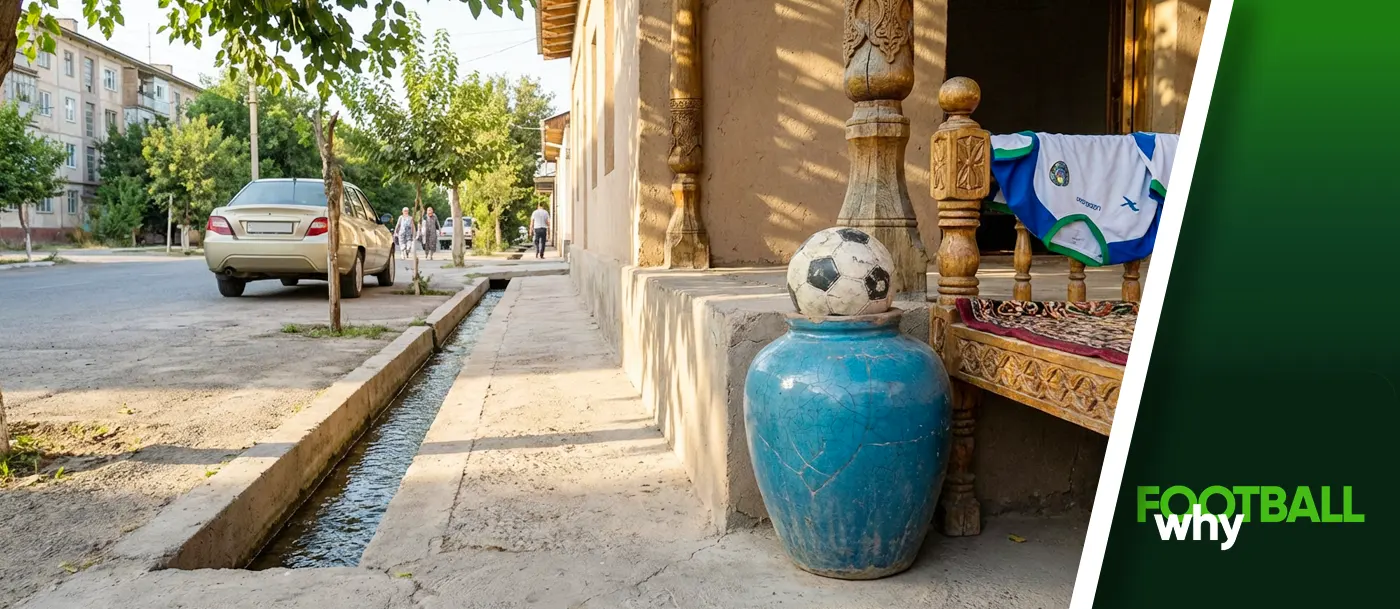
UZBEKISTAN | Structural Collision

Where it hurts?

Uzbekistan: current status and team news A Debut Forged in Stoic Scarcity

Uzbekistan’s long-awaited arrival on the global stage carries a strange, quiet tension. The White Wolves finally broke through to secure their historic debut, yet the national federation immediately reshuffled the deck, handing the managerial reins to Fabio Cannavaro late in the cycle. Tashkent’s cafes buzz with a mix of fierce pride and deep unease. Men sip green tea over newspaper columns, debating how the timing of this opaque bureaucratic shuffle has left supporters visibly jittery.

This anxiety deepens when looking directly at the pitch. A severe drought of fit, creative wingers has forced the squad into a highly rigid, conservationist approach. Cannavaro has responded by bolting the doors, leaning heavily on centre-back Abdukodir Khusanov to anchor a stoic, narrow mid-block. Almost every attacking responsibility is now funnelled toward Eldor Shomurodov. The captain operates as an isolated focal point, tasked with wrestling loose balls and turning early diagonals into tournament survival.

The squad treats every minute and every yard of grass like a scarce physical resource.

They will not dazzle the crowds with expansive width or reckless numbers thrown forward. Instead, their disciplined defensive geometry and sudden vertical strikes will make them a brutally stubborn opponent. They step onto the pitch determined to prove they belong among the elite through sheer, uncompromising physical grit.

The Headliner

Uzbekistan: key player and his impact on the tactical system The Structural Anchor of Tashkent

Pinning centre-backs to the edge of their own penalty area, Eldor Shomurodov acts as the structural anchor for the entire attacking unit. A sudden sprint towards the near post, followed by a stoic chest-thump, resets the tactical shape around him. He executes curved, outside-to-in channel runs, cushioning difficult, high-velocity passes on his chest to tee up trailing midfielders or unleash immediate shots. As a classic reference striker, he physically occupies defenders, allowing inverted wingers to exploit the spaces he vacates.

If starved of service, a pragmatic frustration often drags him too deep into midfield.

This diminishes his threat inside the box and leaves the team's vertical release valve completely empty. Without his anchoring runs, the collective loses its focal point, struggling to convert patient ball circulation into tangible strikes. A seasoned standard-bearer in European leagues, his disciplined physical power and relentless work rate embody a quiet, formidable leadership that commands absolute respect from the terraces.

The Wild Card

Uzbekistan: dark horse and player to watch A Sudden Shift in the Channel

Foreign fanbases and Tashkent crowds alike rise from their seats when the ball finds the inside-left channel. Here, Abbosbek Fayzullaev dismantles defensive structures with sudden, whip-through cuts and deceptive hop-step feints. The 23-year-old inverted winger thrives on converting broken, chaotic plays into clean penetrations right at the edge of the penalty area, drawing double-teams that isolate weak-side runners. He supplies the threaded slip passes and flat late cut-backs that a highly disciplined system desperately needs to break stubborn mid-blocks.

To neutralize him, defensive units will deliberately deploy a two-man trap in the inside lane.

They aggressively shade him toward his weaker angles, forcing him to receive the ball facing his own goal, where his first touch occasionally wavers. Heavy central pressure might also tempt him into frustrating over-dribbles when passing lanes remain firmly gated. Yet, an early, successful take-on usually fuels a relentless vertical energy. The upcoming tournament offers the perfect platform to see if this agile, low-centre slalomer can consistently translate his fearless drives into decisive group-stage actions.

The Proposition?

Uzbekistan : Tactical guide - how to identify their movements and game variations on the pitch The Geometry of Control and Sudden Vertical Punches

Uzbekistan arrives as a highly disciplined debutant aiming for the knockout stages through compact control and sudden vertical strikes. Fabio Cannavaro actively manages a fragile tactical equilibrium, pushing for attacking aggression while carefully guarding against counter-attacks and an overwhelming reliance on his star forwards during late-game shifts.

The baseline is a 4-2-3-1 that fluidly shifts into a 3-2-5 in possession and a narrow 4-4-2 mid-block without the ball. To build from the back, Otabek Shukurov often drops between the centre-backs, or a weak-side full-back tucks inside to form a back three.

What to look at: During a goalkeeper restart, if the left-back narrows or Shukurov drops into the defensive line, the team is setting a 3+2 structure behind the ball. This bypasses the opponent's first pressing line and immediately opens up a weak-side diagonal passing lane.

What to look at: By the tenth minute, watch the height of the defensive line. If the central attacking midfielder steps up beside the striker to form a 4-4-2 with the wingers tucked tightly inside, they are deliberately funneling the opposition wide. This sets a trap to press backward passes and release early vertical balls into the channels.

The primary route forward relies heavily on sweeping diagonal passes from the centre-backs into the wide playmakers. Abbosbek Fayzullaev carries the ball through the half-spaces, while Eldor Shomurodov acts as the ultimate focal point.

What to look at: When Shukurov crosses the halfway line and shapes to switch the play, watch Shomurodov pin his marker while Fayzullaev turns into the inside-left channel. This movement is designed to produce a late cut-back, a whipped cross to the far post, or a clever slip pass to the striker's inside run.

What to look at: When Shomurodov makes an outside-in run and receives the ball on the curve off the right centre-back, notice how Fayzullaev immediately underlaps. The weak-side winger will sprint to the back post to compress the opposing defenders and open a square passing lane.

This system reveals a clear structural flaw in the five to eight seconds following a turnover, particularly when the full-backs are high and Abdukodir Khusanov aggressively steps out of the defensive line, leaving his blindside exposed.

What to look at: If the opposition executes a rapid switch into the vacated full-back zone before the midfield can reset, the lateral pull will create a massive seam between the centre-back and full-back, yielding a high-quality chance at the far post.

To protect a lead, Cannavaro will drop the block into a 5-4-1.

What to look at: After the 70th minute, if the block drops deeper and the pressing intensity cools, the squad is trading territory for penalty-box density, accepting wide crosses to bleed the clock.

Despite the inherent risks of transition exposure, their sheer physical resilience and the clinical precision of their counter-attacks make the White Wolves a fascinating, highly dangerous tournament wildcard.

The DNA

Uzbekistan: football's importance and what we will see in their game at the 2026 World Cup The Geometry of Scarcity and Stoic Endurance

Traveling across the vast Asian continent for grueling away fixtures demands a highly specific type of physical endurance. For the 'White Wolves', this logistics-hardened resilience forms the absolute bedrock of their footballing identity. The national squad approaches matches not as theatrical stages for individual brilliance, but as meticulous, high-stakes operations where survival depends entirely on the collective effort.

In a society where elder authority and procedural discipline hold immense weight, the pitch operates as a strict hierarchy. Players rarely override the established tactical blueprint. When a crucial knockout match tightens, spectators will not witness a sudden, chaotic rebellion of improvised dribbling. Instead, the squad instinctively retreats into a rigid, coach-centric decision tree. They look toward the touchline, defer to the captain's hand signals, and execute pre-rehearsed defensive patterns.

This cultural deference produces an incredibly compact, difficult-to-break mid-block.

However, it also breeds a visible hesitancy during penalty shootouts, where the burden of individual risk feels unnaturally heavy and isolating. Furthermore, centuries of managing scarce water resources through complex irrigation networks have hardwired a deep communal aversion to waste. Translated into footballing mechanics, ball possession and physical energy are treated as strictly rationed commodities. The squad exhibits a highly cautious shot profile and prioritizes safe ball retention over speculative, long-range attacks. Rather than burning stamina on low-probability strikes, they manufacture chances through methodical, low-variance engines. They rely on precise vertical passes released into the channels and a heavy, rehearsed reliance on corner kicks.

The domestic academy system, heavily influenced by Soviet pedagogical methods, reinforces this caution by prioritizing geometric spacing over spontaneous flair. Yet, a modern counterforce is steadily emerging. A new generation of youth champions, increasingly exported to elite European leagues, is beginning to inject a higher tempo and faster decision-making into this stoic framework. A newly imported foreign coaching staff actively attempts to harness this energy, running rigorous scenario-based drills to normalize risk-taking and cure the squad's late-game conservatism.

Still, the solemn memory of the 1979 Pakhtakor tragedy — a mid-air collision that devastated the nation's premier club — continues to frame on-pitch discipline as a matter of civic responsibility.

Pulling on the national shirt is treated as an act of dutiful remembrance. A perfectly engineered canal still depends entirely on the unpredictable grace of the rain; one must build the banks meticulously, endure the dry spells without public complaint, and accept that certain outcomes remain strictly in the hands of fate.
Character