Algeria (Les Fennecs) - National flag

Algeria National Football Team

Les Fennecs

What to look for?

Born in exile, they carry the fiery pride of a nation that fought for its breath. That same burning honour constantly threatens to consume them. They fight the urge to turn every whistle into a declaration of war. Watch for the elegant academy touch that suddenly erupts into chaotic, street-level sprinting. It is a beautiful, terrifying explosion of pure grievance. Will the fire forge a triumph, or burn the house down?

Team at a Glance

What do they want?

To conquer the globe, or at least launch a highly justified, incredibly stylish protest trying.

What are they strong at?

Elite European technical polish, aggressively weaponised by an absolute refusal to let any slight go unpunished.

What will they show?

Patient passing that instantly combusts into rapid, grievance-fuelled sprints down the wing because someone looked at them funny.

Why are they as they are?

When your footballing history begins as an exiled liberation movement, every match feels like defending sovereignty.

What is the chance of getting the title?

7%. Entirely possible if they can somehow play seven matches without turning the referee into a geopolitical enemy.
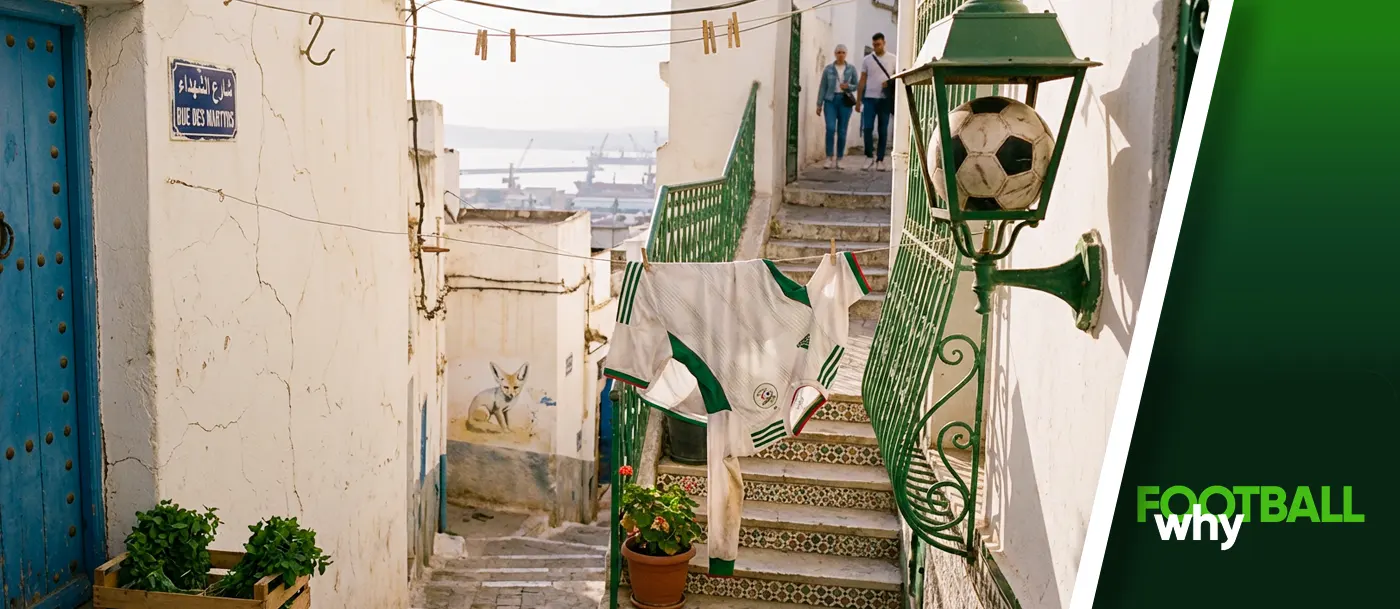
ALGERIA | Structural Collision

Where it hurts?

Algeria: current status and team news Fines, Flair, and the Goalkeeper's Trial

The Algerian squad walks a razor-thin line between undeniable flair and continental reprimands. Players are now acutely aware of the cameras, following a turbulent AFCON campaign where severe CAF fines placed the entire setup under a strict institutional spotlight.

Coach Vladimir Petković is actively trying to cool the emotional volatility that so often derails them.

He is establishing a rigid internal code — mandating specific bench behaviours — to protect the team's collective honour from cheap provocations. In Algiers, supporters watch this cultural shift with a blend of defiance and deep anxiety, gathering in cafes to dissect every squad announcement.

The public square is fiercely focused on the goalkeeper hierarchy. Luca Zidane’s inclusion continues to spark loud accusations of nepotism against the FAF leadership.

Petković relies on pure pragmatism to silence this online rancour. He actively redirects the attacking flow to bypass the historical overreliance on Riyad Mahrez. By pushing Rayan Aït-Nouri into aggressive overlaps down the touchline and deploying Mohamed Amoura as a rapid vertical outlet, the coach distributes the creative burden across broader channels.

Their upcoming group stage opener against Argentina leaves absolutely zero margin for petulance. Expect to see a combative, compact mid-block designed to spring sudden transitions. If they can keep their tempers anchored and ignore perceived refereeing slights, they possess the sheer attacking audacity required to secure second place and advance.

The Headliner

Algeria: key player and his impact on the tactical system The Arbiter of the Right Flank

A raised arm precedes the inswinger. Riyad Mahrez approaches dead-ball situations with a stuttered, calculating run-up, acting as the undisputed arbiter of the right flank. He is the focal point where European tactical schooling meets Algerian street audacity.

Defenders know the sequence — the tempo-freeze feint, the inside cut, the icy left-footed curler — yet the execution remains unreadable.

When subjected to heavy double-teams, a defiant streak emerges. Rather than melting down under rough treatment, he channels the physical friction into sharper, press-resistant craft, skipping past lunging tackles. The squad naturally funnels progression through his wing. Without his magnetic pull in the half-space, circulation slows and set-piece danger evaporates.

While his advancing years prompt whispers of over-deference from younger teammates, his capacity to morph from an isolation dribbler into a central playmaker cements his status. He remains a revered architect of continental triumphs.

The Wild Card

Algeria: dark horse and player to watch Untying the Central Defensive Knot

Scanning the defensive lines with an upright glide, Ibrahim Maza navigates the pitch with a calmness that belies the chaos around him. His physical carriage is entirely relaxed until a sudden half-turn ignites an attack.

By taking up positions in zone 14, he unties central congestion. This offers an alternative creative hub when opponents heavily box the right flank. The 20-year-old excels at receiving between the lines, utilising quick wall-passes and late-disguised slips to bypass mid-blocks.

Physical contact against rugged screens remains a genuine hurdle. If he suffers early turnovers from heavy tackles, his youthful daring can regress into risk-averse recycling. Defenders will attempt to crowd his space, force back-to-goal receptions, and foul early to disrupt his rhythm.

Yet, his ability to dictate the interior tempo provides a vital spark. This two-footed playmaker arrives in North America carrying the genuine promise of diversifying the national attacking portfolio on the global stage.

The Proposition?

Algeria : Tactical guide - how to identify their movements and game variations on the pitch Asymmetric Ambition and the Left- Lane Overload

Vladimir Petković faces a delicate balancing act to rebuild Les Fennecs for the World Cup. He must restore tournament credibility by blending the immense influence of veteran stars with dynamic youth integration. An expansive attacking ambition constantly threatens to expose a fragile rest-defence when key figures tire.

Algeria operates an asymmetric 4-2-3-1 that aggressively morphs into a 3-2-5 in possession, establishing a two-speed rhythm of early diagonals and intricate half-space combinations.

What to look at: In the opening fifteen minutes, the wingers tuck inside alongside the striker in a 4-4-2 mid-block. They are baiting a backward pass from the opposition centre-backs, using it as a trigger to jump the press and immediately release the ball toward the high left flank.

This aggressive posture requires a distinct build-up flip from the back.

What to look at: At a goalkeeper restart, watch Ismaël Bennacer step between the centre-backs while the right-back holds his position and Rayan Aït-Nouri pushes high on the left. This creates a numerical advantage against the first press, allowing them to find their attacking midfielders cleanly.

Once stabilised, the primary vector is a heavy left-lane overload.

What to look at: As Bennacer crosses the halfway line, he will open his hips to hit a sweeping diagonal to Aït-Nouri, or bounce a wall-pass into Riyad Mahrez in the right half-space. This generates a low cutback to the penalty spot, or a disguised reverse pass to a far-post runner like Mohamed Amoura.

The architecture inevitably bends toward Le Magicien. When the crowd volume surges at Mahrez's feints, the team's vertical bias increases.

What to look at: Upon Mahrez receiving the ball, Baghdad Bounedjah darts to the near post while the far winger freezes the back post. This over-concentrates the opposition block to the right, opening an instant diagonal window for Aït-Nouri to exploit on the opposite side.

This extreme asymmetry — a high left-back and an inverted right-winger — leaves glaring structural holes.

What to look at: If the opposition pins Aït-Nouri high and executes a rapid wide-to-wide switch behind the Algerian right-back, the rest-defence shifts too late. The weak-side fullback is isolated, leaving a back-post runner completely free for a high-probability finish.

When Petković’s methodical gesturing demands stability, Algeria shifts into survival mode to protect a lead.

What to look at: The block height retreats significantly, dropping into a compact 4-5-1. They will introduce a fresh pivot like Ramiz Zerrouki, willingly trading field tilt and possession for sheer penalty-box density and clock management.

Despite these structural tightropes, the blend of audacious individual flair and aggressive vertical transitions makes them an electrifying watch. Their capacity to suddenly unpick a defence with sheer technical brilliance ensures they remain a formidable, highly entertaining threat.

The DNA

Algeria: football's importance and what we will see in their game at the 2026 World Cup The Exiled Caravan and the Fire of Justice

In 1958, a group of exiled professional players formed the FLN team, utilising football as a direct declaration of sovereignty during the War of Independence.

This historical cross-border movement forged a permanent pipeline.

Today, the national squad operates as a transnational caravan, pulling heavily from the Franco-Algerian diaspora. Watch the pitch when a player like Rayan Aït-Nouri receives the ball under heavy marking. The crisp, methodical first touch is pure European academy polish. A second later, the decision-making snaps into North African street improvisation. He launches a sudden, chaotic vertical burst down the wing, bypassing patient positional play entirely in favour of a rapid, winger-led transition.

That same history of anti-colonial struggle hardwired an intense, hyper-vigilant sensitivity to justice and external authority.

When a referee makes a contentious decision against the team, the players do not process it as a mere sporting error. It is felt as a direct assault on collective honour.

During the AFCON 2025 quarter-final against Nigeria, falling behind triggered an escalating wave of protests and aggressive physical duels. Players surrounded the officials, arms raised in disbelief. The tactical structure frayed completely under the emotional surge, resulting in a 0-2 loss and severe CAF disciplinary bans. The grievance-fuelled edge that makes them such terrifying underdogs is the exact same mechanism that causes them to spontaneously combust.

This volatility is compounded by heavy domestic governance scrutiny. The federation operates under a thick political shadow, turning squad selection into a highly public legitimacy trial. The rapid integration of dual-national Luca Zidane as the starting goalkeeper sparked fierce national debates. Fans clashed online and in the streets, pitting an undeniable technical upgrade against loud accusations of favouritism and status politics.

Coach Vladimir Petković is currently attempting to insulate the squad from its own combustible nature. He is installing codified bench protocols and a rigid set-piece hierarchy to ensure the team can survive the suffocating pressure of World Cup knockouts without losing their heads.

There remains a wry, unspoken acknowledgement on the terraces that a team stripped of its fiery, confrontational edge might navigate tournaments more quietly. But it would fundamentally cease to be their own.
Character