

The World Cup Qualification Decider
Monday, 22 June

BC Place, Vancouver

New Zealand vs Egypt FIFA World Cup 2026 Group Stage Match A clattering shift: hierarchy outlasts the chaos Forecast generated:

It was a clattering, sweaty shift of a match until Mohamed Salah orchestrated a ruthless three-goal blitz in twenty-four minutes. Discover how Egypt finally dismantled New Zealand's stubborn aerial barricade.
New Zealand vs Egypt Structural Collision

What was it?

Friction and sweat dictated the afternoon in Vancouver. Twenty-two men sprinted as if the turf was burning beneath them, driven far more by frantic adrenaline than any grand tactical design. New Zealand struck first at the quarter-hour mark, with Finn Surman rising to head home a corner.

That early advantage operated as a cruel illusion. Egypt cranked the pressure gauge, stumbling occasionally over their own feet but constantly shoving the action towards the opposition penalty area. They held 56 percent of possession and registered nineteen shots. The oceanic response consisted entirely of launching long diagonals toward Chris Wood.

The defensive structure finally buckled on the right side, completely failing to track Mohamed Hany. He overlapped as though he held the deed to the flank, delivering a cross for Mostafa Ziko to level the score at 58 minutes.

Nine minutes later, Mohamed Salah dismantled the remaining resistance. He exchanged a rapid pass with Ziko and finished cleanly with his left foot. A late corner routine finished by Trezeguet sealed the afternoon. It was a thoroughly awkward, breathless contest, yet undeniably alive.

Why not go for the win?

New Zealand

New Zealand collapsed because their defensive structure simply could not stretch wide enough to cover the overlapping threat. Once Egypt raised their pressing height immediately after the interval, the oceanic block sank deep into their own penalty area.

The withdrawal of Liberato Cacace removed their sole reliable outlet for carrying the ball up the pitch. Without him, the midfield was entirely bypassed. The instinctive response to pressure was a desperate, hopeful clearance toward an isolated Chris Wood.

This reliance on a single target man masks a glaring void in the squad's composition. They fundamentally lack central midfielders comfortable with receiving possession under heavy duress to dictate tempo or orchestrate a controlled transition.

That void is a direct product of their geographical isolation. Cruising through regional qualifiers against vastly inferior opposition breeds a false sense of defensive security. It inflates clean-sheet statistics while masking structural fragility.

Domestic defenders rarely encounter the explosive, synchronised transitions of elite international football. When confronted with that blistering pace, the collective firmware defaults to raw survival instincts rather than coordinated tactical adjustment.

Their famous physical grit is an excellent tool for barricading the front door, but it proves entirely useless when elite opposition simply picks the lock on the side window.

How did they clinch it?

Egypt

Egypt seized control by fundamentally altering the spatial dynamics right after halftime. Pushing their forward line aggressively onto the opposition centre-backs allowed them to reclaim possession higher up the pitch and immediately isolate the right flank.

Losing Hamdy Fathy to injury forced a defensive reshuffle, but it did not alter the fundamental blueprint. They continued to draw fouls out wide, using territorial pressure to pin the opposition back rather than risking intricate central combinations.

This heavy bias toward the wings hides a persistent lack of invention in the middle of the park. Without a natural playmaker to thread passes through the centre, the team funnels all attacking responsibility toward their wide forwards.

It is a pragmatic adaptation born from a domestic league that prizes physical endurance and rigid tactical discipline over individual flair. The local ecosystem produces incredibly resilient athletes but struggles to develop elite creative midfielders.

Consequently, the national setup leans heavily on a rigid defensive block, outsourcing the actual burden of chance creation to a handful of globally exported stars. The collective absorbs the pressure, waiting for individual brilliance to strike.

It is a system built to endure the grinding heat of expectation, relying on the sheer gravity of a single talisman to eventually bend the match to his will.

Match hero...

Finn Surman
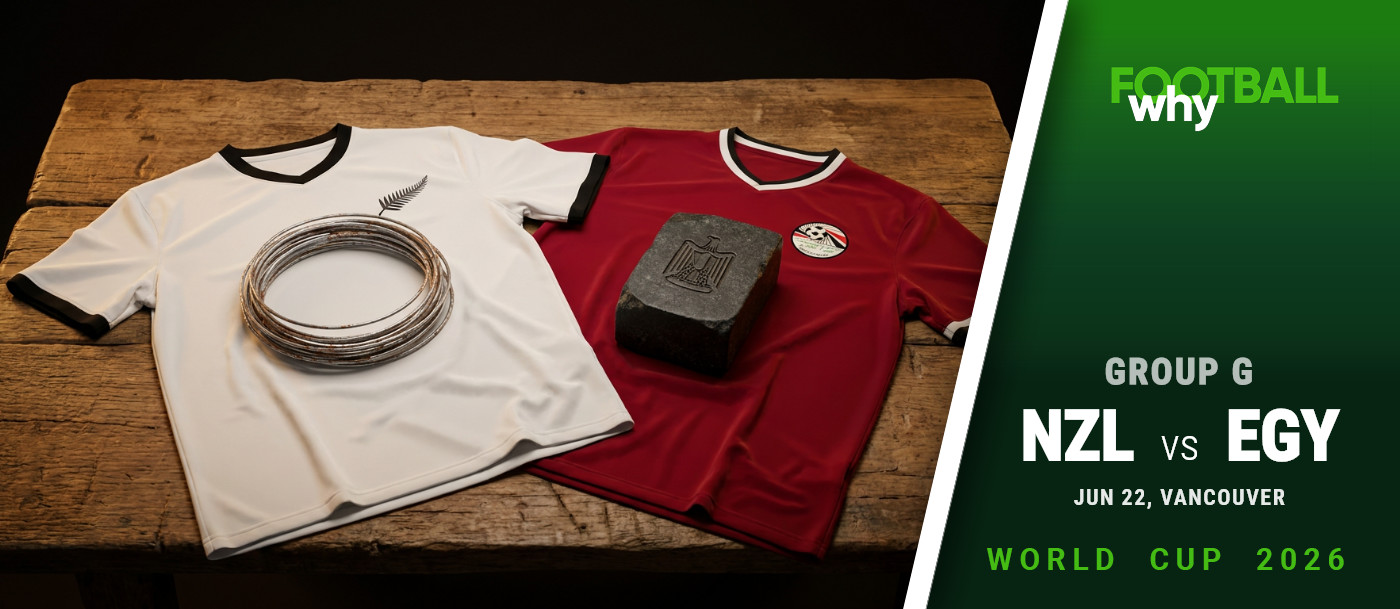
Finn Surman went to work without asking for the spotlight. He approached the opposition penalty box like a man securing a storm-battered fence, rising to nod home the opener with pure, uncomplicated graft. For forty-five minutes, he absorbed the physical toll of a relentless Egyptian tide. It was a textbook application of No.8-wire pragmatism — fixing immediate leaks with whatever was at hand. He eventually wilted under the sheer volume of defensive actions, but his shift was a deeply honest piece of manual labour.

...and one more

Mohamed Salah
Mohamed Salah carried the weight of the nation’s expectations without breaking stride. He didn’t force the issue early; instead, he probed the right flank with the calculated patience of a veteran merchant in Khan el-Khalili waiting for the buyer to blink. When the structural cracks finally appeared in the oceanic defence, he accelerated. He leveraged his sheer gravitational pull to fix markers, opening the lane for Ziko before stepping in to finish the job himself. It was an exercise in pure, undeniable patronage.