

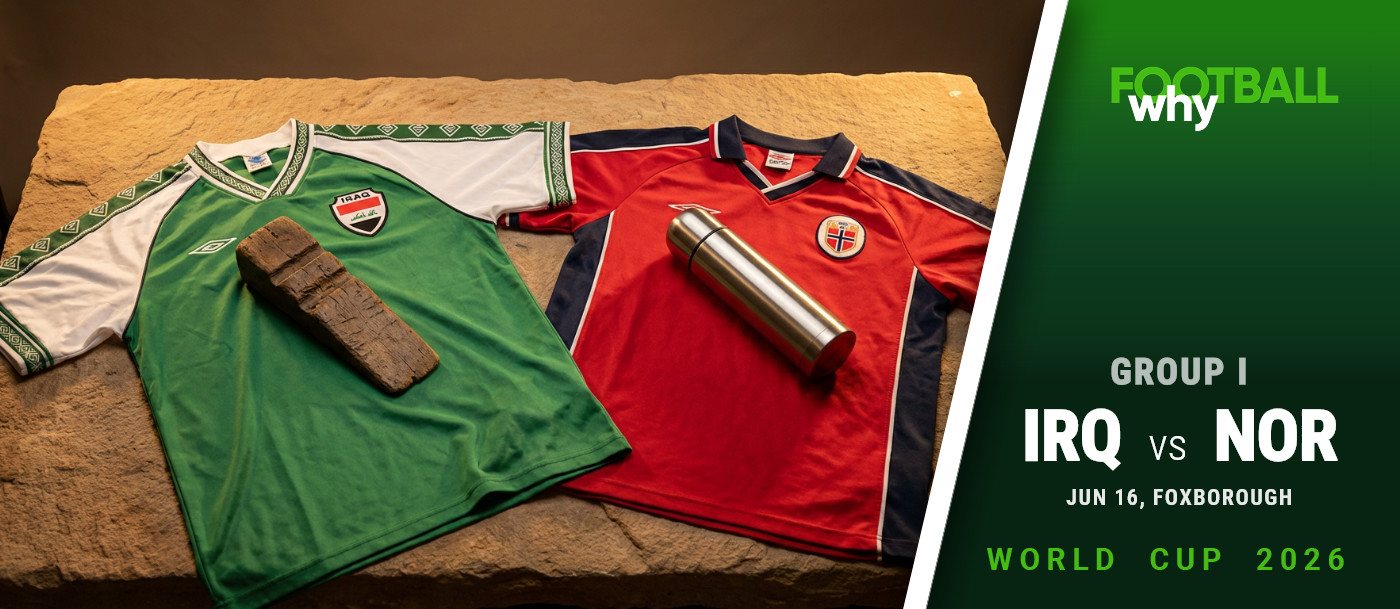
The World Cup Qualification Decider
Tuesday, 16 June

Gillette Stadium, Foxborough

Iraq vs Norway FIFA World Cup 2026 Group Stage Match A ruthless audit executed entirely at walking pace Forecast generated:

It ground forward like a rusted tractor, yet somehow produced five goals. Discover how Norway strolled to a methodical 4-1 victory over Iraq without ever needing to shift out of second gear.
Iraq vs Norway Structural Collision

What was it?

Gravel grinds in the gearbox when you watch this sort of spectacle. The Norwegians idled through the evening like a driver refusing to shift out of second gear, hoarding 61% possession without ever breaking a sweat.

Erling Haaland scored twice before half-time. His first arrived from a deep David Møller Wolfe cross, validating a two-striker system that pinned the opposing centre-halves.

Iraq equalised briefly when Aymen Hussein powered a header home. It was their only shot on target. Four minutes later, a panicked back-pass wilted under pressure, gifting Haaland a second goal.

The second half dragged like a wet weekend. The Gabonese referee paused proceedings constantly, delivering stern, unwanted seminars in the penalty area before every corner kick.

Ståle Solbakken introduced four substitutes at the 73rd minute. Leo Østigård nodded in Martin Ødegaard’s delivery three minutes later.

A late own-goal sealed a 4-1 scoreline. It was a clinical dismantling of defensive frailties, executed without anyone genuinely raising their heart rate.

Why not go for the win?

Iraq

Iraq failed to cope with the relentless, structural pressure imposed by their opponents. When Norway squeezed the space, the Iraqi build-up fractured. The suicidal back-pass at the 43rd minute revealed a profound lack of composure when forced to operate at an elite European tempo.

The team depends heavily on launching the ball towards Aymen Hussein. While Merchas Doski won eleven of his fourteen individual duels, that isolated grit could not plug the wider structural leaks. They lack midfielders capable of orchestrating calm escapes.

Defending set-pieces exposed another glaring vulnerability. Conceding from a corner immediately after a substitution wave highlighted a failure to track assignments against larger, highly coordinated opposition.

Under severe stress, the squad retreats into emotional defiance. A lack of consistent exposure to top-tier match speeds leaves them without automatic, rehearsed exit strategies. When the pressure peaks, tactical discipline evaporates into hurried, panicked clearances.

Geopolitical and logistical instability severely curtails their development. Disrupted training camps and fragmented resources make it nearly impossible to drill the intricate passing networks required at this level.

Raw courage holds the line for a while, but it inevitably buckles when asked to outlast a meticulously drilled system.

How did they clinch it?

Norway

Norway secured the result by maintaining absolute control over the game’s geography. Starting with two strikers pinned the opposing defenders deep, allowing the wide players to operate without fear of immediate retaliation.

They did not expend energy needlessly. Patience functioned as their primary weapon. They pressed only when they detected genuine panic, punishing mistakes efficiently rather than chasing the ball in a manic frenzy.

The quadruple substitution shifted the tactical balance entirely. Introducing fresh personnel simultaneously fortified their defensive shape and maximised their threat from set-pieces. This calculated adjustment yielded a goal from a corner almost instantly.

This reliability stems from a deeply ingrained footballing culture. Developing players in indoor winter facilities fosters an appreciation for strict positional discipline and clear role allocation over individual flair.

The squad embraces a collective work ethic. There is a broad consensus that the supporting cast must maintain the structural integrity, providing a stable platform so that the elite forwards can decide the outcome in the final third.

The system operates like a well-managed sovereign fund, quietly accumulating interest until the opposition goes bankrupt.

Match hero...

Aymen Hussein
Aymen Hussein carries the collective honour of the side like a designated elder stepping forward at a checkpoint. He scored their only goal, absorbing the physical punishment of the Norwegian centre-halves to provide a focal point for an otherwise disjointed attack. When the team bypasses midfield entirely, they rely on his sheer bulk and willingness to suffer for territory. He acts as the ultimate fallback option, catching long, desperate clearances and trying to turn raw survival instinct into structured play.

...and one more

Leo Østigård
Leo Østigård entered the pitch at the 73rd minute and immediately rebalanced the defensive ledger. He acts as the ultimate pragmatic safeguard, stepping into the fray like a foreman inspecting a newly built roof before a winter storm. He headed in Martin Ødegaard’s corner just three minutes later. He thrives because he completely accepts his role within the collective structure, bringing unflashy aerial dominance that ensures the team’s late-game safety margin is never genuinely threatened.