

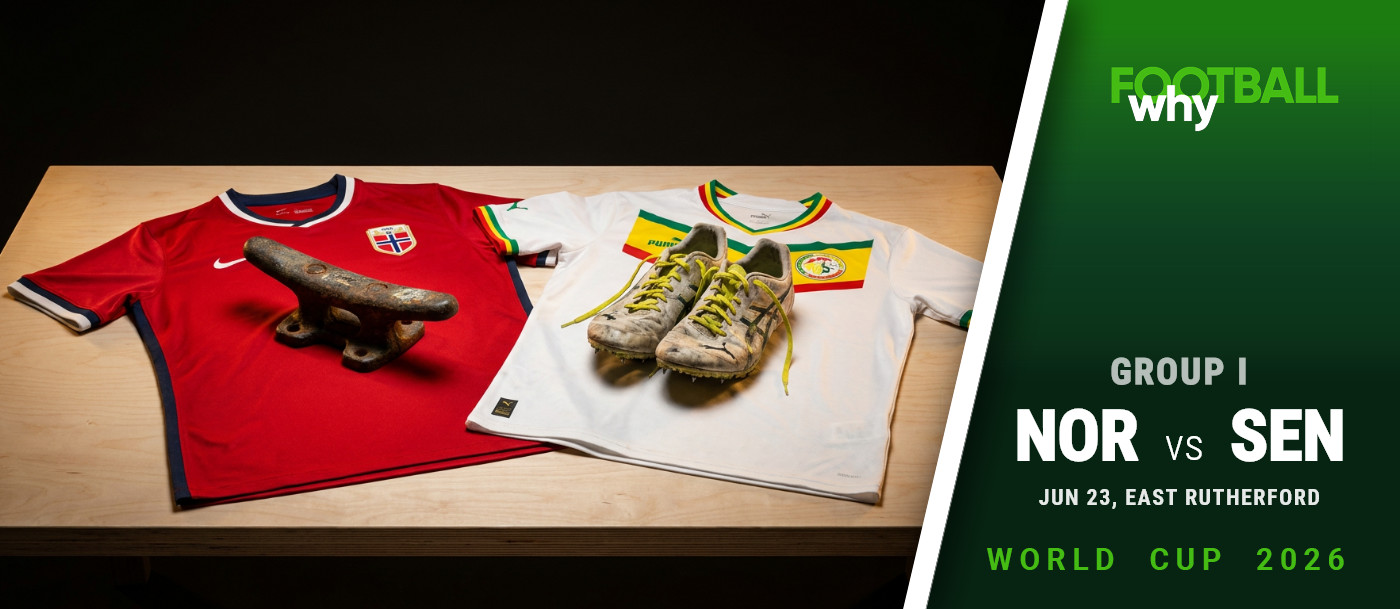
The World Cup Qualification Decider
Tuesday, 23 June

MetLife Stadium, East-rutherford

Norway vs Senegal FIFA World Cup 2026 Group Stage Match A Defensive Miskick and the Giant's Grin Forecast generated:

A claustrophobic afternoon cracked open by a catastrophic defensive miskick and the radiant joy of a giant. Discover how Norway’s pragmatic second-phase accounting outlasted Senegal’s frantic flank-hammering in a five-goal thriller.
Norway vs Senegal Structural Collision

What was it?

Heavy rain and muggy East Rutherford heat dragged the afternoon into a stuttering, claustrophobic grind. Muscles snapped early. Julian Ryerson limped off after thirteen minutes, forcing Marcus Pedersen into the fray. That utterly mundane, unplanned shift completely scrambled the script.

Norway process transitions like union delegates filing workplace grievances — unemotional, repetitive, and devastatingly effective. They generated 2.1 expected goals from a distinctly pragmatic setup. Koulibaly handed them the opening argument, miskicking a routine clearance to let Pedersen score directly at the near post.

Anyone skipping the broadcast missed the sheer structural collapse of the Senegalese rearguard. Edouard Mendy hesitated at the near post before an injury forced him down the tunnel. The chasing side hunted parity down the right flank, leaning entirely on Ismaïla Sarr’s isolated sprints to secure two desperate goals.

Yet the afternoon belonged entirely to Erling Haaland. He leapt for his finishes with the splayed, absurd mechanics of a frog snatching a mosquito. He struck twice within ten minutes after the interval. He grinned through the downpour, radiating a warm, incandescent joy that briefly suspended the ruthless tournament pressure.

How did they clinch it?

Norway

Norway absorbed the early loss of their starting full-back without a flinch, simply plugging a new component into the right flank. They neutralised Senegal’s physical surges by refusing to engage in emotional footraces, waiting patiently for the storm to pass.

The introduction of Patrick Berg at half-time proved decisive. He anchored the midfield pivot, immediately calming the possession and providing a clean platform to launch early diagonals.

They generated 2.1 expected goals not through sustained siege, but by ruthlessly exploiting transitional spaces. This strict adherence to the tactical blueprint masks a noticeably thin squad depth.

The side relies entirely on a few elite individuals for final-third chance creation. Consequently, the supporting cast must prioritize absolute positional discipline over spontaneous creativity.

It is a survival mechanism born from their domestic environment. Long winters force youth development indoors onto artificial turf, breeding a generation of players who excel in highly structured, predictable routines and rehearsed second-ball recoveries.

They are deeply uncomfortable with chaotic improvisation. When heavily pressed by elite opponents, they instinctively default to safety-first clearances and rigid mid-block containment, trusting their superior set-piece literacy.

A sensible, draught-proofed shelter meticulously constructed to protect and enable the few brilliant sparks inside.

Why not go for the win?

Senegal

Senegal lost their grip on the match the moment their central defensive authority evaporated. An uncharacteristic misjudgement from their most senior centre-back completely unravelled their initial containment strategy.

The subsequent injury to their goalkeeper compounded the anxiety. Stripped of their veteran spine, the side responded to Norway's transitions with emotional, disjointed pressing rather than a coordinated reset.

To chase the deficit, they heavily overloaded the right flank. They isolated their wingers to exploit raw pace, but this predictable verticality repeatedly stranded their midfielders in vast, empty pockets of space.

This structural vulnerability highlights a glaring gap in the current generation. They possess an abundance of high-octane runners and fierce duel-winners, but entirely lack a patient, tempo-dictating playmaker to unpick compact defensive blocks.

The root of this imbalance lies in their development pipeline. Elite local academies, heavily partnered with European clubs, prioritize explosive athleticism, transitional speed, and strict one-on-one dominance to satisfy export market demands.

Consequently, the system rarely produces cerebral orchestrators. When forced to break down a stubborn, retreating opponent, the collective pride hardens into rushed, grievance-fuelled attacks that bypass the midfield entirely.

A magnificent, roaring heavy-duty locomotive that ultimately shakes itself to pieces for lack of a regulating valve.

Match hero...

Erling Haaland
Erling Haaland operates less like a pampered superstar and more like a highly specialized snowplough clearing a municipal road. He repeatedly isolated himself in the left channel, dragging defenders completely out of their structural comfort zones. His sheer biomechanical force masks a deeply egalitarian work rate; he tracks back as if fulfilling a local dugnad volunteer shift. He exploits the sensible, risk-averse groundwork of his midfield, converting their collective graft into immediate, explosive dividends.

...and one more

Ismaïla Sarr
Ismaïla Sarr preserved his side's dignity through relentless, rhythmic industry down the right flank. When the defensive spine snapped behind him, he refused to let the tempo drop, hammering the inside channels with the steady cadence of a community drum calling a meeting. He capitalized on the brief, chaotic windows during transitions to isolate his fullback. His performance was an exercise in jom — maintaining fierce physical and moral composure while the scaffolding collapsed under pressure.