

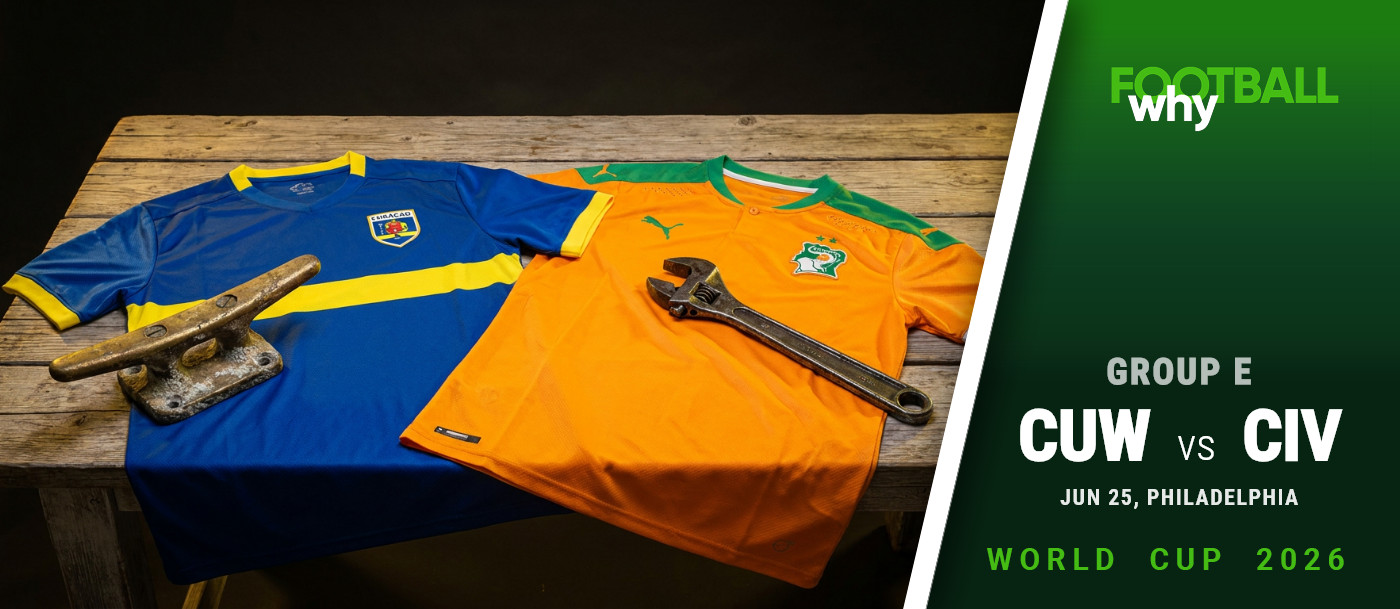
The World Cup Qualification Decider
Thursday, 25 June

Lincoln Financial Field, Philadelphia

Curaçao vs Côte d'Ivoire FIFA World Cup 2026 Group Stage Match A Tedious Schedule Cleared Without Fuss Forecast generated:

A sweltering afternoon managed with the drowsy efficiency of a junior clerk. Côte d'Ivoire required just seven total shots to seal a 2-0 victory. Discover how brutal pragmatism quietly suffocated Curaçao’s brave resistance.
Curaçao vs Côte d'Ivoire Structural Collision

What was it?

The heat hung heavy, forcing a rhythm that felt almost chewable. The Africans operated like seasoned diplomats clearing a tedious morning schedule. They stamped an early advantage, filed the paperwork, and let the clock tick.

Côte d'Ivoire held 63% possession but attempted only seven shots. Nicolas Pépé finished clinically in the seventh minute, then curled in a second past the hour mark from Ibrahim Sangaré’s precise vertical pass.

Emerse Faé introduced Christ Inao Oulaï at half-time to form a three-man midfield, suffocating the remaining space. Curaçao, sitting deep in a 5-3-2 block, were reduced to honest but fruitless running.

Tahith Chong stood out, bobbing through the midfield as though navigating a crowded library entirely alone. He registered three shots and carried the attacking burden, but an isolated spark rarely ignites a damp room.

The victors' sheer reluctance to shoot despite total control highlighted a brutal pragmatism. Yet, watching such unpanicked competence leaves a strange comfort. Sometimes, logic imposes itself without a hint of drama.

Why not go for the win?

Curaçao

Curaçao entered the contest aiming to stretch the stalemate, relying on a rigid defensive shape to frustrate their opponents. Conceding so early dismantled that primary survival mechanism immediately.

Once forced to chase the deficit, their structural limits became glaringly obvious. The low block, usually so effective at denying central access, left them too deep to mount sustained pressure. They relied almost entirely on isolated wide carries to escape their own half.

This inability to transition smoothly into an attacking posture is not born of a lack of effort, but rather a shallow talent pool. Their defensive discipline is imported through diaspora players schooled in Dutch academies, providing a solid baseline of organisation.

However, that same system struggles to produce dynamic, creative depth. When the initial game plan cracks and fresh attacking impetus is required, the bench simply lacks the varied tools needed to alter the momentum.

Consequently, the side remains heavily reliant on set-pieces or single moments of individual inspiration to threaten the opposition.

They built a sturdy vessel to weather the storm, but lacked the engine power to sail against the current once the tide turned.

How did they clinch it?

Côte d'Ivoire

Côte d'Ivoire secured the result not through overwhelming force, but through meticulous tempo management. Their decision to prioritise midfield control over raw shot volume effectively starved the opposition of transition opportunities.

The tactical shift at half-time, introducing a third midfielder, firmly locked the centre of the pitch. This allowed them to dictate the pace of the game without committing unnecessary bodies forward and risking the counter.

Such measured restraint is rooted in a squad heavily socialised within European academies. While they retain the physical capacity to overpower opponents, they increasingly favour a structured, risk-averse approach when protecting a lead.

This generation seems acutely aware of past failures, where emotional, crowd-pleasing surges often led to defensive vulnerabilities. By suppressing that urge to entertain, they ensure a stable rest-defence remains intact at all times.

The resulting performance may lack the flamboyant chaos expected by some, but it reflects a mature understanding of tournament football.

The elephants no longer charge blindly at the first sign of red; they simply stand their ground and let the heat exhaust the challenger.

Match hero...

Tahith Chong
Tahith Chong read the pitch as though trimming the sails on a solitary skiff. His carries up the right flank provided the sole reliable outlet for a squad pinned deep. This awareness stems from his Dutch positional schooling, allowing him to spot the few navigable channels left open. He absorbed fouls and dragged his side forward, yet his shifts ultimately foundered without a second vessel arriving to share the load.

...and one more

Nicolas Pépé
Nicolas Pépé conducted his business with the calm authority of a senior merchant settling accounts. Operating centrally rather than out wide, he merely waited for the traffic to clear before striking. That clinical edge relies entirely on the heavy lifting done by the midfield behind him, affording him the luxury of patience. He simply accepted the deliveries and closed the ledger without a wasted motion.