

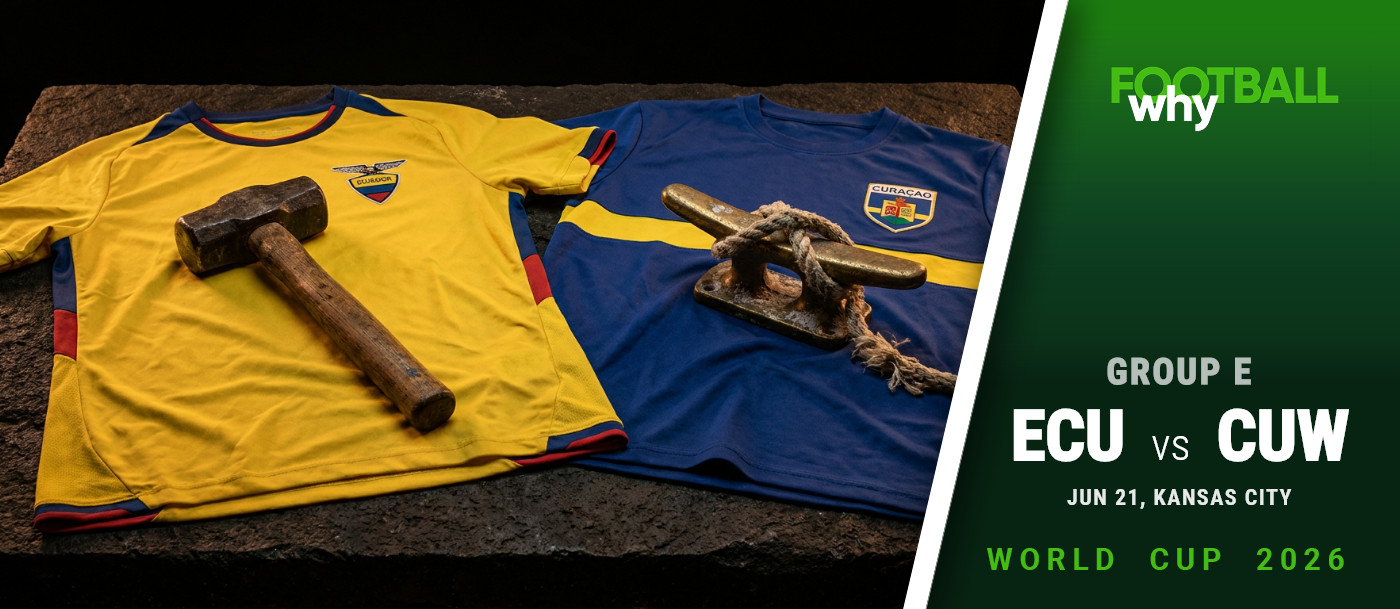
The World Cup Qualification Decider
Sunday, 21 June

Arrowhead Stadium, Kansas-city

Ecuador vs Curaçao FIFA World Cup 2026 Group Stage Match Fifteen Saves and a Claustrophobic Siege Forecast generated:

Twenty-eight shots hammered against a bolted Caribbean door. Uncover how Eloy Room’s record-breaking fifteen saves frustrated Ecuador’s relentless siege and secured Curaçao a deeply stubborn, historic point.
Ecuador vs Curaçao Structural Collision

What was it?

Claustrophobic and relentless. South American forwards spent ninety minutes hammering against a packed penalty area, crossing repeatedly into a box stripped of all breathable space.

Ecuador hoarded seventy-five percent possession and fired twenty-eight shots. They generated 3.06 expected goals. Yet, they operated as though churning through empty soil, producing zero actual celebrations.

The reason for the blank scoreboard stood between the posts. Eloy Room registered fifteen saves, a World Cup record for a ninety-minute fixture.

Anyone tuning out missed a brutal manual in survival. Dick Advocaat’s men retreated into a narrow 5-4-1 shape. They absorbed the pressure and sliced the rhythm with cynical, perfectly timed fouls in midfield.

The Caribbean side earned zero corners and accepted their territorial poverty. Meanwhile, the South American forwards grew frantic.

Enner Valencia embodied this blunt anxiety. He fired a clear one-on-one straight into Room’s chest in the eighty-fourth minute, wasting the singular clean opening.

Preciado’s late cross kissed the crossbar, echoing out into the night. It was a desperate, ugly, deeply human spectacle of endurance against overwhelming force.

Why stopped just short of victory?

Ecuador

Ecuador failed to break the deadlock because Sebastián Beccacece’s wide overloads crashed directly into Curaçao’s congested centre. They forced early deliveries from the flanks, bypassing the midfield entirely.

When the initial crossing patterns yielded nothing, the South Americans simply increased the volume. They substituted to add more bodies into the penalty area, trading whatever remained of their patience for raw, physical crowding.

This frantic urgency masks a glaring void at the tip of the spear. The squad lacks a natural, cold-blooded finisher, leaving them entirely dependent on Enner Valencia’s sheer persistence to force openings through attrition.

They generate threat through athletic surges and second balls rather than rehearsed, intricate combinations in tight spaces. When an opponent refuses to leave gaps behind the defensive line, this physical exuberance suddenly looks remarkably blunt.

The root lies deep in the national production line. The academies consistently export elite ball-winners and transition sprinters built for European counter-attacks, but they rarely forge the delicate central playmakers needed to unpick a static, low block.

A machine designed to sprint down open highways stalled completely in a crowded alleyway.

Why stopped just short of victory?

Curaçao

Curaçao survived the ordeal because Dick Advocaat deliberately stripped his side of any attacking pretense. They collapsed into a rigid 5-4-1 shape, intentionally conceding the flanks to protect the central penalty area at all costs.

They managed the tempo not through possession, but through cynical, perfectly timed tactical fouls. Whenever Ecuador threatened to build momentum, a Caribbean midfielder would step across a runner, absorbing the booking to reset the defensive structure.

This extreme pragmatism hides a severe physical deficit. The squad lacks the raw aerial dominance to engage South American centre-backs in open duels, forcing them to minimise the spaces where those physical mismatches occur.

They compensate for this talent gap with strict, unapologetic obedience. The players suppressed any individual urges to break rank, trusting entirely in the collective shape to frustrate a vastly superior athletic force.

This resilience stems directly from their hybrid footballing identity. The national setup relies heavily on diaspora talent schooled in the Dutch positional pedagogy, blending Caribbean pride with a cold, rule-based accountability that punishes structural waste.

They battened down the hatches and rode out the storm by refusing to leave the deck.

Match hero...

Moisés Caicedo
Moisés Caicedo did not just pass the ball; he organised the communal labour. Dropping into the first build-up line, he acted as the foreman of Ecuador’s frantic assembly. He swept the midfield with brutal efficiency, pushing the physical limits of his teammates higher up the pitch. Caicedo understands that collective sweat requires a central rhythm to prevent exhaustion. He calibrated the heat of the attack, ensuring the pressure never boiled over into complete structural collapse, even as the final product eluded them.

...and one more

Eloy Room
Eloy Room bailed water from a fractured hull for ninety relentless minutes. He did not dive for the cameras; he merely shifted his weight to plug the necessary gaps. Facing a barrage of shots, the goalkeeper managed his energy with extreme thrift, stepping precisely where the Dutch positional manual demanded. Room absorbed the South American fury by stripping away panic, reducing the chaos of the penalty box to a cold, rule-based exercise in damage limitation.