

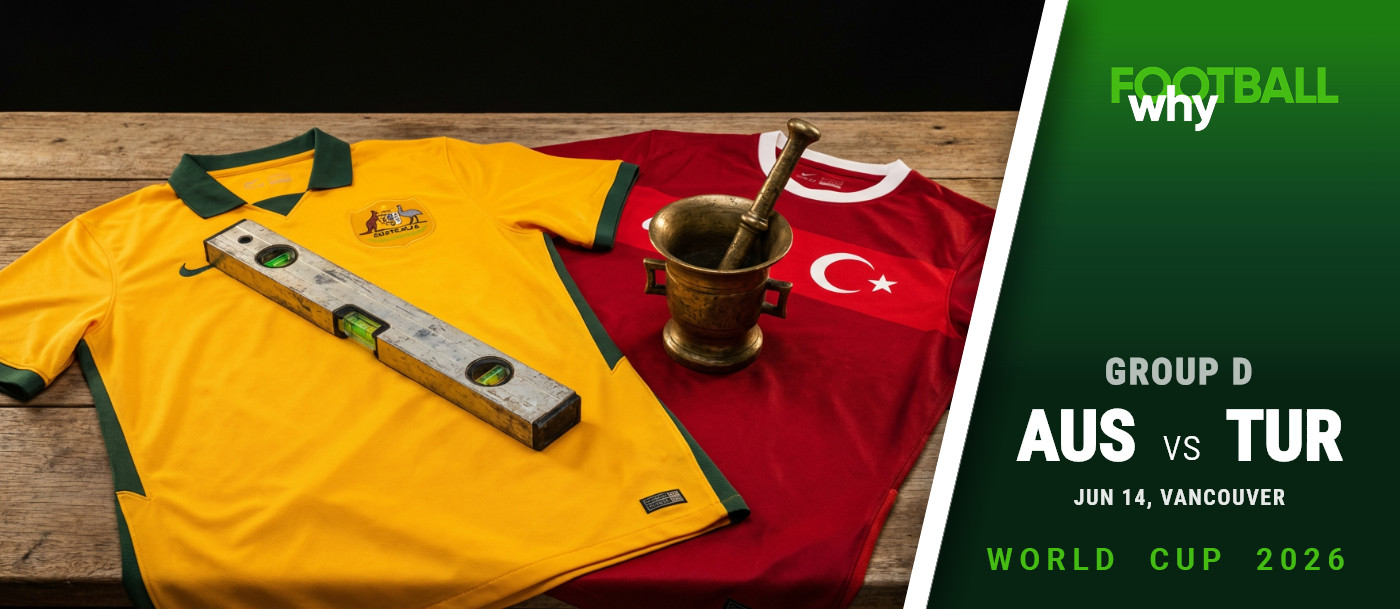
The World Cup Qualification Decider
Sunday, 14 June

BC Place, Vancouver

Australia vs Turkey FIFA World Cup 2026 Group Stage Match Thirty shots against a corrugated shutter Forecast generated:

Thirty Turkish shots hammered against a corrugated iron shutter, but Australia simply refused to break. Discover how a debutant goalkeeper's eight saves and brutal counter-attacking pragmatism secured a 2-0 smash-and-grab.
Australia vs Turkey Structural Collision

What was it?

Thirty shots ricocheted away as though striking a padlocked corrugated iron shutter. Vincenzo Montella's men monopolised the turf, pushed forward with the weight of their history, and spent the entire afternoon failing to break through. Australia entrenched themselves in a deep 5-4-1, retreated to the edge of their own penalty area, and survived by hacking away 55 clearances.

The crescent-stars burned through their energy like someone throwing far too much fuel on a fire too early. They held 72% of the possession. Ferdi Kadıoğlu tried to unlock the left flank with 102 passes, while Arda Güler took seven shots. Nobody found a way past the gloves.

The architect of that frustration was Patrick Beach. He stepped in for the veteran Mat Ryan in a move that looked entirely reckless, yet the debutant handled the pressure as if he had stood between those posts for a decade. He made eight saves. One of those stops served as the springboard for the opening strike.

On 27 minutes, Paul Okon-Engstler lofted a pass into open space. Nestory Irankunda ran onto it, faced the keeper, and finished low. Turkey never adjusted to the threat. They just kept crossing from wide areas with the same blunt obstinacy.

The final blow arrived inevitably. On 75 minutes, Yıldız and Çalhanoğlu tripped over each other in midfield and surrendered the centre. Connor Metcalfe drove to the edge of the box and drilled a shot inside the near post. Two counter-attacks, two goals. Turkish stubbornness simply shattered against the brutal pragmatism of an opponent entirely unashamed to hide behind the barricades.

How did they clinch it?

Australia

Australia succeeded precisely because they refused to engage in a technical debate. They conceded the midfield entirely, dropping into a rigid defensive shape that prioritized clearing the lines over building from the back.

Tony Popovic constructed a game plan reliant on heavy, uncompromising centre-backs to manage the aerial traffic. By deploying youthful, direct runners out wide, the team bypassed the centre of the pitch completely.

The players instinctively defaulted to a safety-first reflex under pressure. Rather than risk a dangerous turnover centrally, they gladly hacked the ball away to reset the defensive line.

Whenever possession turned over, the response was immediate. They drove the ball into the channels, using transitional speed to exploit the vast spaces the opposition vacated.

This brutalist method directly addresses a long-standing creative scarcity within the squad. Without elite playmakers to dictate tempo, the coaching staff leans heavily on honest work-rate and rehearsed structures.

It mirrors a domestic sporting culture that inherently distrusts sterile possession, valuing physical endurance and communal effort over delicate technical schooling.

They simply bolted the doors shut and waited patiently for the intruders to exhaust themselves against the frame.

Why not go for the win?

Turkey

Turkey failed because they confused sheer volume with tactical penetration. They monopolised the turf and tilted their entire attacking weight down the left flank, yet never found a clean route through the defensive shell.

The absence of a dominant focal point in the penalty area meant their primary creators had to build the play and attempt to finish it simultaneously. They resorted to launching hopeful deliveries into a zone entirely commanded by the opposition.

As the clock ran down, the initial structured approach dissolved into visible frustration. The tactical adjustments from the bench merely introduced more wide players, which only exacerbated the lack of central cutting edge.

Consequently, the midfield was left dangerously exposed during defensive transitions. The squad began chasing the game emotionally, abandoning their defensive spacing to hunt for a heroic breakthrough.

This volatility highlights a chronic systemic vulnerability. When methodical patience fails, the collective mindset frequently reverts to frantic, unstructured surges, prioritizing passion over cold, calculated geometry.

The external pressure from a ferocious football environment constantly feeds this urgency, making calm game management incredibly difficult.

They spent the evening hammering against a reinforced wall, ultimately leaving themselves exhausted, exposed, and entirely empty-handed.

Match hero...

Patrick Beach
Patrick Beach handled his World Cup debut as if clocking in for a routine shift on a dusty site. Replacing the veteran captain, he simply put his head down and cleared the workload without a hint of self-promotion. He absorbed the aerial pressure and smothered shots cleanly. His crucial early save functioned as the direct manual override that sparked the opening counter-attack. He survived, and thrived, because he refused to overcomplicate the basics.

...and one more

Ferdi Kadıoğlu
Ferdi Kadıoğlu operated down the left channel like a desperate merchant trying to force a stubborn bargain. He pushed forward relentlessly, offering passes and overlapping runs to test the opponent's patience. Carrying the creative burden almost entirely on his own shoulders, his stamina allowed him to keep knocking at the door. However, his insistence eventually left his own defensive corridor exposed. He bargained for every yard, yet found absolutely no buyers in the penalty box.