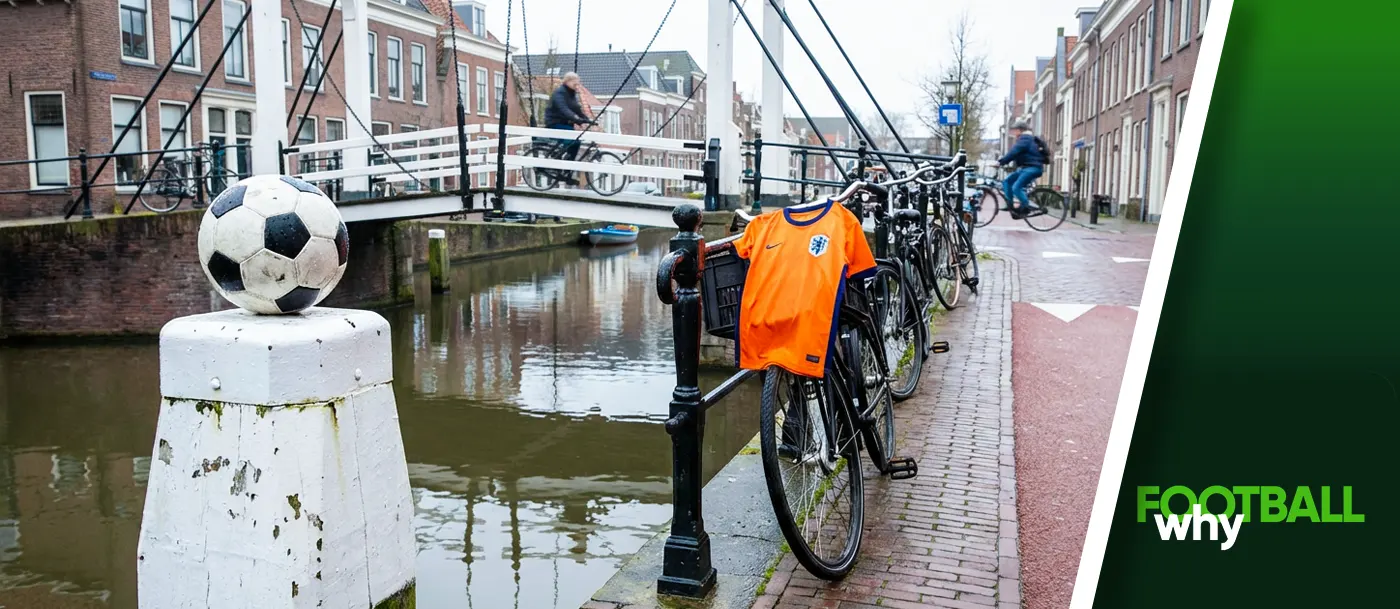
Watch the Netherlands to witness a nation fighting its own perfectionism. For decades, the
Oranje have treated football as an architectural project, building beautiful, intricate
structures of passing and movement. But history has taught them that being right is not the
same as winning. This World Cup is their attempt to finally weld steel onto the glass house.
Expect periods of hypnotic, rhythmic control suddenly broken by direct, jagged counters.
They are no longer just trying to teach the world a lesson in geometry; they are here to
survive the street fight. Can the inventors of the modern game finally learn to win ugly?
Where it hurts?
Netherlands: current status and team news
Beyond the Crowbar:
Rerouting the Orange Current
There is a specific, pained noise that emits from a Dutch living room when the national team
manager signals for the ‘Breekijzer’ — the crowbar. It usually means Wout Weghorst is entering
the fray to turn a tactical debate into a desperate bar fight. It is effective, often brutally
so, but for a nation that prides itself on engineered beauty, relying on a battering ram feels
like a spiritual defeat. Ronald Koeman’s mandate for 2026 is clear: design a system that can
flow, one that doesn't need to be kicked to start working.
The current anxiety in the
Netherlands is not about victory, but the fragility of the method. For too long, the Oranje’s
circulation has depended on a single hub: Frenkie de Jong. He is the sole regulator of the
team’s tempo, the man who collects the ball from the goalkeeper and decides the direction of the
current. When he is fit and finding space, the system hums with that famous fluid authority. But
when opponents clog his supply channels, the 4-3-3 stagnates into a harmless, sterile horseshoe
of possession. The domestic press is ruthless, labelling the play ‘gênant’ (embarrassing) not
for the score, but because the stagnation betrays the national intellect.
To fix this
single point of failure, Koeman is rerouting the flow. The emergence of Tijjani Reijnders offers
a second valve to the midfield, a player capable of carrying the ball through the lines when De
Jong is shackled. This dual-hub system is designed to release Cody Gakpo earlier on the left,
turning possession into incision before the defence settles. With Ruud van Nistelrooij now
sharpening the attack’s timing, the goal is to win games with precision, not panic. By the time
the squad assembles for the finals, we will know if the Dutch have finally engineered a system
robust enough to leave the crowbar in the toolkit.
The Headliner
Virgil van Dijk: key player and his impact on the tactical system
The Unhurried Minister:
Calm in the Eye of the Storm
Virgil van Dijk does not panic. In a sport defined by frantic cardio and sweaty
desperation, he moves with the scandalous leisure of a man inspecting his own garden
during a riot. His signature gesture — two palms pressed downwards, commanding calm — is
less a tactical instruction and more a hypnotic suggestion to the twenty-one other
frantic souls around him.
He is the living embodiment of the Dutch obsession with
control, a ‘Minister of Defence’ who prefers interception to collision. While others
defend by throwing their bodies into the mud, Van Dijk defends by seemingly arranging
the space so that the ball has nowhere else to go but to him. He launches attacks with
raking diagonals that look less like passes and more like architectural drafts, drawing
new lines of engagement across the turf.
He is a one-man infrastructure project,
a mobile dyke that allows the rest of the team to flood forward without fear. When he is
on the pitch, the defensive line pushes up to the halfway mark, tethered to his
confidence; he turns the perilous high-wire act of the Dutch high press into a stroll on
the pavement. But this aura of invincibility is a heavy crown. The entire nation holds
its breath every time he sprints, watching for the slightest fissure in the engineering.
We stare at this monument with a mix of reverence and anxiety, knowing that even the
most elegant structures are ultimately subject to the cruel rust of time.
The Wild Card
Xavi Simons: dark horse and player to watch
The Eddy in the Current:
Anarchy in the Orange Flow
To watch Xavi Simons is to see a young man annoyed by the rigid channels of Dutch
football. While his teammates adhere to the agreed geometry of the national blueprint —
pass, move, triangulate — Simons operates with an elastic, almost insolent freedom. He
drops his shoulder, spins on a coin, and drives directly into the traffic that sensible
midfielders are taught to avoid. He is the unpredictable eddy in a system that sometimes
feels too placidly engineered.
The Oranje desperately need this specific brand of
turbulence. They have enough controllers to circulate possession until the grass turns
grey, but they lack the burglar capable of picking the lock of a low block. Simons
exists to inhabit the chaotic half-spaces, turning safe circulation into sudden, jagged
incision. He offers the one thing a committee of hydraulic engineers cannot design:
surprise.
Yet, this gift is volatile. At 22, the line between creative genius and
wasteful indulgence is razor-thin. There is a lingering fear that on the World Cup
stage, his desire to force the miracle pass will result in cheap turnovers rather than
breakthroughs. The question is whether he can temper his street-football instincts with
tournament maturity. If he finds that balance, he stops being a viral prodigy and
becomes the decisive variable, turning a polite quarter-final exit into a night of
historic, beautiful chaos.
The Proposition?
Netherlands : Tactical guide - how to identify their movements and game variations on the
pitch
The Lopsided Siege:
How Oranje Tilts the Pitch
Ronald Koeman’s Oranje is an exercise in calculated imbalance. The mission is to convert the
nation’s historic obsession with possession into a ruthless tournament weapon, solving the
puzzle of low blocks by overwhelming them with bodies. It is a proactive, flank-heavy identity
that demands absolute precision; one slip, and the expansive geometry becomes a liability. The
classic 4-3-3 is merely a starting position; the reality is a shapeshifting siege engine
designed to overload the final third.
What to look at: The heavy tilt to the
right. As soon as possession is secured, right-back Denzel Dumfries abandons his
defensive post to operate as a pure winger. To compensate, the left-back (often Nathan
Aké or Micky van de Ven) tucks inside to form a temporary back three, while a
pivot like Jerdy Schouten or Frenkie de Jong drops deep to orchestrate play. The
formation morphs into a 3-2-5, creating a heavy front line that pins the opponent’s fullbacks
against their own corner flags.
What to look at: The sudden diagonal switch. The
Dutch use the overload on the right to draw the defensive structure toward Dumfries, only to
suddenly fire a diagonal ball to Cody Gakpo, who is left isolated 1v1 on the left flank.
If the defence stays spread, watch for Dumfries crashing the back post like a battering
ram to meet deep crosses, bullying smaller defenders in the air.
What to look at:
The panic in transition. Because Dumfries plays so high, a turnover in midfield exposes a
massive acreage of green space on the Dutch right. If the counter-press fails, the remaining
centre-backs are forced into a desperate sprint to cover the gap, often leaving them in a
perilous 2v2 scenario. However, if the game state requires survival, this risk vanishes: Koeman
will order a retreat into a compact, flat 4-4-2 block, sacrificing the ball to deny central
space.
Despite the risks, this system offers something the Dutch have often lacked: brute
force disguised as tactical sophistication. When the channels are open and the flow is right, it
creates a suffocating pressure that few defences can withstand for ninety minutes.
The DNA
Netherlands: football's importance and what we will see in their game at the 2026 World Cup
The Fatal Geometry:
Engineering Space in a Chaos Engine
There is an old, weary joke that God created the world, but the Dutch created the Netherlands.
It is repeated often because it contains the terrifying truth of the national psyche: nothing
here is natural. Every inch of soil is reclaimed, every canal a calculated decision, and the
horizon itself a man-made line. This relentless need to organize the void is the only way to
understand why the Oranje play football the way they do. They do not view the pitch as a
battlefield to be conquered with blood and thunder; they see it as a hydraulic project to be
managed with angles, drainage, and distribution.
This is the burden of the ‘Polder Model’
transferred to grass. In a nation that exists below sea level, survival depends on unanimous
agreement. If the water board argues too long about the height of the dyke, everyone drowns.
Consequently, Dutch football is built on a crushing collective responsibility. A player does not
simply run into space; he occupies a zone agreed upon by the group, maintaining the structural
integrity of the web. It is high-concept architecture, beautiful to behold, but it carries a
heavy tax. When the system flows, it looks like the future. When it stagnates, it looks like a
committee meeting that has run three hours over time.
History has hardened this into a
complex superiority complex. Under the guidance of Rinus Michels and the on-pitch priesthood of
Johan Cruyff, they taught the world that space was a resource to be manipulated. They pressed to
shrink the field; they expanded to stretch it. But being the ‘Teacher Nation’ is a lonely,
bitter station. The Dutch have spent fifty years watching their students — Germany, Spain, even
modern England — take these lessons and win trophies with them, while the inventors are left
holding the blueprints. The scar of 1974 is not just a lost final; it is the moment they
realised that being right is not the same as winning.
This intellectual vanity is their
tragic flaw. The Oranje often treat a football match as a debate where the most coherent
argument should win. But football is often a pub brawl, not a dissertation. When faced with
chaos — a jagged high ball, a muddy penalty area, a penalty shootout — the agreement breaks
down. You saw it against Italy in 2000, where they missed five penalties in a single evening,
paralysed by the sheer illogical pressure of the moment. They froze because you cannot design a
schematic for nerve. In those moments, the beautiful geometry shatters like glass in a
hailstorm.
Yet, the wind is changing off the North Sea. The trauma of recent failures has
forced a retrofit of the national machine. The current generation, raised in a globalised
market, is less dogmatic. They are willing to weld steel onto the glass structure. We see now a
willingness to cede possession, to employ a back three, to play the long ball when the sluice
gates are stuck. It is a painful evolution for the purists who remember the fluid perfection of
the past, but it is necessary. They are learning that sometimes, to keep the water out, you
don't need a perfect plan; you just need a sandbag and a shovel.