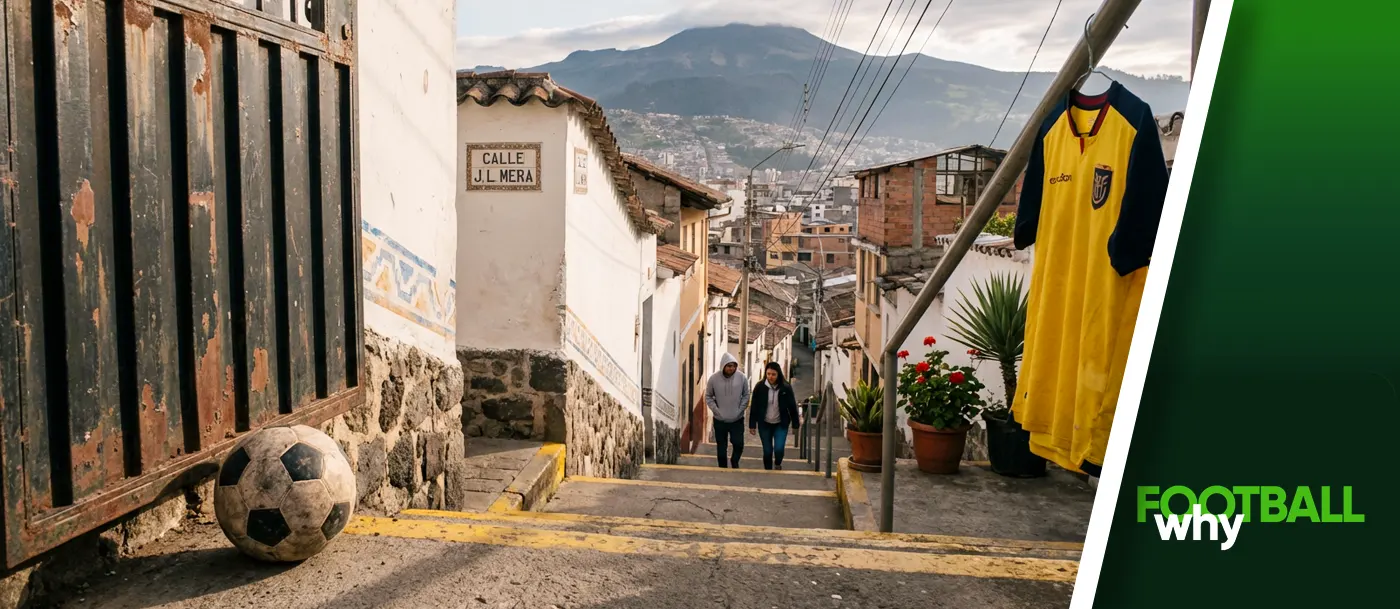
Biting mountain winds have long forged a stoic, impenetrable fortress of survival. Yet, a burning national demand for beauty now clashes against their deeply ingrained instinct to simply endure the storm. Watch them suffocate the pitch with grim, collective discipline before suddenly erupting into explosive, yellow-shirted lightning down the flanks. The high-altitude grinders are finally coming down to conquer the coast.
Team at a Glance
What do they want?
To finally prove they can brutally suffocate the world's elite without needing a stadium in the clouds.
What are they strong at?
Extreme, joyless defensive pragmatism. Plus an elite European-based spine that treats conceding a goal as a communal disgrace.
What will they show?
Eighty-five minutes of deeply frustrating, impenetrable suffering, punctuated by five minutes of blindingly fast coastal sprints.
Why are they as they are?
When your ancestors survived thin mountain air by hoarding energy, you don't waste breath on reckless attacks.
What are their title chances?
8%. Entirely possible, provided they can somehow win a World Cup without ever needing to score twice.
Where it hurts?
Ecuador: current status and team news
Bureaucratic Efficiency
In The Penalty Area
Sebastián Beccacece’s camp operates behind a thick wall of non-committal memos and polite obstruction. The manager deliberately withheld his final squad list until the absolute deadline. Ecuador traded expansive ambition for a low-risk, defence-first identity, aiming to grind through the group stage with a series of clean sheets.
A late paperwork clearance for goalkeeper Omar Carabalí only adds to the sense of endless policy drifting. Fans mock the recent string of low-scoring draws, dubbing them the team of one-one. They want attacking flair, but the staff insists on strict procedural discipline over any individual expression.
The opening match presents a massive administrative headache with Moisés Caicedo serving a suspension. His absence removes the primary screen in midfield. Furthermore, Piero Hincapié is nursing a hamstring issue, which completely disrupts the preferred passing lanes and defensive stability on the left side of the pitch.
Watch them construct a rigid block, stamping out opposition attacks with bureaucratic efficiency before launching sudden breaks. Full-backs will stay pinned back to protect the central spaces. It is a deeply pragmatic, unsentimental approach, relying on sheer physical effort to survive the chaos of tournament football.
The Headliner
Ecuador: key player and his impact on the tactical system
The Relentless
Midfield Regulator
The entire defensive block breathes through his lungs. Moisés Caicedo acts as the relentless midfield regulator for Ecuador, physically pointing out markers and dictating exactly when the full-backs can safely push forward and when the pressing traps must snap shut.
If his rhythm slips under the weight of attritional minutes, the half-spaces open and the defensive line fractures.
He answers tactical stress with stoic graft. Emotional spikes are harvested into perfectly timed, telescopic tackles rather than theatrical complaints to the referee. After a clean ball recovery, his shoulder-open first touch instantly launches a whip-smart vertical pass, transitioning the team from survival directly into attack.
This hybrid destroyer-controller embodies the nation’s underdog reflex. He combines elite scanning under intense physical pressure with a ruthless, group-first work ethic. While the squad retains its basic shape in his absence, it loses its vital transition spark. He remains the undisputed anchor of a generation, quietly pulling his team toward unprecedented heights.
The Wild Card
Ecuador: dark horse and player to watch
The Unfazed Architect
of Deception
At merely eighteen years old, his shoulders remain remarkably relaxed amidst the physical chaos of international midfields. Kendry Páez possesses a gliding, cat-quick kinetic signature. He drops his shoulder, utilises subtle pauses, and uses pure disguise to manipulate hardened defensive lines before threading the killer pass.
This press-resistant creator provides the central deception that Ecuador historically lacks. He actively draws double-teams, demands the ball in tight pockets, and significantly upgrades their set-piece delivery.
The primary doubt surrounding his youth is the consistency of his defensive tracking when the match tempo drops. Hardened opponents will ruthlessly crowd his left foot, physically attempting to force him back-to-goal and deny his lethal half-turn.
Despite these bruising tests, he responds to rough treatment with an unfazed, competitive sparkle. He simply adjusts his shin pads and asks for the ball again, setting the stage for a prodigious talent ready to orchestrate knockout-stage drama at the forthcoming World Cup.
The Proposition?
Ecuador : Tactical guide - how to identify their movements and game variations on the pitch
Prudent Control and
the Midfield Anchor
Ecuador is hunting their best-ever World Cup finish, built on risk-controlled stability, an elite rest-defence, and opportunistic wide creation. The central conflict surrounding Sebastián Beccacece’s side is stark: a massive public demand for attacking ambition clashing with a system that produces low shot volume, relies heavily on crosses, and faces a terrifying opening match without their midfield anchor, Moisés Caicedo.
Beccacece deploys a deeply prudent 4-3-3 that compresses into a rigid 4-4-2 or 4-1-4-1 mid-low block. They deny central passing lanes, maintain incredibly narrow distances between players, and operate at a deliberate, medium tempo.
What to look at: In the first fifteen minutes, observe if the back line holds a strict shape just outside their own third while the wingers pinch inside. If the full-backs push high without pinning the last line, Ecuador is actively funneling play wide. They are depressing the opponent's chance volume to prime half-space counters for their own wingers once the ball is won.
When they secure possession, their primary progression vector relies on wide advancement. They utilise high-flying full-backs like Pervis Estupiñán or Ángelo Preciado, vertical sets into Enner Valencia, and rapid diagonal switches from the centre-backs.
What to look at: As the ball crosses halfway and the carrier opens his body toward the far side, watch Valencia back into the near centre-back to pin him. If the near full-back overlaps while the far winger attacks the back post on his blindside, expect a flat low cross or a cutback to the penalty spot.
The entire tactical structure revolves around the relentless positioning of Moisés Caicedo. As the system-defining pivot, he organises the first pass, dictates pressing triggers, and provides the vital cover that allows the full-backs to bomb forward.
What to look at: When Caicedo receives the ball facing forward, watch the interior midfielders physically point and vacate their lanes. If both full-backs instantly push five to eight metres higher, Ecuador is exploiting the central zones while relying entirely on Caicedo’s recovery angle to throttle any immediate counter-attacks.
To protect the build-up, the team fluidly alters its shape in possession, often dropping a midfielder or tucking a full-back to form a makeshift back three.
What to look at: On goal-kicks or slow restarts, if Estupiñán narrows inside while Preciado holds very wide and high, Ecuador is attempting to bypass the first pressing line to open early service for the right flank against a man-oriented front.
However, the cost of this extreme control is a heavy reliance on crossing and a severe vulnerability in the wide channels when the full-backs are caught upfield — a weakness amplified exponentially if Caicedo is clamped by markers or suspended.
What to look at: If an opponent holds a mid-block, forces Ecuador to circulate on the touchline, and hits early switches behind Estupiñán or Preciado, the rest-defence stretches violently. The centre-backs are dragged wide in a desperate sprint, opening a high-probability cutback lane.
When defending a narrow lead, Beccacece shifts into a pure lead-protection mode, sinking into a 5-4-1 to suffocate the penalty area.
What to look at: If the block height retracts to the edge of their own box and they shift from pressuring the ball to simply shading passing lanes, Ecuador is trading all possession for box density. They are perfectly content to burn the clock with slow touchline restarts.
Despite the frustrations over their attacking volume, Ecuador’s sheer defensive resilience and the tactical intelligence of their elite European-based spine make them a formidable, deeply compelling underdog capable of suffocating the world's best.
The DNA
Ecuador: football's importance and what we will see in their game at the 2026 World Cup
Andean Pragmatism and
the Coastal Flash
“Defend like Arsenal, attack like Barcelona.” When the national team coach recently uttered this tactical promise, it birthed a wave of sarcastic memes across the country. Following back-to-back 1-1 draws in Europe, the fans in Guayaquil responded with boos, frustrated by an aesthetic that felt far more austere than beautiful.
Global audiences often dismiss this squad as mere altitude bullies who fade away at sea level. The reality is rooted deeply in the history of highland survival.
In a high-altitude agricultural village, the biting mountain wind dictates the margins of daily life. A farmer does not decide to plant a radical new crop on a whim. The entire community gathers in the cold evening air to debate the risks, because conserving resources is a matter of collective life and death. Taking a lone gamble that jeopardises the harvest is a deeply shameful act.
This strict communal agreement rules the locker room. Veterans fiercely police the squad, heavily sanctioning any player who jogs back lazily or attempts to elevate his personal brand above the collective shape.
When the team takes a narrow lead, this instinct takes over the pitch. They do not expand their shape to hunt a second goal.
They instantly lock arms into a stoic, egalitarian mid-block. Players physically point at passing lanes, preferring to manage the clock, absorb pressure, and suffocate the opponent's half-spaces rather than risk exposure.
However, the nation’s identity is not solely forged in the thin air of the Sierra.
It is a constant migration between the stoic mountains and the rhythmic, humid coast. A labourer moving from Quito to the bustling ports of Guayaquil must constantly calibrate his body. You switch from measured, energy-saving movements in the highlands to explosive, rapid-fire negotiations on the docks just to earn a daily wage.
The squad inherently understands this duality. They defend with the grim pragmatism of the mountains, but the moment the ball is won, it is funnelled directly to the flanks. This triggers explosive, yellow-shirted surges and rapid diagonal switches, relying on raw coastal pace to bypass bewildered defenders.
Currently, their reliance on a single veteran striker creates a severe limit on chance creation, a problem exacerbated by constant administrative turbulence in the federation. Yet, a modern wave of academy-drilled creators is raising the technical baseline, promising to turn this rugged block into a genuinely proactive force.
In the end, you simply chew the bitter leaves, trust the collective sweat of your brothers, and know that one perfectly timed strike is worth more than a thousand empty promises.