

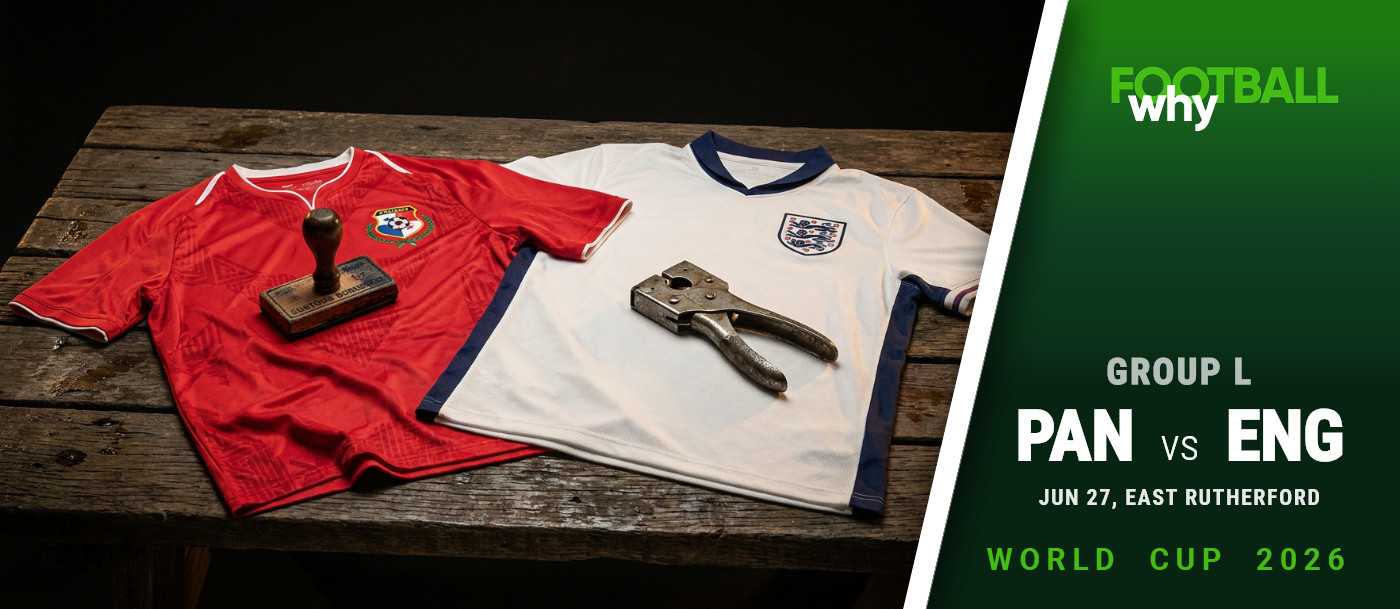
The World Cup Qualification Decider
Saturday, 27 June

MetLife Stadium, East-rutherford

Panama vs England FIFA World Cup 2026 Group Stage Match Sixty minutes of polite knocking, five of sudden demolition Forecast generated:

After sixty minutes of claustrophobic, heavy-legged drudgery, Jude Bellingham suddenly dismantled Panama’s stubborn 5-4-1 block with two quick-fire interventions. Discover how a polite bureaucratic stalemate finally gave way to sudden demolition.
Panama vs England Structural Collision

What was it?

The humidity hung over the stadium like a damp wool blanket, stifling any sudden movements. Eleven men in white spent an hour knocking on a locked door with the polite persistence of a parish council inspector.

Panama held a rigid 5-4-1 shape. The European side controlled possession entirely but generated little threat through the middle.

The deadlock broke not through intricate passing, but via a set-piece. At 62 minutes, Bukayo Saka whipped a corner to the near post. Jude Bellingham darted through the static markers to finish.

Five minutes later, Bellingham clipped a cross from the left half-space. Harry Kane nodded it in. A quick 0-2 scoreline suddenly masked the preceding hour of an absolute creative void.

Without their central creator, the Central Americans relied purely on right-sided surges. They finished the evening with a meagre 0.59 expected goals. Their single lapse in near-post concentration ruined a thoroughly disciplined defensive shift.

We are left with that familiar, exhausting ringing of hope. It is the draining realisation that this squad can look entirely bereft of ideas, yet still possess the sheer individual quality to advance.

Why not go for the win?

Panama

Panama approached this fixture with the pragmatic caution of a ship navigating a narrowing canal. Their defensive shape was a deliberate workaround to nullify superior technical opposition.

They steered the English possession wide, absorbing pressure without panic. Yet, the absence of Adalberto Carrasquilla left them without a reliable central transit route.

Consequently, their offensive transitions became entirely reliant on the right corridor. The team generated volume down the flank, but the final delivery consistently lacked the precision required to trouble a settled defence.

This predictability allowed the opposition to simply wait for the inevitable turnover. When the defensive structure finally fractured at the near post, it was the result of cumulative physical fatigue rather than a sudden tactical surprise.

This specific failure points to a deeper, chronic limitation. The national pipeline reliably produces rugged athletes and pacey wide players, forged in a fragmented domestic system and hardened abroad.

However, it struggles to cultivate elite, press-resistant playmakers capable of retaining possession under sustained tournament duress. The developmental focus remains heavily skewed towards athletic transitions.

Without a creative hub to dictate tempo, the team is forced to rely on sheer veteran grit and set-piece salvos to manufacture threat. They can suffer admirably, but they cannot dictate.

Ultimately, resilience without a release valve merely delays the inevitable flooding of the hull.

How did they clinch it?

England

England treated the opening hour less as a sporting contest and more as a rigorous compliance audit. The primary objective was to establish territorial control and eliminate any risk of transitional chaos.

Operating without Declan Rice, the makeshift double-pivot prioritised structural stability over vertical ambition. The left side functioned purely as a recycling station rather than an attacking threat.

This methodical circulation kept the opposition pinned, but it also induced a sterile, heavy-legged rhythm. The players seemed terrified of forcing a pass that might breach protocol and invite a counter-attack.

The eventual breakthrough did not stem from free-flowing combination play, but from a heavily rehearsed set-piece routine. It was a victory of committee planning over spontaneous improvisation.

This deep-seated caution reflects a profound systemic tension. These players operate weekly in the relentless, high-octane environment of the Premier League, yet they revert to a stiff, conservative shell on international duty.

The national team remains haunted by historical tournament traumas and the unforgiving gaze of the tabloid press. Consequently, managers and players alike default to a 'safety first' mandate, prioritising game management over creative expression.

They possess the individual quality to dismantle low blocks, but the collective psychological burden forces them to play with the handbrake firmly applied.

They are a team of thoroughbreds forever being asked to pull a sensible family carriage.

Match hero...

Orlando Mosquera
Orlando Mosquera acted as the ultimate port authority against the European tide. He delayed the inevitable docking of England’s attack, demanding the proper paperwork for every shot. His ability to read the currents and narrow angles kept the cargo bay sealed for an hour. Mosquera thrives when the pressure is predictable, stamping rejections on routine efforts. He could not, however, stop the sudden rerouting at the near post. Still, his shift was a triumph of regulatory defiance.

...and one more

Jude Bellingham
Jude Bellingham simply decided to bypass the committee. While his colleagues formed a polite, horizontal queue outside the penalty area, he identified the absurdity of the delay. His sudden dart to the near post was an abrupt breach of protocol that rescued the evening. He possesses the rare arrogance to ignore established precedent when the system stagnates. Bellingham read the dead air, stepped out of the collective sludge, and filed the paperwork himself.