
Panama (Los Canaleros) - National flag

Panama National Football Team

Los Canaleros

What to look for?

Scarred by the ghosts of stoppage-time collapses, they carry the heavy, industrial discipline of an interoceanic shipping lane. A shallow talent pool forces a terrifying reliance on a single creative spark, while the brutal tropical climate demands absolute energy rationing. Watch them absorb immense pressure behind perfectly rehearsed defensive gates before unleashing sudden, violent surges down the right flank. The lock gates are finally opening.

Team at a Glance

What do they want?

To prove their meticulously rehearsed industrial discipline can finally drown a European heavyweight in the group stage.

What are they strong at?

Absolute, unapologetic stubbornness perfectly synchronized with highly scripted set-piece routines and a single, overworked midfield maestro.

What will they show?

Ninety minutes of agonizing, energy-saving patience that randomly explodes into a frantic, stoppage-time drum-circle of chaos.

Why are they as they are?

Operating a massive global shipping canal leaves absolutely zero room for individual improvisation or sloppy mistakes.

What is the chance of winning the title?

4%. They could actually shock the world, provided their one creative midfielder never needs to sleep.
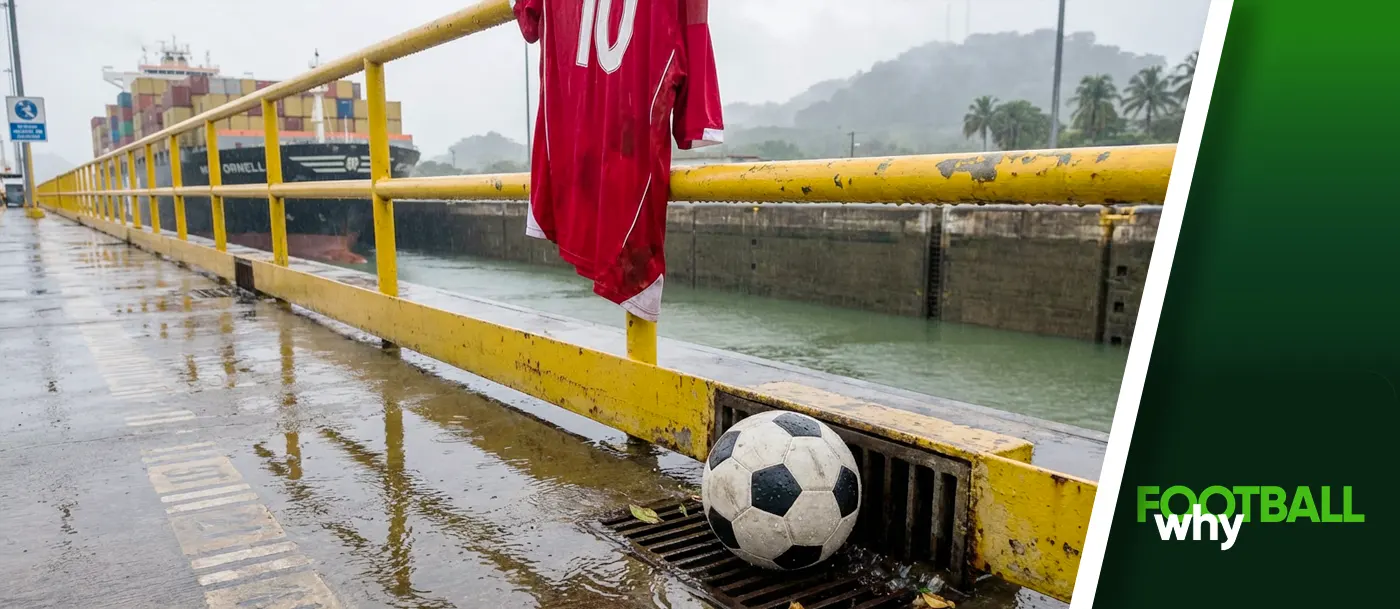
PANAMA | Structural Collision

Where it hurts?

Panama: current status and team news Distributing The Weight Of The Canal

Thomas Christiansen recently stepped up to the microphone and delivered a blunt warning to the Panamanian public regarding his final squad selection: "voy a ser injusto" (I am going to be unfair). This phrase, immediately trending across local social media as a hashtag, perfectly captures the ruthless pragmatism required as Panama prepares for only its second World Cup appearance. Having secured qualification early and smoothly, the squad was immediately plunged into a brutal group featuring two European heavyweights.

The central tension keeping fans anxious in the cafes of Panama City is the overwhelming reliance on a single playmaker. The squad's creative output flows almost entirely through the boots of Adalberto 'Coco' Carrasquilla. While his calm swagger dictates the passing tempo, opposing managers know perfectly well that aggressively man-marking him stalls the entire Panamanian midfield. Furthermore, the squad exhibits a highly predictable bias toward attacking down the right flank, feeding the ball constantly to Michael Amir Murillo, which makes their wide progressions much easier to scout and physically contain.

To survive this tactical bottleneck, Christiansen is aggressively testing an elastic 3-5-2 system on the training pitch, explicitly forcing the midfield to distribute the creative load. He is loudly drilling weak-side combinations, instructing Édgar Yoel Bárcenas to drop into pockets of space and provide relief whenever Carrasquilla is swarmed by defenders. Simultaneously, the coaching staff is doubling down on set-piece routines. They are heavily leaning on Fidel Escobar's aerial dominance, sending him forward for corners to generate high-quality chances without needing sustained periods of possession.

The domestic mood remains a volatile mix of guarded pride and deep scepticism. Supporters are fiercely scrutinizing whether ageing veterans will keep their starting spots over in-form youngsters, a heated radio debate amplified by the exorbitant costs of travelling to the tournament.

However, if this tactical pivot holds together under pressure, spectators can expect a stubborn, highly organized defensive block capable of punishing elite teams through heavily rehearsed set-pieces and sudden, diversified transitions. The players are fighting to prove they are far more than just a one-man show.

The Headliner

Panama: key player and his impact on the tactical system The Unflappable Dispatcher Of The Engine

The domestic crowd affectionately calls him the 'cerebro', but Adalberto Carrasquilla operates more like a high-grade logistics dispatcher deep within the engine room. He governs the circulatory flow of the team with an unflappable pre-receive scan and a smooth, hip-led half-turn that instantly erases the first line of incoming pressure. The 2023–24 Concacaf Player of the Year represents the prototypical modern free-8, seamlessly combining disguised channel passes with highly intelligent first-presser duties.

His absolute centrality to the system inevitably makes him a prime target. When subjected to systemic, cynical fouling, he occasionally becomes overextended, abandoning his distributive calm for carry-first sequences that risk dangerous central turnovers. Remove his deceleration from tight spaces, and the team's vertical clarity immediately bottlenecks, causing weak-side timing to collapse. He remains the industrious, calm motor of the national side, an indispensable operator whose quiet competence keeps the entire machinery moving forward with undeniable dignity.

The Wild Card

Panama: dark horse and player to watch The Sudden Gravity Of The Near Post

Gustavo Eloy Herrera acts as a broad-shouldered shield, a tall, straight-line mover who alters the geometry of the penalty area without needing heavy touches on the ball. At just 20 years old, he provides the hard near-post occupation and first-contact physical duelling that the Panamanian system desperately lacks. He operates as a second-phase hunter, utilizing sudden, aggressive darts to draw defensive gravity away and free up weak-side wingers arriving late. His breakout potential was clearly signalled by high-profile friendly minutes, immediately earning him the heavy mantle of the next great Panamanian scorer.

His confidence, however, remains heavily rhythm-dependent. If his first touch stiffens under an aggressive press, or if he misses early chances, his near-post timing can visibly drift. Opposing defenders will actively attempt to pre-block his running lanes, step the defensive line to bait offsides, and apply early front-shoulder contact to physically deny his half-turn layoffs. Yet, when an early hold-up play or a won foul switches him on, his appetite for the physical duel spikes dramatically. The domestic expectation is palpable; fans are simply waiting for the moment the ball enters the six-yard box and this young classic '9' turns an xG scrap into a World Cup breakout.

The Proposition?

Panama : Tactical guide - how to identify their movements and game variations on the pitch The Elastic Geometry Of The Canal Engineers

Thomas Christiansen has transformed Panama into a highly organized unit, targeting a deep World Cup run through an adaptive structure and rapid wide supply lines. The central conflict lies in balancing this tactical flexibility against a heavy load concentration on a single playmaker and their high-flying wingbacks — a dynamic that elite opponents will ruthlessly test.

Panama defends in a compact 5-4-1 mid-block. In possession, this fluidly expands into a 3-2-5 or 3-4-3, driven by high carrileros like Michael Amir Murillo and Eric Davis pushing up the flanks.

What to look at: In the opening fifteen minutes, if the back five sets just ahead of the halfway line with tucked wingers and restrained wingbacks, Panama is forcing wide circulation to set touchline traps for early transitions towards striker José Fajardo.

Their build-up phase, the salida mixta, relies heavily on dropping midfielders to bypass high pressure.

What to look at: During the build-up, watch left centre-back Andrés Andrade step forward with the ball while Aníbal Godoy slides between the centre-backs. This creates a 3v2 advantage against the first pressing line, opening a vertical feed directly into the midfield.

Progression heavily favours a right-sided overload, utilizing rapid third-man releases in the half-space.

What to look at: As the ball-carrier crosses the halfway line, Murillo will overlap while Ismael Díaz pins the defensive seam inside. Expect a low cut-back to the penalty spot or a rapid diagonal switch to Eric Davis for a first-time delivery.

At the absolute heart of this system is ‘Coco’ Carrasquilla, operating as a free roaming 8 who dictates the tempo.

What to look at: When Carrasquilla receives the ball facing forward in the right half-space, Fajardo will check and spin while the far wingback starts an early overlap. This baits the opponent's midfield to overcommit, opening an inside slip pass to Díaz.

However, the extreme width provided by the wingbacks creates a perilous rest-defence scenario.

What to look at: If an opponent hits an immediate diagonal switch within five seconds of a Panamanian turnover, the centre-back is dragged wide. With both wingbacks caught high up the pitch, the rest-defence is stretched, often resulting in a dangerous 1v1 or a free cut-back.

When under siege or protecting a narrow lead, Christiansen demands a strict retreat.

What to look at: After the 75th minute under a narrow lead, the block retreats 10–15 metres and pressing drops to a mere screen. They willingly trade possession for clearance cycles, hunting counters off second balls.

Even with the physical vulnerabilities inherent in their wide attacking shape, Panama’s shape-shifting resilience, aerial dominance, and the rhythmic brilliance of Carrasquilla ensure they remain a fiercely organized spoiler capable of dismantling established hierarchies.

The DNA

Panama: football's importance and what we will see in their game at the 2026 World Cup The Industrial Patience Of The Lock Gates

Operating the massive locks of an interoceanic shipping route allows absolutely zero margin for individual improvisation. A single uncoordinated movement by a dockworker jams the entire global transit system. This strict, working-class discipline of the canal crew provides the structural blueprint for Panamanian football. When defending, the squad organizes into a meticulously rehearsed mid-block. Players do not chase the ball randomly across the grass; they hold their assigned lanes with industrial precision. This coordination peaks during attacking set-pieces, where centre-backs execute highly scripted decoy runs and back-post overloads with the exact same synchronized routine as engineers securing a massive cargo ship.

This conservative structure is heavily reinforced by the brutal realities of the local climate. Enduring torrential tropical downpours and suffocating humidity demands strict energy rationing from anyone working outdoors. Consequently, the national squad rarely engages in a continuous, physically exhausting high press. Instead, midfielders deliberately manage the tempo by committing strategic fouls and taking agonizingly slow restarts. They preserve their physical reserves in the heat, waiting patiently before launching sudden, explosive transitional sprints down the right flank.

Because the domestic league generates minimal revenue, the nation struggles to mass-produce elite, technically gifted playmakers. This harsh economic reality creates a severe creative bottleneck on the pitch. The entire offensive progression relies almost exclusively on one central connector to thread passes through tight spaces. If an opposing defensive midfielder suffocates him, the team’s possession game stalls entirely. To compensate for this shallow domestic talent pool, the federation historically relied on a Colombian coaching lineage. These imported managers successfully installed a rugged, counter-attacking pragmatism that perfectly maximizes the raw athletic standards players later hone in Major League Soccer and Liga MX.

The emotional temperature inside the Estadio Rommel Fernández, however, violently contradicts this calculated patience. Driven relentlessly by the percussive drums and brass bands of La Marea Roja, matches often devolve into volatile, stoppage-time chaos. This late-game anxiety is a lingering psychological scar from their heartbreaking stoppage-time collapse against the United States in the 2013 qualifiers, an event that permanently encoded a sense of impending doom in the closing minutes of tight fixtures.

They are a squad explicitly built to endure immense pressure. They absorb the physical weight of superior opponents, sitting deep and waiting for a single, heavily rehearsed opportunity to strike. Navigating through such narrow margins requires immense patience, but the locals know the drill. There is always a moment when the heavy steel gates finally open, and the water violently rushes through.
Character