

The World Cup Qualification Decider
Tuesday, 30 June

Estadio BBVA, Guadalupe

Netherlands vs Morocco FIFA World Cup 2026 Group Stage Match Boarding up the windows to wait for defeat Forecast generated:

The Netherlands boarded up their own windows, generating a miserable 0.23 expected goals in a baffling display of voluntary confinement. Discover how Morocco patiently unpicked the padlock to claim a deserved penalty shootout victory.
Netherlands vs Morocco Structural Collision

What was it?

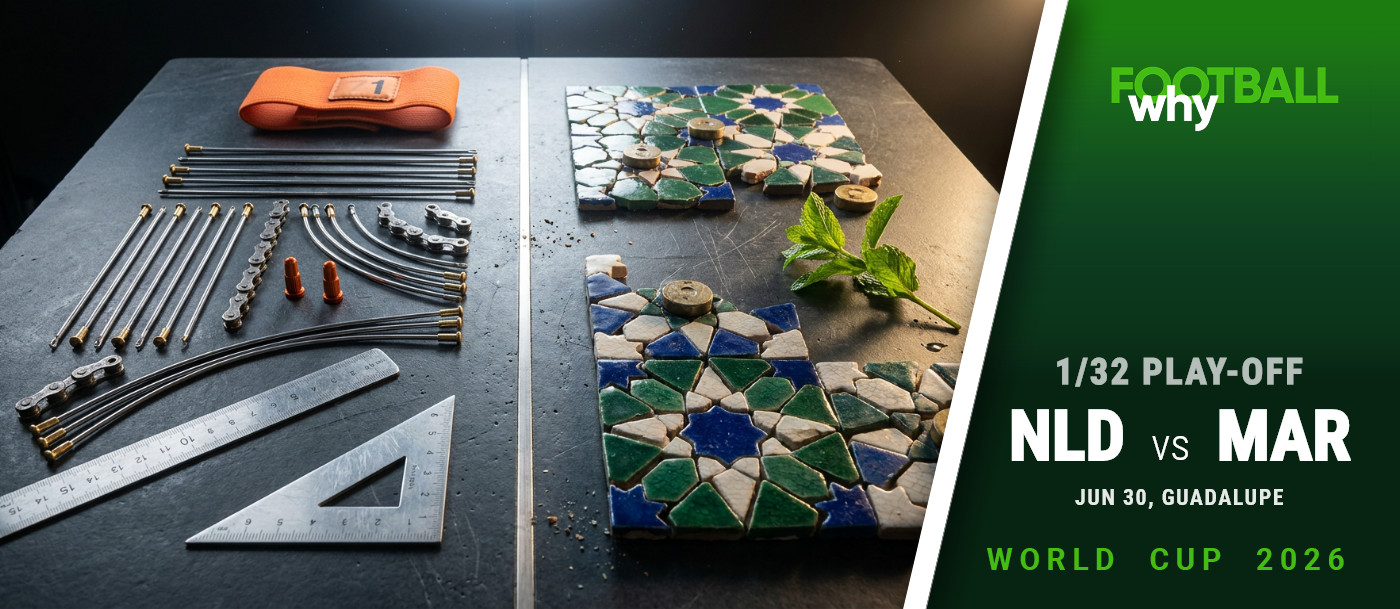
The Dutch elected to board up their own windows and sit in the dark. Ronald Koeman deployed a rigid back-five, actively funnelling seventy percent of possession toward a patient Moroccan midfield. It was an astonishing display of voluntary confinement.

This cynical blockade generated a miserable 0.23 expected goals over two hours. Their solitary breakthrough arrived on 72 minutes, bypassing the midfield entirely as Bart Verbruggen launched a long clearance for Wout Weghorst to flick toward Cody Gakpo.

Yet Walid Regragui’s men refused to panic, chipping away at the wide channels like damp rot spreading through creaky floorboards. Their methodical wing-play finally collapsed the Dutch structure in stoppage time, when Chemsdine Talbi whipped an inswinging cross for Issa Diop to head home.

Then came the true absurdity. Throughout extra time, the Europeans stood perfectly still in an immaculate defensive shape, ceding nearly ninety percent of the territory. They actively engineered their way to a penalty shootout.

Football rarely tolerates such calculated cowardice. The Dutch missed three spot-kicks, succumbing to their historic dread, while Morocco marched on, entirely deserving of a victory built on disciplined endurance.

Why stopped just short of victory?

Netherlands

The Netherlands collapsed under the weight of their own mercantile calculus. Ronald Koeman abandoned the traditional high press, installing a rigid back-five to passively absorb Moroccan pressure rather than attempting to dictate the contest.

This defensive retreat stemmed from a glaring void in central creativity. Lacking a natural playmaker to dictate tempo, the manager bypassed the midfield entirely. He treated direct, agricultural service to a target man as the primary tactical blueprint, rather than a late-game emergency lever.

It was a pragmatic trade-off that ultimately backfired. By refusing to engage in positional circulation, the Dutch surrendered all territorial authority. They stopped cycling the ball and simply waited for the clock to run down, hoping their defensive margins would hold.

This points to a deeper, recurring neurosis within the national setup. When confronted with elite knockout pressure, the famed Dutch tactical schooling often gives way to a paralyzing late-stage anxiety. Their egalitarian confidence vanishes.

The fear of transition exposure overrides their instinct to control spaces. They retreat into rigid, uninspired protocols, overthinking the geometry of the pitch instead of trusting their innate technical superiority.

They tried to mathematically audit their way to a clean sheet, only to drown in the very penalty shootout they have spent generations dreading.

Why stopped just short of victory?

Morocco

Morocco secured their progression through an unwavering commitment to structural patience. Faced with a heavily fortified Dutch penalty area, they refused to force central combinations, methodically threading their attacks down the flanks instead.

This territorial control was sustained by incredibly astute game management from the touchline. As the match wore on, fresh wingers were introduced to maintain the physical pressure, constantly probing the defensive margins without compromising the team's defensive shape.

Their ability to stay calm while chasing the game highlights a profound collective maturity. There was no panicked deviation from the system. They simply trusted that their continuous wide overloads would eventually force a structural failure.

This resilience reflects the successful fusion of their dual footballing heritage. The squad marries the rigorous positional discipline learned in European academies with a deep, culturally ingrained capacity to suffer and endure together.

They do not view a defensive opponent as an insult, but as a test of their collective endurance. The diaspora talents and domestic graduates operate on a shared wavelength, prioritising efficiency and clean execution over chaotic heroics.

They dismantled a European powerhouse not with sudden flashes of lightning, but with the steady, relentless carving of water through stone.

Match hero...

Bart Verbruggen
Bart Verbruggen executed his duties with the deadpan efficiency of a municipal engineer managing a rising tide. His pivotal 96th-minute save was stripped of heroics; he simply calculated the geometry of the approaching attacker and shut the sluice gate. He thrived because the Dutch low-block demanded a goalkeeper who could tolerate long periods of inactivity before instantly shifting gears. His long distribution for the opening goal proved his mercantile value, turning a defensive clearance into a swift, profitable transition.

...and one more

Yassine Bounou
Yassine Bounou presided over the shootout with the quiet authority of an elder settling a familial dispute. He did not need to scramble or shout; he simply anchored himself, extending a hospitable but firm hand to deny the Dutch takers. This performance was rooted in deep sabr — a ritualised patience that allowed him to absorb the tension of a gruelling standoff without fraying. By trusting his reading of the taker’s body language, he wove absolute certainty into a moment of pure chaos.