

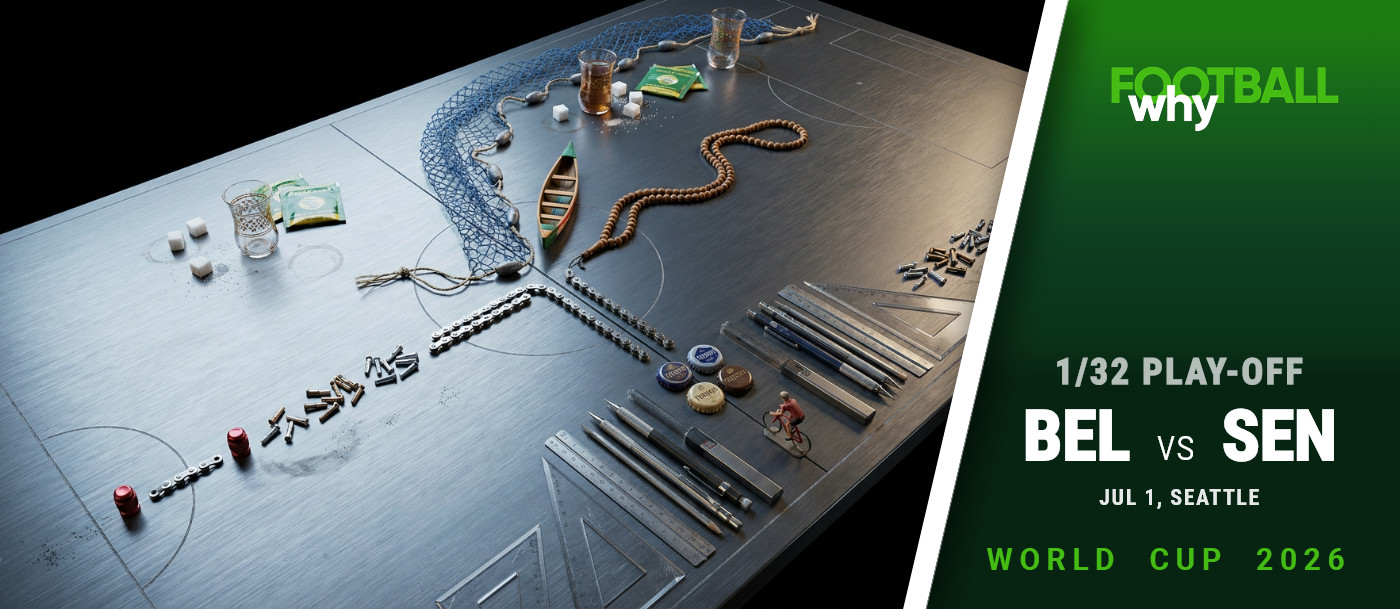
The World Cup Qualification Decider
Wednesday, 1 July

Lumen Field, Seattle

Belgium vs Senegal FIFA World Cup 2026 Group Stage Match Seven minutes of forensic video salvage European lethargy Forecast generated:

Eighty minutes of European lethargy trudged through the mud, yielding zero shots on target. Discover how a flapped cross and a seven-minute video tribunal robbed Senegal of a clinical victory.
Belgium vs Senegal Structural Collision

What was it?

The heavy sludge of European apathy dripped off the stands for over an hour. Eleven men in red trudged across the turf as if dragging rusted tools through wet clay. Senegal, meanwhile, sliced through the right flank in total silence.

Habib Diarra and Ismaïla Sarr carved out a deserved 0-2 lead. The African side generated a massive 3.54 expected goals. They looked clinical, exploiting wide channels while their opponents registered zero shots on target for 85 minutes.

Then, the lungs emptied. As Senegal dropped deeper, the European side abandoned their intricate passing and simply started hammering crosses. Romelu Lukaku bundled one in at the 86th minute. Three minutes later, Mory Diaw misjudged the flight of a desperate delivery, allowing Youri Tielemans to nod an equaliser.

Extra time felt entirely superfluous. The final ruling arrived from a monitor, not a moment of brilliance. Seven minutes of forensic video review extracted a microscopic foul, granting Tielemans a 125th-minute penalty. A clinical robbery disguised as procedural justice.

Why stopped just short of victory?

Belgium

Belgium survived because they willingly dismantled their own aesthetic identity just in time. The decision to withdraw primary playmakers while trailing two-nil seemed counterintuitive, yet it instantly removed the friction of sterile central passing.

By introducing wide runners to deliver early crosses toward a physical focal point, the squad replaced cosmopolitan craft with brute industrial repetition. The fact that their first shot on target arrived only after this tactical regression speaks volumes.

This drastic shift highlights a recurring squad trait. When the mandate to play beautiful, intricate football stalls against athletic mid-blocks, the players reflexively defer to a pragmatic contingency plan.

Such adaptability is deeply baked into their club-led academy system. Their developmental pipeline prioritizes rapid problem-solving and tactical fluency over rigid ideological purity, allowing them to code-switch between styles.

However, this also points to a deeper systemic ceiling. The historic dread of knockout-stage failure often paralyses their creative instincts.

When external expectations press down, they abandon sophisticated possession, retreating into a modest, risk-averse survival mode to secure a quiet victory.

They avoided collapse by tossing the architectural blueprints into the fire and simply hammering the remaining nails with a heavy iron.

Why stopped just short of victory?

Senegal

Senegal surrendered their advantage because sheer physical endurance eventually bows to sustained territorial pressure. For over an hour, they executed a flawless transition strategy, isolating the wide channels and exploiting the vast space left by advanced European fullbacks.

Yet, as late substitutions removed their primary ball-carriers, the collective block inevitably dropped deeper. Despite dominating the underlying chance quality, the squad lost the capacity to relieve defensive pressure, inviting a relentless barrage of crosses.

The necessity of a backup goalkeeper exposed a critical vulnerability in aerial claim reliability under late-game duress.

This late-stage fragility reflects broader systemic contours. Senegalese academies, tightly linked with French developmental pathways, consistently produce elite athletic engines and transition specialists. They excel in aggressive one-on-one duels and playing with a defiant, communal energy.

However, this specific pipeline occasionally trails in cultivating penalty-box guile and cold composure against sustained, repetitive attacks.

When fatigue sets in or external decisions feel unjust, that communal pride hardens into nervous tension. Defensive cues desynchronize, and the stoic composure required to manage narrow margins evaporates.

They built an impenetrable fortress of collective effort, only to watch it crumble because the roof could not withstand the final, desperate storm.

Match hero...

Romelu Lukaku
Romelu Lukaku operated as the emergency manual override for a stalled bureaucratic process. When Belgium’s intricate half-space passing dissolved into polite, unproductive circulation, his introduction shattered the deadlock.

He anchored the penalty box, dragging defenders out of position through sheer gravitational mass. This was not just physical dominance; it was a calculated disruption of the opponent's defensive rhythm.

He provided a blunt focal point that allowed the rest of the peloton to finally settle into a direct, repetitive crossing cadence.

...and one more

Ismaïla Sarr
Ismaïla Sarr struck the right flank with the relentless cadence of a ceremonial drum. His ability to chest down a long diagonal and split the central defenders showcased a clinical, unbothered dignity.

He exploited the vast acreage behind the European fullbacks because he accelerates without visible friction, maintaining his upright composure even at top speed.

Sarr provided the vital outlet, weaving the isolated threads of Senegal’s transition into a sharp spearhead until physical exhaustion finally demanded a pause.