

The World Cup Qualification Decider
Wednesday, 17 June

Levi's Stadium, Santa-clara

Austria vs Jordan FIFA World Cup 2026 Group Stage Match Heavy friction, zero drama, and a decisive corner Forecast generated:

Ninety minutes of relentless, joyless physical friction ground Jordan's historic World Cup hopes into dust. Discover how Austria leveraged sixty-three percent possession and a brutal late corner to force a mechanical, drama-free victory.
Austria vs Jordan Structural Collision

What was it?

The turf at Levi’s Stadium endured ninety minutes of relentless, heavy-footed friction. Twenty-two men executed their tactical instructions with the grim punctuality of commuters catching the early train. Austria monopolised possession, hoarding sixty-three percent of the play. Yet, the shot count finished perfectly level at eleven apiece.

Romano Schmid initially broke the tension by curling a twenty-two-metre strike into the top corner. Jordan absorbed this early blow and equalised shortly after the interval. Ali Olwan accelerated down the left flank on a sudden transition and finished low off the post. It marked the first World Cup goal in his nation’s history.

Ralf Rangnick responded by emptying his bench to tilt the pitch. The introduction of Marko Arnautovic and Patrick Wimmer ratcheted up the physical pressure inside the penalty area. Jordan’s defensive line retreated deeper, trying to absorb the crosses like sandbags holding back a rising tide. They managed the open play, but faltered under dead-ball service.

A wicked corner from Marcel Sabitzer forced an agonising own goal from Yazan Al-Arab. Austria then squeezed the remaining life out of the afternoon. A stoppage-time handball allowed Arnautovic to convert a late penalty.

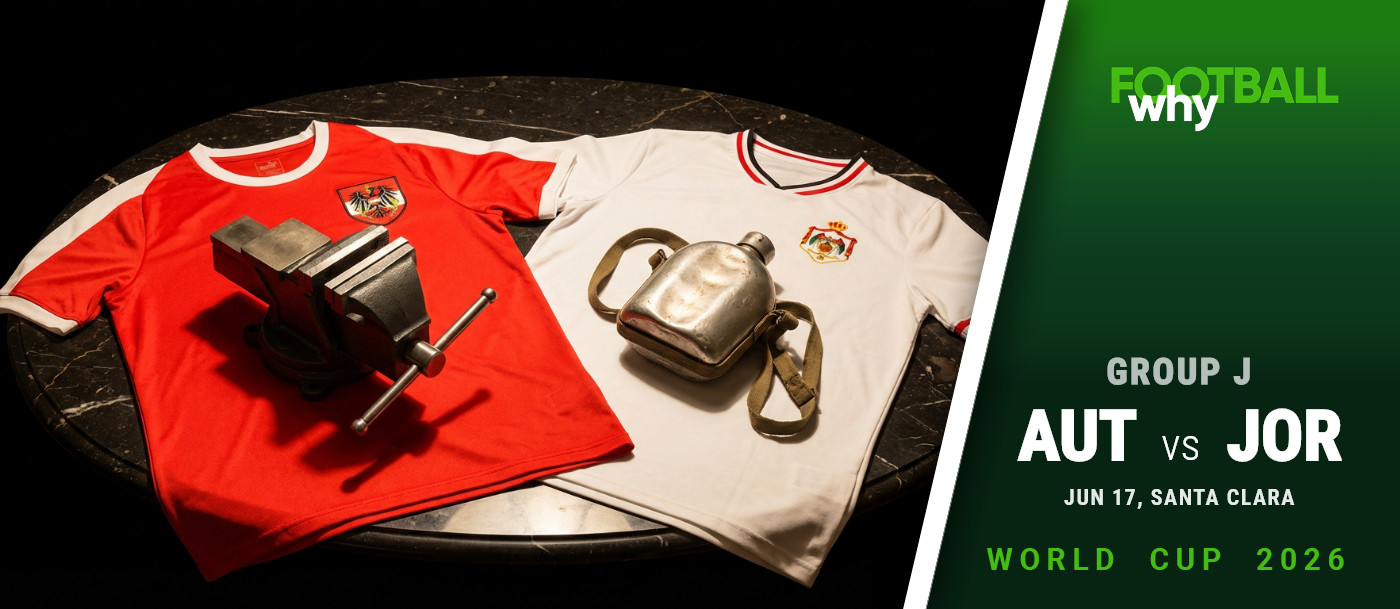
Viewers hoping for a romantic clash of spirits were left chewing on the visual equivalent of cardboard. The technical execution functioned flawlessly, and the physical commitment never wavered. We watched a highly competent athletic exercise, but left desperately craving a single drop of genuine human madness.

How did they clinch it?

Austria

Austria secured this result by systematically elevating the physical friction inside the penalty area when their passing circuits stalled.

They deliberately shifted from rushed vertical passes to a heavier, static box presence. This forced the opponent to defend multiple aerial deliveries under severe duress.

This tactical pivot was necessitated by pre-tournament injuries to their creative midfielders. Without natural playmakers, the manager leaned on veteran target men to secure possession and win territorial advantage.

The current generation excels at collective pressing but sorely lacks elite dribblers capable of unpicking a low block. Consequently, they treat set-pieces not as a bonus, but as a primary industrial mechanism.

This mechanical approach stems from a domestic development pathway heavily influenced by high-intensity pressing systems. Players are schooled to prioritise structural reliability and physical exhaustion over spontaneous individual flair.

Austria ultimately triumphed because their footballing infrastructure is designed to grind down stubborn resistance through relentless, repeatable procedural weight.

Why not go for the win?

Jordan

Jordan’s defensive structure eventually fractured under the sheer volume of sustained aerial traffic. Their compact mid-block shielded the central corridors effectively, but surrendered the wide areas entirely.

This concession invited a continuous stream of crosses. While they managed the initial clearances, the physical toll of defending consecutive dead-ball situations gradually eroded their concentration and spatial awareness.

The absence of their primary central striker severely limited their ability to relieve this pressure. Without a reliable outlet to hold up possession, clearances simply bounced straight back into their own half.

Consequently, their attacking threat narrowed down to a single wide creator. This predictability allowed the opposition to aggressively counter-press, trapping Jordan deep within their own defensive third for extended periods.

Beneath these tactical strains lies a systemic lack of exposure to elite European club rhythms. The domestic league hardens their collective mentality, but struggles to replicate the relentless physical tempo required at this level.

Jordan’s valiant effort ultimately collapsed because a dam built for occasional storms cannot indefinitely hold back a permanently rising tide.

Match hero...

Marko Arnautović
Marko Arnautović stepped onto the pitch not to dazzle, but to act as the senior site manager stamping approval on a stalled construction project. He anchored the penalty area, absorbing physical contact to provide a fixed reference point for a rushing midfield. This was classic Austrian craft authority in motion. When the younger apprentices rushed their verticals and hit a wall, he provided the heavy, certified competence required to force the issue, turning frantic energy into documented, procedural pressure.

...and one more

Ali Olwan
Ali Olwan understood that when resources are desperately scarce, a single drop must sustain the entire household. He spent the afternoon rationing his energy, waiting for the precise moment the European block overcommitted. His low finish was the product of immense patience and a long, solitary carry down the left channel. Operating almost entirely isolated, he leveraged his stride to stretch the pitch, offering his deeply entrenched colleagues a fleeting, vital patch of shade in a relentlessly hostile environment.