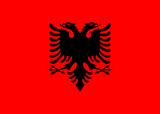
Bound by an ancient oath of honour, they treat every blade of grass as a fortress. Survival
taught them that a broken promise is worse than defeat. Yet, a restless diaspora now hungers
for more than just desperate survival. The roaring crowds demand they step out from the
shadows and risk catastrophic exposure. You will witness a suffocating wall of red and
black, absorbing relentless storms before snapping forward with ruthless fury. Watch them
turn a brutal defensive grind into a sacred, unbreakable vow.
Albania: current status and team news
Absolute Margins And
The Diaspora Siege
Three thousand away tickets in Warsaw against a quarter-million requests from the diaspora turns
a playoff semi-final into a locked vault. The Albanian FA’s recent clampdowns on ticketing have
already alienated the loudest sections of the fanbase, stripping away some of the raw, roaring
edge that usually fuels this squad. Sylvinho is navigating a very narrow mountain pass toward
the 2026 World Cup. The public is growing restless, demanding a departure from endless defensive
suffering and asking for creators to be trusted. They want history made now, not deferred to
another cycle. The structural deficit remains stark. Albania operates on absolute margin
football. They generate a terrifyingly low volume of shots, leaving them entirely reliant on
flawless defensive coordination and the fragile fitness of Armando Broja to provide a sudden,
solitary release up front. To survive this, Sylvinho relies on cold, data-led compression. The
team shifts seamlessly into a deep 5-4-1, using Berat Gjimshiti to dictate the physical
boundaries of the pitch, setting the rest-defence height and launching first-time diagonals.
Ylber Ramadani acts as the midfield anchor, dropping early to screen the centre-backs, while
Thomas Strakosha stabilises exits under extreme pressure. It is an exercise in denying space,
frustrating opponents until a dead-ball opportunity arises. The internal dispute over who
commands the creative minutes is quieted by strict, rehearsed penalty orders and set-piece
hierarchies. Should they break through to North America, expect a masterclass in organised
frustration. The tournament will witness a side that treats a clean sheet as a sacred oath,
absorbing immense pressure before snapping forward in straight, punishing lines to honour the
millions watching from afar.
The Headliner
Albania: key player and his impact on the tactical system
Geometry Of An Imperious Wall
The defensive third operates as a zone of strict geometry, leaving absolutely no room
for improvisation. At the centre of this grid stands Berat Gjimshiti, dictating the
rest-defence height with imperious, tectonic certainty. He operates directly behind the
holding midfielder’s screen, reading the opponent’s shape before stepping forward to
execute perfectly timed, front-foot duels. Once possession is regained, his distribution
is immediate — a flat, unyielding diagonal pass that launches the counter-attack while
he resets the line with a familiar, palms-down gesture. Opponents constantly attempt to
drag him into expansive, open areas. A straight ball down the inside-right channel tests
his recovery speed and forces him into uncomfortable footraces. Yet, within a compact
block, his spatial command remains absolute. He dictates the emotional temperature for a
nation that treats clean sheets as a matter of strict honour. When second-phase
set-pieces cause panic, he barks the realignment, ensuring the backline does not
collapse inward. Leading his country onto the major tournament stage in 2024, he
cemented his legacy as the foundational stone upon which modern Albanian resilience is
built.
The Wild Card
Albania: dark horse and player to watch
The Poker Face Of Progression
The most telling action happens before the ball even reaches his feet. A quick scan over
the shoulder, a subtle shift of the hips, and the picture is mapped. Kristjan Asllani
operates in a state of poker-faced calm amid the midfield noise.
For an Albanian
squad that treats defensive organisation as a sacred duty, he provides the vital
mechanism for clean exits. His game skips high-volume dribbling entirely, relying purely
on clipped strides and an economical half-turn reception. Once facing forward, he breaks
lines with firm vertical passes into the strikers or disguised switches to the far
flank, dictating the tempo from a single-pivot role.
Aggressive, man-oriented
pressing specifically targets this delicate control. An opponent assigning a combative
marker to shadow his movements aims to compress his risk appetite, forcing him into
safer, lateral circulation. Should he navigate these physical traps, the World Cup stage
will witness a deeply intelligent playmaker capable of dismantling elite mid-blocks with
a single swing of his boot.
The Proposition?
Albania : Tactical guide - how to identify their movements and game variations on the pitch
Suffocating Margins And
The Geometry Of Cold Grit
Sylvinho’s mission is clear: deploy a highly organised 4-3-3 mid-block to grind through the
Warsaw playoffs and secure Albania’s first-ever World Cup appearance. The central friction lies
in their ambition to control the game versus their deeply ingrained conservative habits,
compounded by a heavy reliance on Kristjan Asllani against elite pressing and lingering doubts
over Armando Broja’s fitness.
Out of possession, the Kuqezi settle into a highly
disciplined 4-5-1.
What to look at: In the opening 15 minutes, watch the defensive
line set just inside their own half, compressing five horizontal lines within a mere 28 yards.
Jasir Asani will hold the inside lane while Elseid Hysaj hesitates to advance. This imposes a
wide funnel, slowing the opponent's tempo to force touchline turnovers.
During build-up
and pressing phases, the structure fluidly shifts to control the centre.
What to look
at: On an opponent's back-pass, Nedim Bajrami will jump to pair with the striker,
morphing the press into a 4-4-2. In possession, Hysaj steps inside while Ylber Ramadani drops,
creating a 3v2 base to secure cleaner half-space routes and force opponents to play long into
Berat Djimsiti's aerial domain.
The system deliberately warps to maximise Asllani's
distribution range as a deep regista.
What to look at: When Asllani receives the
ball, Bajrami drags his marker higher and the weak-side full-back tucks in. This lures the
opponent's press toward the ball, opening a far-side window for Asllani to launch a sweeping
switch that isolates Asani one-on-one.
This right-sided overload-to-isolation drives
their primary progression.
What to look at: Crossing halfway, Bajrami drops on the
half-turn, Asani tucks inside, and Hysaj times a late overlap. The ultimate goal is a slip pass
for a byline cut-back, or a quick set for Asani to curl a shot toward the far
post.
Opponents actively target the joints of this precise machinery.
What to
look at: If an opponent man-marks Asllani on goal-kicks, the first pass is completely
blocked. The pivot arrives late to cover transitions, creating a 2v1 on the weak-side channel
that yields dangerous back-post headers.
When protecting a lead, Sylvinho’s side embraces
the grind.
What to look at: If the block retreats 15 yards and jump-presses vanish
after the 70th minute, Albania is in a 4-1-4-1 survival mode, trading territory for sheer box
density and clearances to touch.
Despite their attacking limitations, Albania’s tactical
discipline and the unbreakable, cold-weather grit of their defensive spine make them a
phenomenally stubborn force, capable of suffocating heavy favourites through pure collective
will.
The DNA
Albania: football's importance and what we will see in their game at the 2026 World Cup
A Binding Oath Kept
Upon Foreign Soil
The most striking feature of an Albanian international match often occurs thousands of miles
away from Tirana. In stadiums across Switzerland, Germany, or Italy, the away end swells until
it consumes the host, transforming foreign concrete into a roaring sea of red and black.
Hundreds of thousands of migrants, driven abroad by post-communist upheaval, use the national
team as a portable homeland. When a goal is scored, hands immediately cross over chests to form
the double-headed eagle. This gesture serves as a fierce, public reaffirmation of kin,
transcending the boundaries of a simple sporting celebration.
At the absolute core of
this identity sits the concept of Besa — a binding social promise, an oath of honour. In the
rugged mountain terrains where historical margins for error were non-existent, keeping a pledged
word served as the only currency that truly mattered. Today, if a bitter business dispute arises
between two families in the diaspora, they rarely rush to cold, impersonal courts. Instead, they
sit down for strong, thick coffee with a respected elder, speaking in measured tones to mediate
the conflict until a verbal agreement is struck. Once Besa is given, breaking it invites total
social ostracism.
When the national team crosses the white line, this ancient code
dictates their geometry. A winger sprinting back fifty yards to cover an overlapping full-back
is actively honouring a contract to his brothers, driven by far more than a coach’s tactical
instruction. Attempting a vain dribble that leaves the defensive shape exposed registers as a
direct betrayal of the group. Lorik Cana, the iconic former captain, codified this modern
template. He acted as the elder on the pitch, demanding sacrificial defending from every player.
This collective obedience reached its zenith during their Euro 2016 victory over Romania, a
gruelling 89-minute masterclass in protecting a narrow lead through sheer, unyielding shape and
set-piece menace.
However, the glow of the modern Air Albania Stadium has illuminated a
rising domestic tension. The public, immensely proud of their defensive grit, is beginning to
hunger for more. They watch young, technically gifted players emerging from European academies
and demand that the team stops merely surviving and begins to dictate the play. Yet, the talent
pool remains shallow. The federation knows that opening up the game against heavier nations
risks severe punishment, and in Albanian culture, public humiliation leaves a scar that takes
generations to heal.
The nation currently stands at a crossroads. They feel the
intoxicating lure of modern, expansive football, yet remain tethered by the deep, ancestral
instinct to protect the house at all costs. Ultimately, they view the pitch through a lens of
profound loyalty, knowing that standing firm and keeping a pledged word in the shadows holds
more value than chasing a fleeting, reckless glory that leaves the family exposed.