

The World Cup Qualification Decider
Thursday, 26 March

Stadion Narodowy, Warsaw
MATCH IS FINISHED. SEE REVIEW

Poland vs Albania World Cup 2026 Qualifying Match Procedural calm outlasts the late mountain surge Forecast generated:

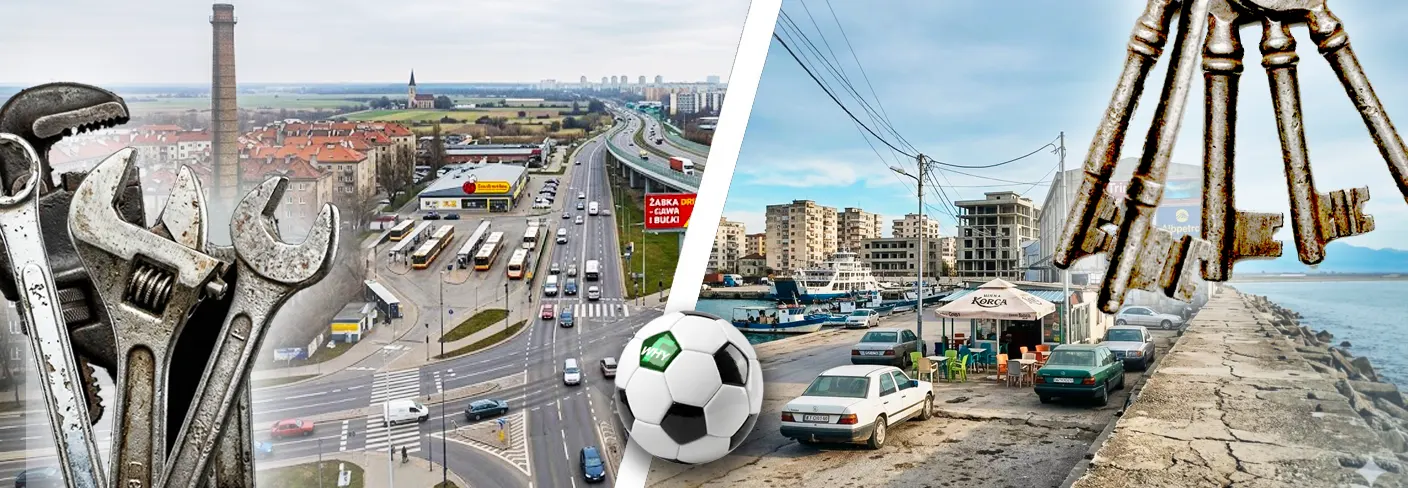
The stamped paperwork of the establishment meets the blood-pact of the mountain clan. It is a collision between institutional entitlement and defiant, barricaded pride. In a stadium suffocating under the weight of expectation, the first to blink loses everything.

Poland vs Albania Structural Collision

To take into account...

Poland drag the heavy baggage of their recent Nations League relegation onto the Warsaw pitch. Jan Urban’s squad must prove to an anxious home crowd that their fading golden generation is not merely a museum exhibit. They are currently sweating on a late fitness test for right-back Matty Cash. The team acts as a hierarchical sentinel, relying heavily on verified procedures and veteran authority to navigate crises.

Albania arrive with a quiet, burning indignation. They boast an impressive wave of autumn clean sheets, though they carry anxieties over Armando Broja’s fitness and fury over a sparse away ticket allocation. They operate as an oath-bound phalanx, where defending is treated as an act of familial dignity. It is a collision between the stamped paperwork of the establishment and a mountain clan’s unbreakable vow.
Win odds by whyFootball experts
Poland
Albania
--%
--%
This match has already taken place. Predict another match

Poland: How we will host...

Jan Urban must soothe a restless Warsaw crowd while dismantling a stubborn, deep-sitting opponent. His primary objective is to project an aura of procedural calm, ensuring his squad doesn't succumb to the stadium’s anxiety and abandon their methodical blueprint for rushed, chaotic attacks.

Strengths
Poland’s foundation is built on a deeply ingrained respect for verified routines. They lean heavily on a veteran spine — a commanding goalkeeper and a ruthless centre-forward. This preference for rehearsed, stamped-paperwork football ensures they rarely beat themselves through reckless experimentation.

Plans
To pick the lock, they will heavily skew their build-up to the left, dragging the defensive block out of alignment. Rehearsed underlapping runs on the opposite side will then exploit the gaps, while set-pieces remain a rigorously drilled lifeline.

Fears
There is a lingering dread of central suffocation. If their main creative hub is man-marked out of the game, their methodical nature quickly curdles into sterile, risk-averse passing around the perimeter, leaving their talisman utterly stranded.

Albania: With what we arrive...

Sylvinho must marshal a defiant travelling contingent while orchestrating a defensive masterclass against a hostile crowd. His overarching task is to channel the squad’s underdog grit into a disciplined, unyielding shape, ensuring their emotional fire does not spill over into reckless indiscipline.

Strengths
Albania are anchored by a profound collective loyalty, where a clean sheet is treated as a binding social contract. They excel in a compact mid-to-low block, closing ranks rapidly and relying on their captain’s commanding presence to snuff out danger. This stoic resilience allows them to absorb pressure and wait for the perfect moment to strike.

Plans
They will construct a narrow funnel, tucking the far-side full-back inside to form a situational back three. The strategy is to smother the opponent's creative hubs and spring devastating, straight-line counter-attacks down the channels the moment possession is turned over.

Fears
There is a deep-seated anxiety regarding forward isolation. If the midfield metronome is bypassed or heavily marked, the lone striker becomes entirely detached from the game, reducing their attacking threat to hopeful, sterile long balls.

Secret mastermind intent:

Jan Urban’s industrial audit of the Albanian barricade

First half
0'- 25'
Poland will initiate an asymmetric overload, leaning heavily on the left flank to force Albania’s narrow front three out of shape. Jakub Kiwior is tasked with stepping out of defence to punch diagonal passes towards Nicola Zalewski, who will hug the touchline. This is the tactical equivalent of rattling the front gate to see who flinches. Meanwhile, a rehearsed near-post flick routine is primed for an early corner to catch the visitors cold.
25'- 45'
The tempo drops into a more conservative rhythm to manage physical exertion before the interval. Jakub Moder will act as the recycling hub, circulating the ball to shift the defensive block laterally and bank set-piece opportunities. It is a slow, methodical tightening of the vice. If starting right-back Matty Cash feels any muscle tightness, a pre-planned substitution around the 35-minute mark will deploy a safer defensive profile to lock the flank.
Second half
45'- 65'
Urban plans to reignite the left channel immediately, increasing penalty box occupation with secondary midfield runners. Around the hour mark, expect a sudden injection of verticality with fresh wide legs introduced to stretch tiring full-backs. The shop floor suddenly gets a lot louder. A highly specific pattern is scripted here: a right-sided overlap acts as a mere decoy, allowing an underlapping midfielder to cut the ball square to the edge of the six-yard box.
65'- 90'
The final stretch is entirely dictated by the scoreboard. If defending a lead, Poland will drop the shutters, shifting into a dense back five to deny central space and kill the game’s momentum with tactical fouls. If chasing, they will throw the kitchen sink at it. The shape morphs into a top-heavy 3-2-5, pairing a second traditional striker with Lewandowski to bombard the box with early, flat deliveries from both touchlines.
If it is needed...
Should the match drag into extra time, energy management becomes paramount. If ahead, the team sits in a rigid defensive shape, leaving just one winger high to keep the opposition honest. If trailing, they will bypass the midfield entirely. It becomes a matter of raw, desperate geometry: lofted early crosses, long throws, and a central defender remaining high to contest second balls.
/ What if the left flank is caught entirely out of position?

If the left-sided centre-back steps up and loses possession while the wing-back is high, a perilous gap opens up. The holding midfielder must immediately drop into the vacated space to block the inside cut. If the initial counter-press is broken, the instruction is to commit a cynical foul near the halfway line to kill the transition dead.

/ What if the primary playmaker is completely suffocated?

When the opposition's holding midfielder successfully screens the central creator, Poland’s possession can quickly devolve into sterile, wide passing. To fix this, the secondary attacking midfielder shifts centrally to provide an alternative bounce pass option. The stifled playmaker must drift wider to drag his marker away and declutter the central lanes.

Centre-Forward

Robert Lewandowski

Make the double-action run every single time. Dart towards the near post to pin the centre-back, then abruptly fade back to the penalty spot.

If you find yourself double-teamed and isolated, drop slightly deeper to bounce the ball first-time and create traffic for the midfield runners.

Attacking Midfielder

Piotr Zieliński

Receive the ball on the half-turn and hold it for a deliberate split-second. Freeze their holding midfielder before slipping the pass to the underlapping runner.

If they stick a man on you constantly, drift wide to empty the central pocket. Do not force the turn if you are pressed blindly from behind.

Left Wing-Back

Nicola Zalewski

Hold maximum width on the touchline, beat your man to the byline, and drill low cut-backs into the penalty box.

If they double up on you, do not run down a blind alley. Recycle the ball backwards once, then immediately swing an early cross towards the penalty spot.

Centre-Back

Jakub Kiwior

Step aggressively into the midfield line to draw their press, then punch a firm diagonal pass out to the left winger.

If we lose the ball and you are exposed, do not dive in. Delay the attacker, show him down the outside, and wait for the midfield screen to recover.

Secret mastermind intent:

Sylvinho’s stoic barricade against the Warsaw siege

First half
0'- 25'
Albania will deploy a suffocating, narrow formation designed to force the hosts out wide and deny any joy in the penalty area. Elseid Hysaj will tuck inside early to construct a temporary back three, slamming the door shut on underlapping runs. It is a meticulous exercise in territorial denial. Should the pitch conditions prove slick, they are primed to test the goalkeeper’s handling with early, skidding crosses rather than floated deliveries.
25'- 45'
The visitors will look to disrupt the opponent’s rhythm by aggressively targeting the handover between the holding midfielder and the advanced playmakers. The defensive shape will subtly slide into a rigid 4-5-1 out of possession, demanding immense patience. If the opposing centre-back steps out prematurely following a set-piece, a swift diagonal clip into the left half-space is the designated trigger for a counter-surge.
Second half
45'- 65'
Expect a sudden, calculated eruption of intensity shortly after the restart. Sylvinho has earmarked a five-minute window for a high-pressing barrage aimed squarely at the opponent's right flank. The shutters will briefly lift. If the scoreline remains level, a second attacking runner will be introduced to occupy the central defenders, whilst strictly maintaining a secure numerical advantage at the back.
65'- 90'
The closing stages will be governed entirely by the match state, shifting rapidly from siege mentality to desperate ambition. If defending a lead, the entire unit drops deeper into a 5-4-1, clearing the ball into the channels and suffocating the tempo through tactical fouls. If chasing the game, it becomes a chaotic 4-2-4, swarming the penalty box for second balls and launching early deliveries from every angle.
If it is needed...
Should the battle extend into an additional thirty minutes, survival instincts take over. A leading side will freeze the rhythm entirely, employing a triple screen on the main striker during corners and utilising the corner flags to bleed the clock. A trailing team will bypass the midfield structure, relying on fresh legs out wide and a towering aerial presence thrown forward to salvage the tie.
/ What if the primary ball-winner is booked early?

An early caution drastically reduces the holding midfielder's ability to step out aggressively, granting the opposition's playmaker precious time on the ball. To mitigate this, the right-sided central midfielder must drop slightly deeper to provide cover. The winger on that side is also instructed to press intensely from the blindside.

/ What if the midfield conductor is completely man-marked?

If the primary deep-lying playmaker is denied forward passing lanes, the team’s build-up becomes painfully predictable and long. The immediate fix is to circulate the ball with shorter, two-touch exits. The attacking midfielder must then operate exclusively between the lines for third-man runs, completely avoiding ball-side receptions.

/ What if the far post is left exposed during an overlap?

When the right-back tucks inside to form a back three, the opposite flank becomes highly vulnerable to deep, looping crosses if the winger fails to track back. The strict mitigation protocol requires the weak-side full-back to position themselves at least one step inside the far post to contest the aerial duel.

Centre-Back

Berat Gjimshiti

Front the striker on any bounce passes and win the first contact decisively. Immediately compress the defensive depth by stepping up five to eight metres.

Command the defensive line during set-pieces. If the midfield screen is pierced, do not overcommit to the first challenge and leave the space behind you vacant.

Defensive Midfielder

Ylber Ramadani

Maintain a forty-five-degree stance to receive the ball and play forward on the second touch. Screen the striker’s body-line and deny any straight passes into the central pocket.

Step across the attacker's first touch rather than diving into the tackle. If you pick up a yellow card, concede territory rather than risking a second booking.

Right Winger

Jasir Asani

Attack the early shooting window only if the rest-defence is securely set behind you. Otherwise, slip the ball to the underlapping runner.

Track the weak-side runner all the way to the far post when defending crosses. If forced onto your right foot, recycle possession rather than forcing a poor delivery.

Central Midfielder

Kristjan Asllani

Execute two-touch vertical passes into the forwards and occasionally switch the play to the far side. Avoid carrying the ball laterally for more than two touches.

If the opposition presses aggressively, use your body feints to open up the switch of play. Control the tempo with short passes when we need to catch our breath.

But it could have been different...

A Cold War of Gestures

Football at this level is rarely just about kicking a spherical piece of leather; it is a high-stakes parlour game of psychological espionage. If both sides fully embraced the dark arts of mental warfare, this fixture could transcend a mere tactical slog and become a masterpiece of theatrical pantomime. The hosts, rather than simply executing their stamped-paperwork routines, could weaponise their procedural calm. Imagine Łukasz Skorupski claiming a routine cross and holding it on the turf for an agonising, contemptuous extra three seconds, or Robert Lewandowski offering a patronisingly polite nod to a defender after a fierce grapple. It is the footballing equivalent of yawning during a hostile interrogation.

The visitors, conversely, could elevate their stoic barricade into an active, mocking defiance. Instead of merely surviving the siege, the oath-bound phalanx could collectively applaud every harmless, overhit cross that sails into the stands. Berat Gjimshiti might orchestrate his defensive line not with frantic shouts, but with the chillingly serene hand gestures of a seasoned traffic warden. This is how you shatter an opponent's fragile ego without ever laying a boot on them.

This kind of weaponised serenity fundamentally alters the spectator experience. The stadium stops watching the ball and starts watching the faces. A single, perfectly timed smirk becomes as devastating as a thirty-yard screamer. If they leaned into this quiet, sardonic chess match, the probability of closing out the game with absolute, bloodless control rises by a good eight to ten percent. It turns a gritty, attritional qualifier into a sophisticated thriller, proving that sometimes the most brutal blows in football are delivered entirely in silence.