

The World Cup Qualification Decider


SoFi Stadium, Los Angeles
SCORE BY AI PREDICTION: 2:0 SEE SIMULATION

IR Iran vs New Zealand FIFA World Cup 2026 Group Stage Match A brutal negotiation over dead balls and bruised ribs Forecast generated:

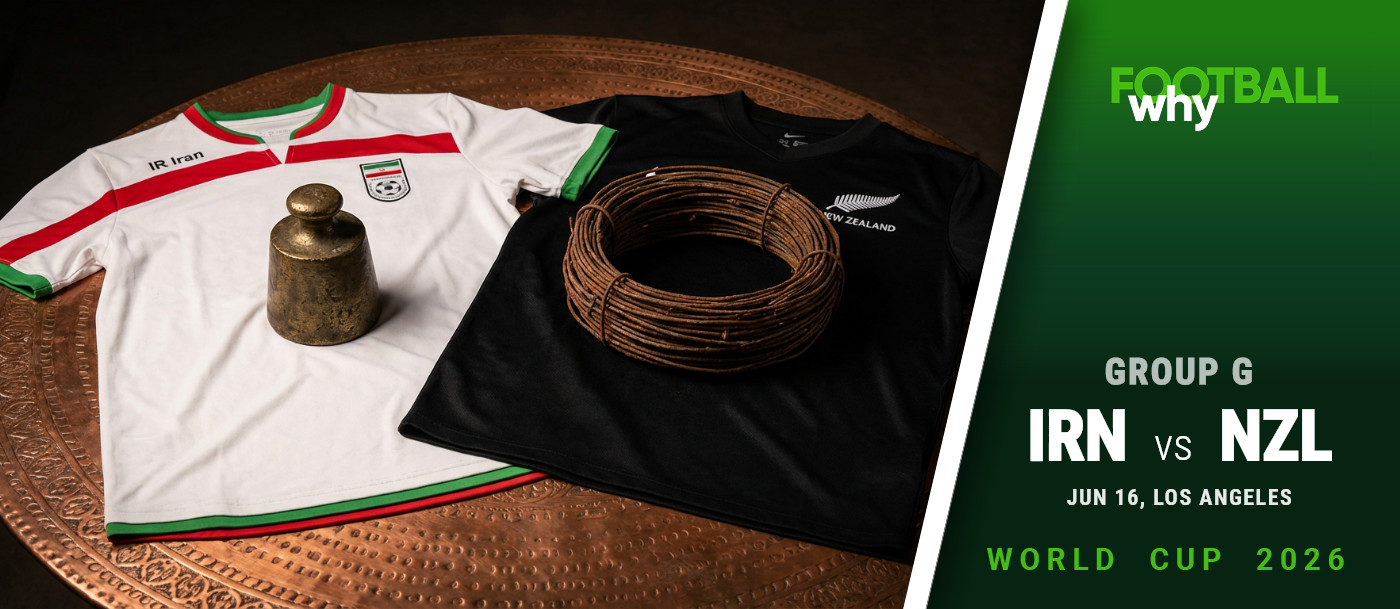
The patient, calculated haggling of the bazaar meets the stubborn, makeshift grit of the island diaspora. This is a collision of pure survival instincts, where elegant technique is entirely sacrificed for bruised ribs, defensive honour, and the sheer refusal to yield.

IR Iran: One side's prayer...

Iran enter this group stage opener under suffocating public expectation, where anything less than a controlled victory will be deemed a failure. The squad is operating with a siege mentality, welding the blast doors shut against external noise. This internal friction is compounded by the high-profile absence of Sardar Azmoun, excluded amid political controversies regarding perceived disloyalty, and past camp absences from Mehdi Torabi. Consequently, Amir Ghalenoei’s men are highly motivated to project stability, leaning heavily on their veteran core to deliver a drama-free result.

New Zealand: ...head-on with the other.

New Zealand arrive determined to shed their reputation as mere regional flat-track bullies who falter on the global stage. Avoiding defeat is their primary objective, and the squad is busy digging a trench to survive the anticipated physical slog. Their preparations are slightly compromised by fitness concerns surrounding key personnel; talismanic striker Chris Wood is having his minutes carefully managed following December knee surgery, while captain Michael Boxall is returning from an adductor issue. Despite this, the mood remains quietly defiant, rooted in their traditional underdog pragmatism.
IR Iran vs New Zealand Structural Collision

IR Iran: How we will host...

Dream
Three points are the absolute baseline; anything less will be treated as a failure back home. The squad is operating under a self-imposed siege mentality, fully aware that a draw against group outsiders will invite ferocious public scrutiny.

Strength
Their truest asset is a rugged veteran spine built on calculated patience. They do not rush the transaction. Instead, they absorb pressure, negotiate the game's tempo, and rely on devastating set-piece execution to settle tight contests.

Plans
Amir Ghalenoei intends to keep the match securely locked in a mid-block, starving the opposition of central space. The primary attacking route involves funnelling the ball down the right channel to supply low cut-backs for Mehdi Taremi in the penalty area.

Fears
The lingering dread is their infamous late-game retreat. When anxiety spikes, this team has a terrible habit of sinking too deep and conceding cheap fouls, inviting an aerial bombardment that their aging legs struggle to repel.

New Zealand: With what we arrive...

Dream
Avoiding defeat in the opening fixture is the ultimate prize. A gritty draw perfectly suits their modest, hard-working ethos, though snatching a win would be a monumental triumph. They want to quietly execute their set-piece routines without drawing unnecessary attention to themselves.

Strength
Their core identity is built on honest, bruising resilience and undeniable aerial dominance. They embody a stoic, rugby-like grit that values collective sacrifice over aesthetic flair. When the match becomes a physical slog, their traditional target man provides a reliable out-ball to relieve pressure.

Plans
Darren Bazeley will set his side up in a stubborn, unyielding formation to deny central space. The primary attacking trigger is to force turnovers and immediately release their left-back into the vacant areas behind the opposition's defence, finishing moves with low, driven crosses.

Fears
A chronic lack of central creativity haunts this squad. If the game demands intricate passing through the middle, they often look bereft of ideas. Under sustained pressure, they have a terrifying habit of retreating too deeply, leaving their lone striker entirely marooned.
52%
27%
21%
Not a recommendation for betting
Tap [+] to cast your expert forecast. Can you outperform both the AI and the crowd?

How it will be...

If you tune in, expect a match that looks less like a sweeping footballing spectacle and more like two men stubbornly trying to unclog a rusted drain. It should be a grinding, attritional affair. Iran will likely absorb pressure with their deep, veteran spine, waiting patiently for the opposition to overcommit. New Zealand will respond with honest, bruising graft and relentless aerial bombardments.

The contest might hinge entirely on the dark arts of penalty-box grappling. You should watch for Mehdi Taremi drifting into the inside-left channel, expertly feeling for contact to buy cheap fouls. On the other side, Chris Wood will be launching his battered frame at every cross, testing the structural integrity of the Iranian centre-backs.

A sudden collapse remains the wildcard in this gritty script. Should Iran abandon their strict two-pass exit strategy, they might sink into a panicked, frantic retreat. Yet, if they hold their nerve, their superior set-piece craft should eventually puncture the Kiwi hull. It promises to be an ugly, fascinating study in pure survival.

Secret mastermind intent

Ghalenoei’s calculated bazaar bargaining behind rigid fortress walls

General Strategy
Amir Ghalenoei is treating this fixture with the caution of a man fixing a pressurised pipe. The team will sit in a disciplined mid-block, setting their line of confrontation near the halfway mark to deny early forward passes.

Once possession is secured, the focus shifts heavily to the right corridor. The plan is to manufacture rapid box occupation through low cut-backs, deliberately avoiding any chaotic end-to-end exchanges.
Antidote for the Opponent
The defensive blueprint is heavily tailored to neutralise Chris Wood. Morteza Pouraliganji has been instructed to stay aggressively on the striker's front shoulder, using a holding midfielder to sweep up the second contacts.

There is also a strict ban on conceding soft fouls within thirty yards of goal. Giving New Zealand free deliveries into the box is viewed as a needless invitation to disaster.
Internal Task Solving
A fascinating tactical quirk is the strict directive on referee management and emotional control. Only the captain is permitted to speak to the officials, a deliberate move to prevent the squad from unravelling into frantic, counter-productive dissent.

Time control is equally regimented. Throw-ins will be used defensively to kill the clock, with the goalkeeper instructed to hold the ball for an extra few seconds to stifle any opposing momentum.
Crisis Response Plans
Ghalenoei is prepared to alter the defensive geometry if New Zealand's left flank becomes too dominant. Should Liberato Cacace manage to pin the Iranian right-back and whip in repeated crosses, the defensive line will immediately drop five yards deeper.

In this scenario, the right-winger will track all the way back, and the central pivot will tilt over to plug the leaking underlap lane. The manager is perfectly willing to bend the shape to protect the penalty area.
Specific Match Orders
Alireza Beiranvand: Keep the distribution low and wide to bypass their pressing triggers. Hold the ball for a good six to eight seconds after a save to kill the tempo. Absolutely no long throws if their big striker is lingering or if our defensive shape is broken. Mehdi Taremi: Own the inside-left channel and wait for the cut-backs. Attack the low diagonal passes on the ground; do not get dragged into pointless aerial wrestling matches with their centre-halves. If you take a hit, suppress the protests and immediately reset for the next phase. Morteza Pouraliganji: Stay tight on the front shoulder for every defensive set-piece. Give the striker an early nudge to push him outside the scoring zone before the ball is kicked. Absolutely no extended grappling inside the penalty area.
/ What if... the team concedes early or faces a relentless set-piece barrage?

Trigger a five-minute cooling-off period. Lock the full-backs in their own half, re-establish the rigid midfield distances, and force two calming passes through the defensive midfielder before attempting any forward ball. Walk to every restart and manually reset the defensive line height to push the opposition back.

/ What if... the team falls into a deep defensive retreat in the final fifteen minutes?

Enforce a mandatory two-pass exit strategy to break the cycle of blind clearances. Introduce fresh legs in the wide areas to defend against late throw-ins and maintain a genuine counter-attacking threat. The goal is to keep the opposition honest and prevent them from throwing every outfield player forward.

Secret mastermind intent

Darren Bazeley’s honest No.8 wire pragmatism

General Strategy
Bazeley approaches this tie with the unglamorous utility of a kitchen-sink wrench. The side will line up in a compact 4-4-2 mid-block, focusing heavily on denying space rather than dominating possession.

When the ball is won, the immediate trigger is to exploit the left channel. They want to bypass sterile midfield passing and feed early, flat deliveries into the box to find their target man.
Antidote for the Opponent
Managing the opposition's star forward is the central defensive puzzle. The holding midfielders are tasked with aggressively screening his initial touch, forcing him to play backwards rather than turning towards goal.

Offensively, they have prepared short-corner routines to drag the Iranian defence out of their comfortable near-post zones. This aims to create shooting opportunities from the edge of the penalty area where rebounds often fall.
Internal Task Solving
The side employs a very deliberate strategy to neutralise the opposition goalkeeper's quick distribution. The moment an attack breaks down, two forwards immediately block the throwing lanes, forcing a slower, rolled clearance.

Furthermore, they will rotate their throw-in takers to disrupt the match rhythm. This simple trick prevents the opponents from setting up coordinated pressing traps and manages the physical toll on the players.
Crisis Response Plans
If the Iranian right-back successfully pins down their left flank, the Kiwis will pragmatically shift their build-up. The right-back will tuck in to maintain defensive solidity, while the left-winger drops deeper to help out.

They will then attempt to switch the play quickly to the right, aiming to stretch the opposition block. Once the defence shifts, they will fire diagonal balls back into the vacated spaces for late runners.
Specific Match Orders
Joe Bell: Maintain absolute discipline in the central zones and concede zero fouls within thirty yards. Screen the opposition playmaker's first touch aggressively. Force him to receive with his back to goal and play backwards before any physical contact is made. Liberato Cacace: Exploit the space behind their advancing right-back the second possession is regained. If the direct route is congested, recycle the ball through the midfield and arrive late. Ensure all final deliveries are driven low across the six-yard box. Michael Boxall: Take complete command of the defensive line during all set-pieces and assign the marking duties. Dictate the near-post zone when defending corners. Demand an immediate step up from the back four to reset the offside trap after the first clearance.
/ What if... the team falls behind or suffers a harsh VAR decision?

Initiate a strict three-minute composure phase to prevent emotional unravelling. The team must complete at least two safe passes through the midfield pivot before attempting any vertical entries. The goal is to clear the defensive lines towards the right flank, tilting the pitch away from danger and restoring collective calm.

/ What if... the opposition playmaker starts winning cheap fouls around the penalty area?

Instruct the midfield pivot to permanently body-screen the receiving lanes. The centre-backs must delay their challenges and absolutely refuse to dive in. The team will accept conceding tactical fouls in the wide areas, provided they occur well beyond the thirty-yard mark.

MAIN SIMULATION 0'-25'

The opening exchanges resemble a clogged U-bend. Iran establish a compact shape around the halfway line, deliberately pushing play down their right flank to eventually feed low balls to Taremi. New Zealand respond by sitting in a rigid block, using Joe Bell to screen Taremi’s touches. The result is a sterile stalemate where neither side manages to register a clean shot on target.

MAIN SIMULATION 25'-45'

The half concludes with a piece of ruthless stage management. Iran ramp up their attacks down the right channel but keep their deliveries flat. New Zealand hold firm until Taremi buys two cheap fouls on the left edge. A rehearsed outswinging corner finds Morteza Pouraliganji, who glances it home. Iran immediately kill the tempo, taking an eternity over every dead ball to protect their lead.

MAIN SIMULATION 45'-65'

New Zealand approach the restart like a gardener attacking stubborn weeds. They force Cacace higher up the left flank and look for Chris Wood much earlier. Iran simply dig in, dropping their right-back and assigning a permanent marker to contest Wood's knock-downs. This deep defensive posture invites pressure but creates vast space for Taremi, who nearly scores from a rapid counter-attack.

MAIN SIMULATION 65'-90'

The final stages severely test the hull integrity of both sides. New Zealand throw on a second striker and launch a desperate barrage of crosses into the box. Iran absorb the impact by sinking into a back five, diligently playing two passes before clearing. As the Kiwis overcommit, a swift Iranian counter down the right exposes the hollowed-out defence. Taremi finishes at the near post, effectively ending the contest.

And it will come to...

Should this exact scenario unfold, we would witness a triumph of cynical efficiency over honest graft. If New Zealand were to commit to a purely physical, aerial bombardment, they would likely find themselves undone by Iran’s superior set-piece craft and disciplined transitions. The Asian side would outlast the bruising encounters, waiting patiently for the tactical hinges to break. Ultimately, a team that manages the dirty work of dead balls and counter-attacks would comfortably dispatch a brave but limited opponent.
end of Game