

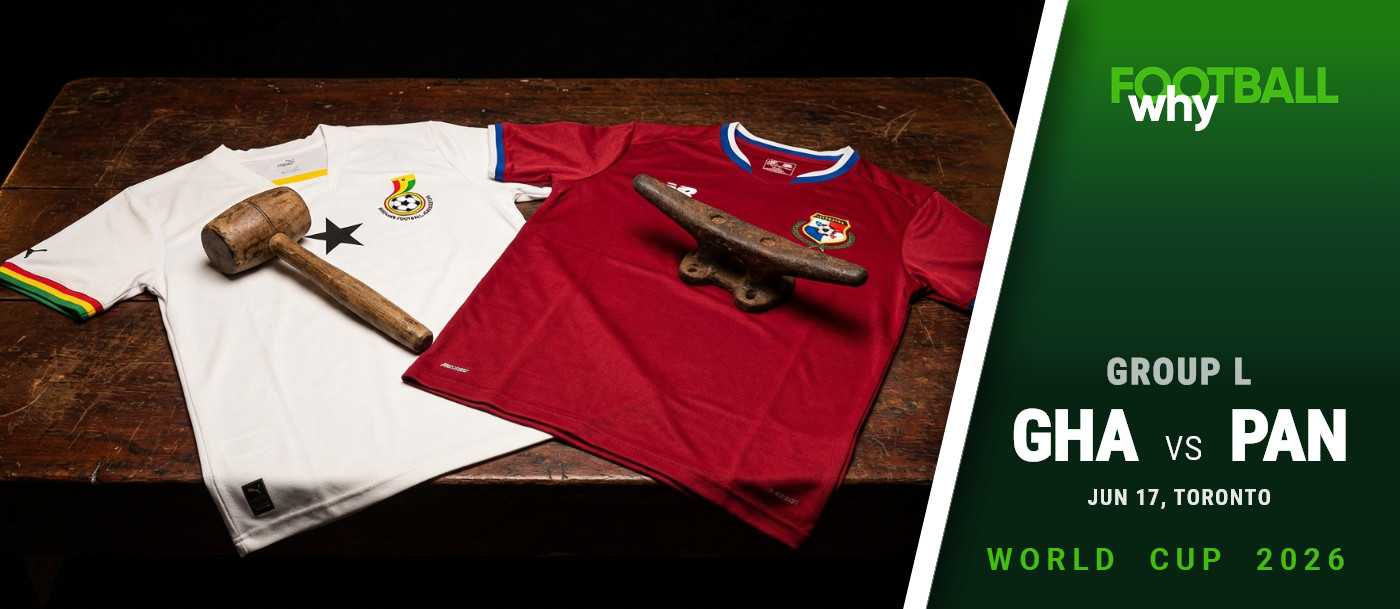
The World Cup Qualification Decider


BMO Field, Toronto
SCORE BY AI PREDICTION: 2:1 SEE SIMULATION

Ghana vs Panama FIFA World Cup 2026 Group Stage Match Dismantling the Transit Tollbooth on the Right Flank Forecast generated:

Ancestral proverb collides with maritime bureaucracy. A defiant communal brotherhood, desperate for redemption, crashes against the stoic tollgates of a tropical transit hub. The heavy sludge of the pitch will ultimately decide who survives this unyielding logistical dispute.

Ghana: One side's prayer...

Ghana arrive burdened by a desperate need for public credibility following their recent qualification stumbles. Sitting in a brutal Group L alongside England and Croatia, this opening fixture is strictly non-negotiable. The squad must operate as a unified steamroller, though preparations have been heavily disrupted: talisman Mohammed Kudus is sidelined with a severe thigh injury, while Thomas Partey’s ongoing legal proceedings in London continue to generate a relentless, distracting media circus. The domestic and political pressure is absolute, demanding a clean sheet and three points without any structural collapse.

Panama: ...head-on with the other.

Panama approach this fixture with a stoic, pragmatic realism, fully aware that Group L is a punishing environment. Their primary objective is to erect a scaffolding of polite obstruction, aiming to extract a narrow victory or a point to keep their progression hopes alive. Manager Thomas Christiansen is carefully managing physical frailties, specifically Fidel Escobar’s lingering lumbar disc issue and Michael Amir Murillo’s recent head knock. While there is minor peripheral noise regarding ticketing controversies and presidential attendance, the squad remains insulated, focused entirely on executing their disciplined right-corridor transitions.
Ghana vs Panama Structural Collision

Ghana: How we will host...

Dream
The primary mandate is to secure three points and a clean sheet, silencing the domestic noise. Following recent qualification stumbles, the demand from both the public and the state is credibility. A win here settles the nerves before facing the group's heavyweights.

Strength
Ghana’s core power lies in their defiant, hard-running collective and explosive transitions. They thrive on physical duels and sudden, joyful bursts of pace. When the team functions as a unified community, they can absorb pressure and release devastating vertical counter-attacks through players like Iñaki Williams and Antoine Semenyo.

Plans
Otto Addo has engineered a pragmatic approach to suffocate Panama’s right flank. The plan involves dropping the left-back deeper to deny overlapping runs, while setting a midfield trap to isolate the opponent's wingers. In attack, the focus is on early, angled passes behind the Panamanian defence to exploit their turning speed.

Fears
The greatest anxiety is the threat of 'basabasa' — a descent into chaotic, structureless play when under stress. If the team loses its communal discipline, the defensive spacing elongates, full-backs get stranded, and the urge to play the hero overrides collective patience, leaving them desperately vulnerable to counter-attacks.

Panama: With what we arrive...

Dream
The primary objective is to steal a pragmatic 1-0 victory or, at the very least, secure a point. Panama acknowledge the brutal difficulty of this group, meaning survival hinges on extracting a result from this specific fixture. They are not looking to entertain; they are here to file the necessary paperwork and move on.

Strength
Their greatest asset is a stubborn, industrious veteran spine that thrives on collective suffering. They operate with a deep-seated resilience, absorbing pressure before launching highly choreographed, pacey transitions down the right flank. It is a working-class footballing identity built on exploiting set-pieces and punishing momentary lapses.

Plans
Thomas Christiansen has drawn up a blueprint of polite obstruction. The team will deploy a compact mid-low block, setting deliberate two-versus-one traps out wide to neutralise Ghana’s explosive wingers. When possession is won, the immediate trigger is to release early cut-backs through the right corridor.

Fears
The overarching vulnerability is an emotional fragility when refereeing decisions feel unjust. Under severe stress, their shape tends to collapse into their own penalty area, leading to panicked clearances. If their primary playmaker is stifled, their attacking outlets vanish completely.
45%
32%
23%
Not a recommendation for betting
Tap [+] to cast your expert forecast. Can you outperform both the AI and the crowd?

How it will be...

The contest would likely unfold as an exercise in structural obstinacy. Panama will construct a regulatory tollbooth down their right channel, daring Ghana to navigate the bureaucratic congestion. This forces the play into a holding pattern, where prolonged spells of administrative stagnation suddenly yield to violent, physical ruptures.

Ghana’s communal defiance should manifest in their sheer muscular endurance. You might watch Antoine Semenyo isolating his marker on the flank; his diagonal surges are less about tactical finesse and more a physiological tearing of the opponent’s fabric. Conversely, Adalberto Carrasquilla will operate like a seasoned customs officer, scanning the horizon to dispatch disguised passes that bypass the African transit lines.

The structural integrity could fracture if a midfield substitution triggers a transient communication blackout. That specific void is exactly where Panamanian stoicism morphs into feral opportunism. Yet, collective panic rarely infects this Ghanaian side; their codified huddles serve as a communal reset switch. Should the final whistle approach amidst heavy sludge, the sheer ancestral imperative to scavenge a loose ball in the penalty area will likely dictate the verdict.

Secret mastermind intent

Otto Addo's communal blueprint for grinding stability

General Strategy
The overarching strategy is built on caution and defensive solidity. Otto Addo wants his team to establish a compact medium block, sitting about forty metres from their own goal. The priority is keeping a clean sheet, as any dropped points here make the path through England and Croatia incredibly steep.

In possession, the focus shifts to direct, vertical transitions. There will be no lingering on the ball or elaborate passing networks in the middle third. They aim to win the physical duels and immediately hit the channels, acting as a heavy steamroller flattening the pitch for quick counter-attacks.
Antidote for the Opponent
The defensive preparation is heavily skewed towards shutting down Panama’s right-sided attacks. The left-back has been instructed to hold a deeper starting position, specifically to deny overlapping runs from Murillo. Additionally, the midfield will compress to double-team Ismael Díaz and force Panama into predictable, floated crosses.

Offensively, Ghana will target the space behind Panama’s left centre-back. The plan is to use quick, diagonal balls to exploit the blind-side runs of Iñaki Williams. They want to isolate the Panamanian defenders in one-on-one sprints, particularly if Fidel Escobar is managing a recent injury.
Internal Task Solving
A unique aspect of the plan is the designated 'shock recovery protocol'. If the match descends into chaotic, unstructured play, the on-field leadership triad will take charge. They are instructed to freeze the full-backs, halve the distances between players, and force the ball into the channels to reset the team's rhythm.

The goalkeeper also has a specific wildcard role. He has been given the green light to use wind-aided, clipped passes straight to the right winger, bypassing the midfield entirely when the opportunity arises.
Crisis Response Plans
If Panama successfully breach the right flank multiple times early on, Addo has a clear contingency. The team will immediately drop into a flat 5-4-1 formation. The winger will pull back into the defensive line to create a back five, effectively putting up the temporary diversion signs and killing the game's tempo.

Beyond this specific trigger, the manager is prepared to adjust the midfield engine. Should the central pivot struggle with the pace or pick up an early booking, the system will shift to a 4-4-2, introducing a fresh defensive midfielder to anchor the centre.
Specific Match Orders
Thomas Partey: Anchor the midfield as a single pivot but empty the tank by the hour mark. Shadow Carrasquilla constantly. Do not attempt to dribble in the central zones; if they break quickly, take the tactical foul immediately to let us reset. Iñaki Williams: Live on the blind-side of their left centre-back. Stay right on the shoulder of the last defender to stretch their shape. Do not drop deep into the middle to receive with your back to goal; look to spin and run into the space behind. Gideon Mensah: Start your positioning two metres deeper than usual. Your absolute priority is to block Murillo's overlapping runs. Do not push forward before the thirty-minute mark; keep your body shape angled to force them outside.
/ What if Panama repeatedly break through the right flank?

If Murillo manages to get behind the defensive line twice within a short window, the team will immediately shift into a 5-4-1 shape. The left winger drops back to form a five-man defence, and the team will focus on killing the tempo with slow restarts to regain control.

/ What if Thomas Partey picks up an early yellow card?

Should the central anchor get booked early or struggle with fitness, the manager will switch to a 4-4-2. A fresh defensive midfielder will be brought on to form a double pivot, the defensive line will drop five metres, and central dribbling will be strictly prohibited.

Secret mastermind intent

Thomas Christiansen’s logistical manual for right-corridor extraction

General Strategy
The tactical framework relies heavily upon polite obstruction and risk aversion. Christiansen intends to establish a mid-low block roughly 35 metres from goal, challenging the opposition to break them down through congested areas.

They will not chase possession or press high up the pitch. Instead, the focus is entirely on maintaining a rigid defensive shape and capitalising on dead-ball situations. It is a grinding, attritional policy designed to frustrate the opponent before striking on the break.
Antidote for the Opponent
Defensive preparations centre on neutralising the opposition's pace in the wide areas. The left-sided centre-back will operate a half-step deeper than the rest of the defensive line specifically to track blind-side runs.

Out wide, the wing-backs are instructed to form immediate double-teams against the opposing wingers. Offensively, they will target the space behind the opposing left-back during transitions, aiming to exploit the gaps left by overlapping runs with rapid, flat crosses.
Internal Task Solving
Christiansen has embedded highly specific routines to manage the emotional and physical flow of the game. The captain is tasked with engaging the referee early regarding contact thresholds to help dictate the physical tempo.

Furthermore, rehearsed set-piece calls are treated as primary attacking weapons rather than mere afterthoughts. Specific routines, such as the near-post flick or the back-post screen, have been rigorously drilled to exploit secondary phases of play.
Crisis Response Plans
Should the opposition successfully man-mark the primary playmaker out of the game, a structural rotation is pre-planned. The creative hub will shift to the left half-space, allowing the holding midfielder to take over central distribution.

If the team falls behind, the system instantly morphs into a 4-2-3-1 formation. The full-backs will be unleashed from their defensive duties, and the side will force rapid, direct entries into the box to immediately alter the momentum of the tie.
Specific Match Orders
Adalberto Carrasquilla: Begin in the right half-space but rotate to the left every eight minutes if heavily man-marked. Avoid dribbling through the centre in the final stages unless the defensive pivot is firmly set behind you. Michael Amir Murillo: Cap your attacking height strictly for the opening fifteen minutes. Only commit to the overlap when the playmaker opens his body to receive; deliver early cut-backs and ensure full recovery runs are made. Fidel Escobar: Manage your energy for a strict seventy-five-minute shift. Do not get dragged out wide to chase their fast forwards; if booked early, immediately hand over near-post marking duties on corners.
/ What if Ghana score the opening goal?

The team will immediately abandon the low block and shift into an aggressive 4-2-3-1 shape. The full-backs will be pushed high, and the players are instructed to force two or three quick, direct entries into the penalty area to quieten the crowd and force a psychological reset.

/ What if stadium pressure causes defensive chaos?

If the team loses its structure under sustained pressure, the wing-backs are ordered to freeze their positioning for three minutes. The team must string together a calm ten-pass sequence to kill the tempo, before executing a rehearsed cut-back pattern down the right flank to regain territorial authority.

MAIN SIMULATION 0'-25'

The match begins with both sides laying down their markers in a cagey, tactical wrestle for the right flank. Ghana sit in a disciplined medium block, looking to spring quick, angled passes out to Semenyo. Panama respond by crowding that side, throwing two men at the winger to smother the supply. With Panama’s full-back Murillo kept on a tight leash and Ghana’s full-back Mensah sitting deep, the centre of the pitch remains largely untouched. Neither team wants to blink first.

MAIN SIMULATION 25'-45'

The stalemate breaks as Ghana find a way past the barricades. They speed up their diagonal passes, bypassing the double-team by targeting the blind-side of Panama’s left centre-back. Around the 38th minute, Semenyo slips a perfectly timed ball for Williams to finish. This sudden shock forces Panama to loosen the reins on Murillo, allowing him to push higher, while Carrasquilla drifts left to escape the midfield traffic. Despite this, Ghana’s defence refuses to be pulled out of position, keeping the middle secure.

MAIN SIMULATION 45'-65'

Panama tilt the pitch heavily towards their right, finding their rhythm as Murillo overlaps. The turning point arrives around the hour mark when Ghana sub off Partey. This substitution creates a brief moment of 'metabolic noise' — a lapse in communication. Panama strike immediately: Murillo breaks the line, Díaz fires a cut-back, and Fajardo levels the score. Shaken, Ghana immediately drop into a back five, slowing the game down with tactical fouls to stop the bleeding and regain their breath.

MAIN SIMULATION 65'-90'

The final stretch is a clash of desperate intentions. Ghana throw on Jordan Ayew, adding crucial physical presence in the penalty area. Panama respond by digging a trench, shifting to a back five to absorb the pressure. The deadlock is broken near the 84th minute from a set-piece. A flick-on at the near post creates chaos, and Ayew reacts fastest to score the winner. Having regained the lead, Ghana shut up shop, compressing the space and managing the clock with veteran grit.

And it will come to...

If the forecast holds true, this match would be decided by sheer physical persistence. Ghana’s vertical incision and set-piece grit would eventually wear down Panama’s methodical, trench-like pragmatism. Panama would make a virtue of order, looking to strike through the right corridor. Yet, in the heavy sludge of the final minutes, the individual quality to win a messy second ball would tip the scales. It would be a hard-fought 2-1 victory, built on sweat rather than silk.
end of Game