

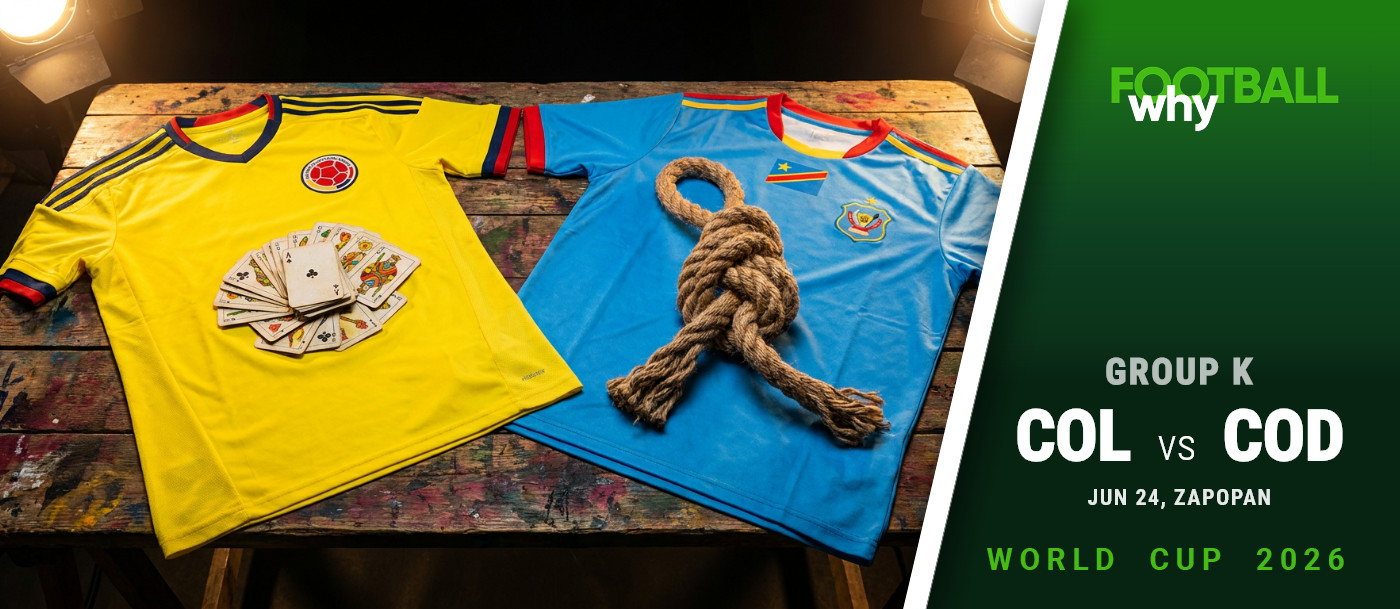
The World Cup Qualification Decider
Wednesday, 24 June

Estadio Akron, Zapopan

Colombia vs DR Congo FIFA World Cup 2026 Group Stage Match Methodical Masonry and the Ghosts of Zapopan Forecast generated:

A damp, methodical audit in Zapopan. Colombia monopolised 64 percent of possession but spent 76 minutes chipping away at a heroic Congolese barricade. Discover how a single surgical substitution finally broke the African mortar.
Colombia vs DR Congo Structural Collision

What was it?

The humid air in Zapopan hung like wet canvas over a deeply asymmetrical standoff. Sixty-four percent territorial monopoly met a rigid five-man barricade. South American patience chipped away at African mortar.

Lionel Mpasi stood as the primary load-bearing pillar. The goalkeeper registered eight direct saves. He absorbed the pressure with raw reflexes, keeping the scoreline blank deep into the second half.

Yet, crossing the halfway line triggered a collective amnesia in the Congolese ranks. Every frantic breakout ended with passes aimed at empty grass. It was a fiercely earnest effort, entirely devoid of malice, but utterly barren of technical execution.

Nestor Lorenzo eventually grew tired of the polite knocking. He introduced Juan Fernando Quintero just before the hour mark to recalibrate the angles. At the 76th minute, a vertical pass bypassed the exhausted defenders.

Daniel Muñoz arrived on the blind side to finish with his left foot. One nil. Two further efforts from Luis Díaz were scrubbed out by the officials, but the damage was done. Methodical engineering finally outlasted a brave, endearing, but fundamentally flawed resistance.

How did they clinch it?

Colombia

Colombia won by treating a stubborn defensive block not as a wall to be smashed, but as a bureaucratic queue to be quietly circumvented.

The early frustration — evidenced by seven offside flags — highlighted a team initially rushing the final pass against a deep line. Yet, they refused to panic.

Instead, the squad displayed a cold, calculated maturity. The introduction of Juan Fernando Quintero altered the attacking geometry, shifting the team from frantic verticality to surgical horizontal control.

They leaned on a rehearsed right-sided overload, patiently stretching the opposition's shape until the weak side finally snapped open. This proved they no longer rely solely on the chaotic brilliance of a single classic playmaker.

This restraint reflects a profound evolution in the national footballing psyche. Historically, the team’s festive bravado would quickly curdle into anxiety and rushed long shots when denied early success.

Now, that traditional street-futsal flair is securely anchored by European tactical scaffolding. The current generation understands how to manage game states, forming double pivots to protect leads rather than chasing unnecessary glory.

They no longer demand chaos to thrive. They are entirely comfortable orchestrating the grind, trusting the system to eventually yield a gap.

The vibrant street dance has successfully matured into a meticulous, load-bearing architecture.

Why not go for the win?

DR Congo

DR Congo constructed a near-flawless survival mechanism, yet they ultimately failed because they never planned a viable route for escape.

Their five-man backline successfully denied the central lanes, forcing Colombia wide. However, every hard-won recovery instantly sparked a new crisis in possession.

The complete lack of a connective midfielder meant transitions were essentially leaps into the dark. Strikers were left entirely isolated, forcing the team to rely on hopeful, low-probability crosses that yielded barely a single shot on target.

This attacking amnesia exposes the uncomfortable realities of the current squad cycle. There is a commendable, community-first discipline in how they protect their own penalty area, but offensive patterns remain entirely improvised.

When stress mounts, the structure dissolves into isolated hero-ball. Players attempt to dribble out of trouble alone, reverting to an informal, hustle-based logic rather than trusting a collective attacking framework.

The issue stems from a deeply fragmented developmental pipeline. The domestic schooling produces fearless, athletic duelists, while the European diaspora injects crucial defensive rigidity.

However, neither environment has successfully cultivated the cohesive, collective playmaking required to actually dictate terms against top-tier opposition. They can endure the storm, but cannot yet summon one of their own.

They built a magnificent, impenetrable fortress, but entirely forgot to install a door to the outside world.

Match hero...

Daniel Muñoz
Daniel Muñoz refused to pound fruitlessly on a locked front door. Instead, the right-back activated a classic 'rebusque' — slipping quietly through the blind-side alley while DR Congo’s defenders were thoroughly distracted by Luis Díaz. He exploited a glaring geometric flaw: when a rigid five-man block shifts entirely to suffocate a superstar, the opposite flank becomes an unguarded mountain trail. Muñoz simply timed his ascents with the patience of a seasoned merchant, waiting for the exact second the African structure overcommitted before arriving to collect his dues.

...and one more

Lionel Mpasi
Lionel Mpasi operated like a frantic market vendor patching a collapsing stall in a monsoon. His eight saves were not born of textbook aesthetics, but of raw, communal survival instinct. The goalkeeper read the escalating pressure as Colombia probed the edges, constantly mending the structural gaps left by his exhausted defenders. Mpasi capitalised on the predictable angles of South American shots, using his explosive lateral reach to buy time. He single-handedly kept the Leopards’ dignity intact, bailing water out of a leaking boat until the very end.