
The World Cup Qualification Decider
Saturday, 4 July

NRG Stadium, Houston

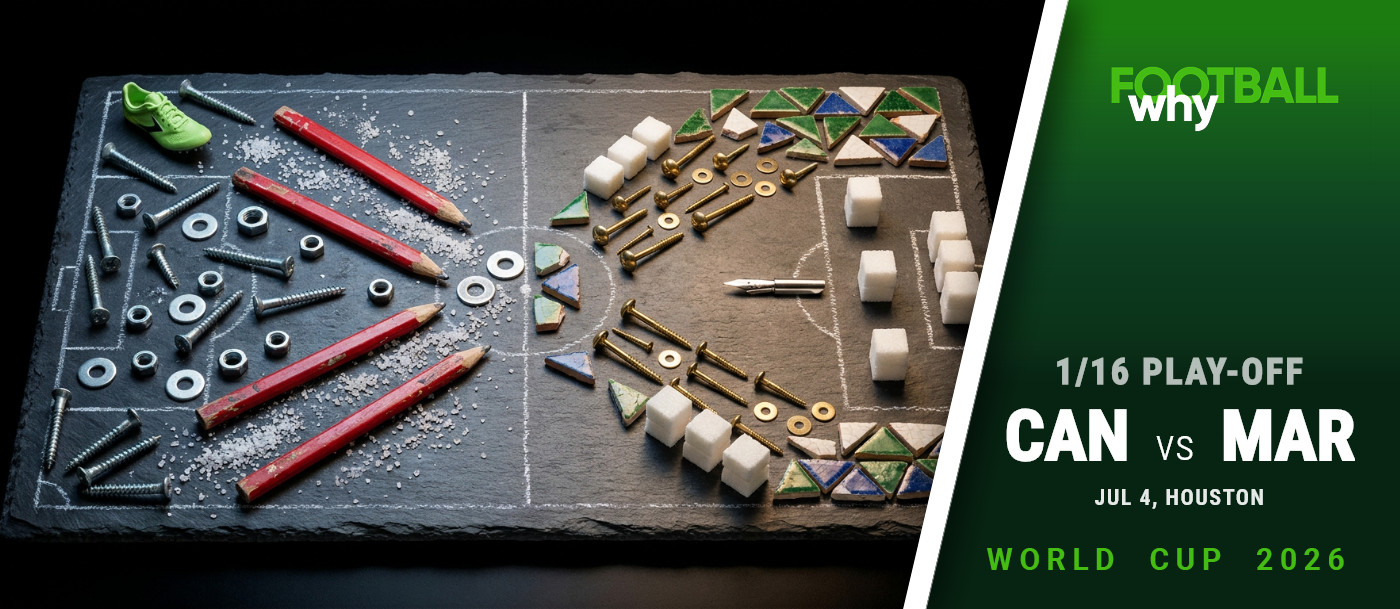
Canada vs Morocco FIFA World Cup 2026 Group Stage Match Eleven Corners to Nowhere, Three Cuts to the Bone Forecast generated:

Canada hurled themselves forward like frantic plumbers, winning eleven corners for zero reward. Morocco simply checked their watches and struck three times on the break. Discover how cold municipal competence dismantled blind enthusiasm.
Canada vs Morocco Structural Collision

What was it?

The turf at NRG Stadium felt tilted, greased, and deeply unforgiving. North American runners hurled themselves forward like frantic apprentices wrenching at a rusted pipe, desperate to force a breakthrough. They won eleven corners. They generated zero goals from an accumulated 0.86 expected threat.

Tactical innocence carries a heavy toll at this altitude. While the Canadians crammed bodies into the penalty area, they left entire postcodes vacant behind their midfield line. Morocco noticed the structural fracture immediately. A rehearsed free-kick routine at fifty minutes allowed Azzedine Ounahi to snap the deadlock from the edge of the box.

Jesse Marsch’s men simply doubled down on the chaos. Ouahbi's side absorbed the blunt-force trauma and sent on Sofyan Amrabat to tighten the midfield sealant. The North Africans scored three times from just five total shots all evening.

Brahim Díaz picked through the wreckage, sliding two perfect passes into the vacated spaces for late breakaway finishes. Watching the Canadians run themselves into a state of sheer muscular collapse inspired a sudden, deadpan tenderness. Raw effort is a beautiful thing, but it rarely survives a collision with cold, municipal competence.

Why not go for the win?

Canada

Canada’s collapse stemmed from a procedural malfunction in the final third. Without Alphonso Davies available to warp the opponent's defensive shape on the left flank, the attack defaulted to a rigid, highly predictable mandate of wide service.

The rotation of forwards provided physical presence but zero localized craft. They pumped crosses into a penalty area marshalled by defenders who feed comfortably on predictable aerial duels.

The absence of a tight-space technician meant the team relied entirely on athletic volume. Pushing fullbacks dangerously high to force the issue left the midfield dreadfully exposed to the counter.

This brute-force approach highlights a deeper structural reality. The domestic player pathway mints athletes with immense recovery pace and pressing stamina, but frequently neglects the microscopic decision-making required to dismantle a low block.

Furthermore, the psychological burden of hosting the tournament creates a desperate need to prove belonging. Rather than pausing to reassess the tactical gridlock, the team manually overrode their own safety protocols, chasing a goal with naive intensity.

They tried to audit a complex tactical puzzle with a sledgehammer, leaving the vault wide open in the process.

How did they clinch it?

Morocco

Morocco’s victory was rooted in a profound, highly functional tolerance for territorial submission. Once ahead, the immediate introduction of midfield anchors effectively shuttered the central corridors, forcing Canada into low-yield wide areas.

This was not a retreat born of fear, but a calculated withdrawal. The squad possesses a deep understanding of game-state management, happily absorbing pressure while keeping their attacking outlets poised on the fringes of the transition lanes.

The defensive unit operated with a centralized authority. They refused to be baited into individual duels or rash tackles that might compromise the collective shape, trusting the structure to handle the blunt-force trauma.

Such composure points directly to a highly effective institutional hybrid. The federation has successfully married the rigid, tactical schooling of European academies with the innate technical rhythm and game-intelligence of its diaspora.

It reflects a cultural comfort with enduring strain without losing structural integrity. They reject the modern anxiety of needing possession to feel in control, trusting that the opposition's impatience will eventually fracture their own defensive lines.

They treated the pitch like a waiting room, letting the host nation exhaust itself before quietly calling their number.

Match hero...

Stephen Eustaquio
Stephen Eustaquio operated with the weary diligence of a municipal clerk trying to file paperwork in a blizzard. Logging 64 passes, he was the sole voice of procedural sanity in the midfield. He constantly scanned his shoulders before receiving the ball — a man double-checking the safety manual before committing. His ability to dictate rhythm stems from a deep-seated need for order amid chaos. He cleared the driveway and laid the grit, but his colleagues simply forgot how to unlock the front door.

...and one more

Azzedine Ounahi
Azzedine Ounahi did not sprint; he bargained. Drifting through the half-spaces with slightly slumped shoulders, he delayed his runs with the calculated rhythm of a medina artisan waiting for the material to yield. His influence relied entirely on a cultural comfort with sabr — patience. He masked his intent, allowing the frantic Canadian midfield to overcommit, before stepping into the newly vacated spaces. He let the opposition exhaust their energy, then quietly claimed his price without ever appearing rushed.