

Round of 16 (A), Match #90
UTC

NRG Stadium, Houston

Prediction by whyFootball readers

CAN
DRAW
MAR
44%
0%
56%
Not a recommendation for betting
Tap [+] to cast your expert forecast.
SCORE BY AI PREDICTION: 1:2 SEE SIMULATION

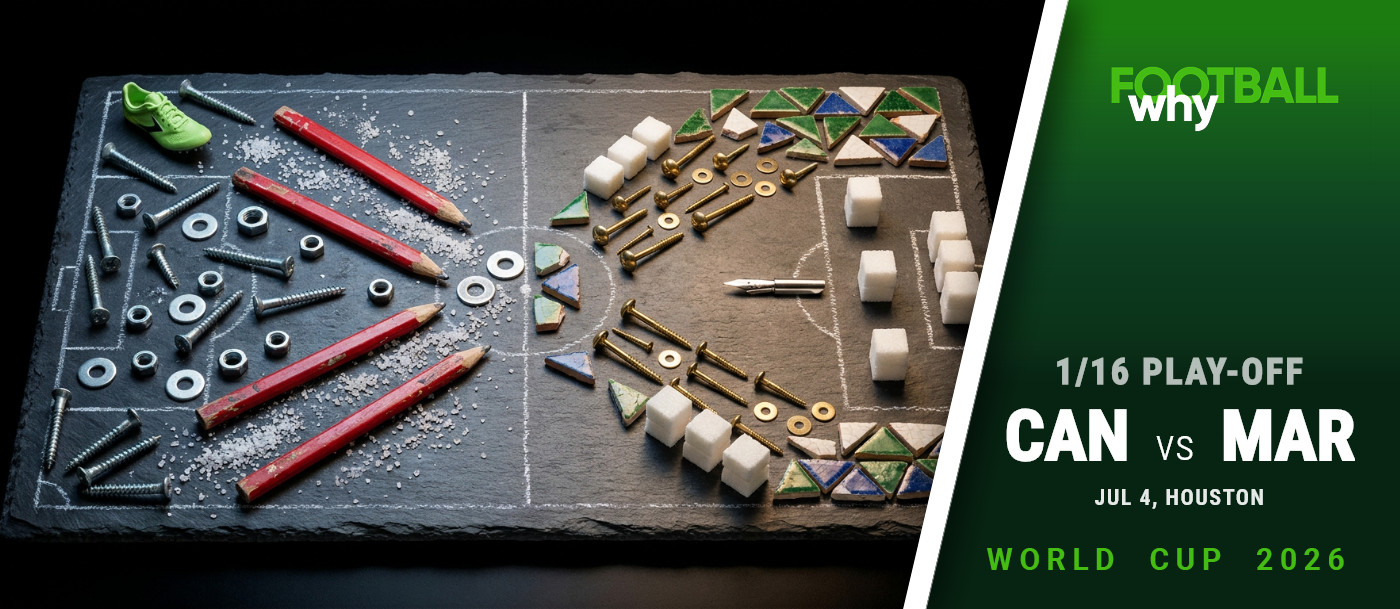
Canada vs Morocco FIFA World Cup 2026 Group Stage Match Frantic winter shovelling stalled by patient procedural weaving Forecast generated:

The relentless, winter-hardened surge of the hosts meets the patient, procedural craftsmanship of the Atlas Lions. Can Canada’s sheer physical industry dismantle Morocco’s serene, calculating structure, or will quiet authority outlast frantic desperation?

Canada: One side's prayer...

Canada arrive at this Round of 16 tie carrying the suffocating weight of host-nation expectations and a lingering sense of grievance. The gruesome injury to midfield engine Ismaël Koné has fostered a bunker mentality, forcing them to patch the engine block with whatever spares they have. With Alphonso Davies strictly nursing a hamstring issue on a minutes cap, the public demands a statement performance. They are desperate to prove their relentless, physical project is sustainable against elite opposition.

Morocco: ...head-on with the other.

Morocco step into the knockout stages desperate to shed the underdog tag and cement their status as tournament heavyweights. The absence of defensive anchor Nayef Aguerd has forced a slight reshuffle at the back, while Noussair Mazraoui is quietly managing a shoulder complaint. Yet, the camp radiates a veteran, procedural calm. The pressure from their vast diaspora is immense, but they approach the fixture like seasoned curators handling fragile artefacts, determined to silence the raucous hosts through sheer, unhurried efficiency.
Canada vs Morocco Structural Collision

Canada: How we will host...

Dream
Advance at all costs and prove this squad can handle elite tournament pressure. The host nation demands a statement performance, and the players want to show their relentless intensity belongs on the biggest stage without looking naive.

Strength
A hard-running, collective grit that feels distinctly Canadian. They embrace the unglamorous labour of pressing and tracking back, acting as a unified front. Confidence surges when they win territory, turning their athletic endurance and winter-weather resilience into a suffocating physical presence.

Plans
Jesse Marsch has built a specific defensive clamp for the right flank to smother Morocco’s creative wide players. If the game stays tight, a pre-planned, two-phase siege will be unleashed in the final twenty minutes. Fresh legs will flood the penalty area, turning the match into a chaotic aerial bombardment.

Fears
A sudden lack of composure when the initial plan hits a wall. If the opponent sits deep and absorbs the pressure, the team often rushes their finishing and overcommits the full-backs. The resulting frantic transitions can easily leave the midfield completely bypassed and exposed.

Morocco: With what we arrive...

Dream
Prove they belong among the tournament's serious adults. Morocco want to showcase their modern, disciplined professionalism and unite their global diaspora. They are aiming for an orderly defiance, out-thinking the hosts and striking with calculated precision.

Strength
A collective, game-state literate confidence built on European-honed discipline. They value clean sheets and ruthless final-third efficiency over chaotic spectacle. Their compact defensive shape acts as a sturdy foundation, allowing them to absorb pressure and wait for the perfect moment to execute their rehearsed attacking patterns.

Plans
Tarik Ouahbi has instructed his team to bypass the Canadian press using quick, one-touch combinations through the midfield. The primary attacking route relies on exploiting the spaces behind the Canadian full-backs with early diagonal passes. Defensively, they will crowd the penalty area to deny any cutbacks from the touchline.

Fears
A retreat into overly cautious, risk-averse football when placed under scrutiny. Under severe stress, their attacking ambition can shrink drastically, leading to early clearances and a slow, sterile circulation of the ball. This deference to seniority and safety can stifle the fresh, audacious play required to win tight matches.

How it will be...

This fixture promises a fascinating collision of national temperaments. Canada, burdened by the expectations of a host nation, will likely open the match with a frantic, physical surge. They will attempt to rattle Morocco’s composure through sheer industry, turning the pitch into a chaotic, high-friction environment. However, a slightly heavy playing surface should eventually blunt this early athletic exertion.

The intrigue lies in watching Morocco’s response. Observers should look for Brahim Díaz receiving the ball on the half-turn in tight spaces. His subtle body feints and disguised passes are not merely decorative; they are the specific tools designed to dismantle Canada’s aggressive pressing structure. Conversely, the introduction of Alphonso Davies offers a sudden injection of raw pace that could briefly shatter Morocco’s procedural calm.

The final twenty minutes should deliver the most compelling drama. Should Canada fall behind, their solid collective identity often fragments into desperate, rushed decisions. Morocco’s capacity to absorb this late, unstructured bombardment — relying on their deep-lying anchor, Sofyan Amrabat, to sweep up the debris — will likely decide the tie. It is the classic tension between earnest, flawed effort and cynical, rehearsed efficiency.

Canada: Why not go for the win?

Canada lost because their attacking model lacks nuance against deep, organised defences. A late structural collapse, triggered by desperation, allowed Morocco to exploit the spaces left by exhausted full-backs. Ultimately, their reliance on physical intensity over creative composure proved insufficient against elite tournament management.

Morocco: How did they clinch it?

Morocco won through superior game-state management and clinical efficiency. The rehearsed combination between Brahim Díaz and Ismael Saibari provided the early breakthrough. Their ability to absorb Canada's late, frantic siege without panic, before punishing them with fresh wide players, highlighted their mature, tournament-savvy pedigree.

Secret mastermind intent

Jesse Marsch’s snowplough to clear the Atlas roads

General Strategy
Jesse Marsch is treating this match like a manual override in a snowstorm. The baseline formation remains a direct 4-4-2 setup. The primary objective is to advance up the pitch at all costs and establish a high-pressing rhythm.

The team will hunt the ball aggressively in the opposition half. They want to force errors early and win territory quickly. Possession for its own sake is entirely discarded in favour of vertical, rapid attacks that bypass the midfield.
Antidote for the Opponent
The defensive plan on the right flank is a tightly locked U-bend to stop the Moroccan leak. Tajon Buchanan will track Achraf Hakimi all the way back to the defensive line. Alistair Johnston is instructed to tuck inside and crowd the space where Brahim Díaz likes to operate.

In attack, Canada will target the spaces left behind by Morocco's advancing full-backs. They plan to use quick diagonal switches to hit the far post. The aim is to exploit the aerial mismatch against the Moroccan centre-backs when the full-backs are caught upfield.
Internal Task Solving
Alphonso Davies is being managed like a fragile, high-voltage battery. His playing time is strictly capped to a 25-to-35-minute window. When he enters the pitch, he will stay high and wide on the left to provide an immediate attacking outlet.

Another unique setup is the staggered, two-phase attacking surge planned for the second half. A fresh striker and winger will be introduced first to stretch the tired defence. Davies will then follow five minutes later to deliver cutbacks from the touchline.
Crisis Response Plans
Conceding a goal triggers a procedural fire-drill rather than a frantic scramble. The team will immediately drop into a compact mid-block for ninety seconds to reset. The captain will gather the players, and the next two restarts will be played long to Cyle Larin.

The manager is prepared to be flexible if the game remains goalless late on. If the attack looks sterile by the 70th minute, a pre-scripted siege pattern will begin. This involves doubling the wide supply and flooding the penalty area with a twin-striker system.
Specific Match Orders
Alphonso Davies: Stay high and wide on the left as soon as you get on the pitch. Do not waste energy on deep recovery sprints. Your first look is always a cutback, and completely avoid risky dribbles inside if we are protecting a lead. Moïse Bombito: Do not step out to challenge Brahim when Hakimi pushes up. Your default run is to cover the channel Hakimi occupies. Clear the danger first, and only look to play out once the space is safe. Alistair Johnston: Tuck inside to double up on the central attacking zone. Keep a close eye on your yellow card risk. Absolutely no lunging into front-on tackles when we are caught in defensive transitions.
/ What if Hakimi and Brahim overrun the right flank early on?

If the Moroccan duo breaches the final third repeatedly in the opening twenty-five minutes, Buchanan will be ordered to drop deeper. This forms a temporary back five to plug the gaps. Johnston will remain tucked inside to screen the cutback lanes, and overlapping runs will be halted.

/ What if Stephen Eustáquio picks up an early yellow card?

A booking for the midfield anchor before the 35th minute compromises the central press. The team will immediately reduce their pressing radius in the middle of the pitch. Another midfielder will take over the primary pressing duties, allowing Eustáquio to hold his screening position without risking a red card.

Secret mastermind intent

Tarik Ouahbi’s dusty archive of defensive patience

General Strategy
Tarik Ouahbi wants to dictate the rhythm like a seasoned committee chair. The default structure is a ball-dominant 4-2-3-1, but the double pivot in midfield remains fluid. The primary goal is to control the tempo, survive the inevitable Canadian surges, and secure the win through sheer efficiency.

The team will operate in a compact mid-to-low block, aggressively denying passing lanes. They are perfectly willing to trade possession for territorial control. Risk is kept to an absolute minimum while leading, prioritising a solid defensive foundation over expansive attacking football.
Antidote for the Opponent
The attacking blueprint focuses on bypassing Canada's first line of pressure. Quick, one-touch links into Brahim Díaz will trigger third-man runs. They will rotate overlapping runs on the right to drag the Canadian defenders out of position, opening up spaces for early diagonal passes.

Defensively, the plan is to crowd the penalty box like a busy market square. Chadi Riad will track the main striker at the near post, while Sofyan Amrabat screens the central passing lanes. The absolute priority is to forbid cutbacks; deep crosses from poor angles are acceptable.
Internal Task Solving
The right-sided attacking triangle is the team's most reliable weapon. However, a specific late-game wide injection is pre-planned if the score is level or they are trailing. This involves bringing on fresh wingers to bombard the back post with crosses.

Another specific tactic involves the goalkeeper's distribution. If leading after the 70th minute, Yassine Bounou will deliberately slow the tempo on goal kicks. The centre-backs will spread wide to draw the Canadian forwards out, stretching their defensive shape and killing the clock.
Crisis Response Plans
If the team falls behind, a mandatory cooling-off period is initiated. The players will retreat into a low block for two minutes to regain composure. The next two possessions will be safely recycled through the midfield anchor. No forced or risky forward passes are allowed during this reset.

Ouahbi is prepared to alter his substitutions if chasing the game late on. Fresh wide players will be introduced earlier than usual to provide a constant supply of early crosses. The strategy shifts to flooding the penalty area for second balls.
Specific Match Orders
Brahim Díaz: Receive the ball on the half-turn, always facing away from their defensive midfielder. Your very first look should be to find Saibari running in behind. If you are crowded, recycle possession immediately; do not attempt to dribble through double teams. Achraf Hakimi: Provide our primary width on the right. Vary your runs between overlapping and underlapping the winger. Track their winger's first step defensively, but avoid dead sprints back if our centre-back is left isolated. Yassine Bounou: Keep your distribution short and measured until the Canadian pressing line drops back. If they switch to a full siege mentality, mix it up by clipping long passes to the striker's chest to break their pressing rhythm.
/ What if Canada counter-presses successfully in the opening minutes?

If the hosts register five successful ball recoveries in the Moroccan half within the first fifteen minutes, the short passing game is suspended. Bounou will start clipping long balls directly to the striker for a ten-minute period. The team will flatten into a rigid 4-4-2 shape out of possession to bypass the pressure zones.

/ What if Alphonso Davies is introduced earlier than expected?

If the Canadian star winger appears before the hour mark, the Moroccan right-back will immediately reduce his overlapping runs. A more defensive-minded full-back will begin warming up. The central defensive midfielder will also shade towards the left to block Davies' preferred inside running lanes.

MAIN SIMULATION 0'-25'

Canada will start with a frantic, high-energy press, jumping on Bounou's touches. They want to force early errors. Morocco will absorb this early storm using a compact mid-block. The pitch is slightly heavy, which will slowly blunt Canada's running. Morocco will weather the initial friction and begin establishing their right-side passing triangles, gradually taking control of the tempo.

MAIN SIMULATION 25'-45'

The match will settle into a more calculated rhythm after an early hydration break. Morocco will use shorter passes through Amrabat to bypass the Canadian press. This structural patience will pay off around the 34th minute. Brahim Díaz is likely to link up with Saibari to break through the inside-right channel. Canada will respond with hurried wide crosses, but both sides will eventually drop their intensity to avoid late-half mistakes.

MAIN SIMULATION 45'-65'

Canada will raise the temperature, shifting to a more direct approach. Around the hour mark, Jesse Marsch will likely introduce a second striker to form a traditional front two. Stephen Eustáquio will drop deeper to orchestrate a sustained aerial bombardment. Morocco will respond by retreating into a deep, low-risk defensive shell. They will crowd the penalty area, happily conceding territory to protect the crucial central spaces.

MAIN SIMULATION 65'-90'

The final phase will be a chaotic scramble. Canada's relentless crossing should yield an equaliser from a set-piece around the 72nd minute. However, Morocco rarely panic. They will execute a brief, calming possession phase before injecting fresh wingers. This late wide battery will target Canada's exhausted full-backs. An inswinging cross to the back post is highly likely to secure Morocco's winner in the dying moments, leaving Canada to launch desperate, fruitless long throws.

And it will come to...

Should this forecast hold true, Canada would prove their physical intensity belongs on the global stage, yet their boom-or-bust attacking model would ultimately falter against an elite, low-risk defensive block. Their lack of a composed cutting edge would be their undoing. Morocco, conversely, would demonstrate a mature, tournament-savvy template. They would absorb the metabolic friction of the Canadian storm, manage the game state with clinical precision, and ruthlessly punish late structural fatigue through rehearsed wide patterns.
end of Game