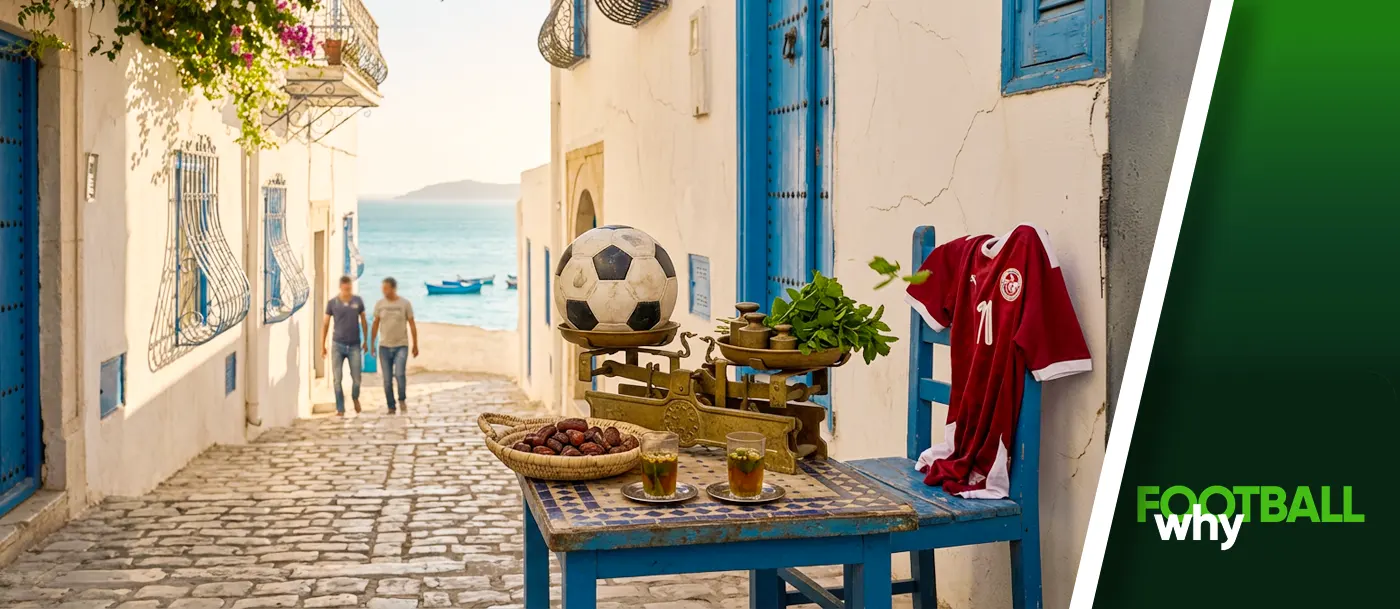
Sweltering under the Mediterranean sun, they carry the defensive scars of endless cautious negotiations. History demands they survive, not dazzle. Yet, an anxious public now screams for fire, begging them to break their rigid, risk-averse chains. Watch a suffocating, immovable wall suddenly orchestrate a single, lightning-fast strike down the flank. The market traders are finally ready to gamble.
Team at a Glance
What do they want?
To finally break past the group stage, proving that endless patience and zero-risk pragmatism can actually conquer giants.
What are they strong at?
Suffocating defensive elasticity mixed with sheer stubbornness. They will drag you into a deeply frustrating, goalless abyss.
What will they show?
Masterful time-wasting, cynical tactical fouls, and precisely one beautifully choreographed counter-attack. You will respect the sheer attrition.
Why are they as they are?
Centuries of coastal market bartering taught them that sudden, reckless gambles only ruin the profit margin.
What is a chance of getting title?
4%. Highly likely, assuming FIFA implements a new rule where matches are decided entirely by defensive shape.
Where it hurts?
Tunisia: current status and team news
Wiping the Greasepaint
off the Script
Sabri Lamouchi has locked the theatre doors in Tabarka, ruthlessly cutting the leading actors from his cast list. Tunisia will face Belgium in their final dress rehearsal before the tournament begins. The manager insists every role must be earned through pure defensive suffering.
Denying stage time to Ali Maâloul and Mohamed Ali Ben Romdhane caused immediate outrage in the stalls. The #لا_أسماء_مقدسة hashtag circulates as both a rallying cry and a bitter joke. Fans fear this stripped-down ensemble lacks the imagination to entertain anyone.
Youssef Msakni usually delivers the finest improvised soliloquies, but his physical availability remains completely shrouded in mystery. Sebastian Tounekti is now tasked with converting wide transitions into actual shots. The late arrivals to the training camp have only just begun their physical integration.
Rivals will aggressively crowd the wide areas to stifle any quick transitions. The resulting matches will feature deep defensive blocks and a heavy reliance on set-pieces. It is a raw, unvarnished human effort to survive the glaring spotlight without forgetting the rehearsed lines.
The Headliner
Tunisia: key player and his impact on the tactical system
Artisan of the Stolen Tempo
A single player can dictate the sheer atmospheric pressure of a match simply by stepping on the ball to deliberately kill its momentum. Youssef Msakni exerts a hypnotic influence on the pitch. He uses calm, downward hand gestures to physically slow the collective pulse of his teammates, waiting for the exact millisecond to accelerate through a sudden, elastic hip swivel.
Operating as the cunning artisan of the left-inside channel, he turns scraps of possession into a whipped far-post curler from the tightest traffic.
The national setup extracts almost all of its attacking guile from his ability to negotiate these tiny pockets of space. Without his line-breaking disguise, their forward motion often stiffens into rigid, predictable patterns. The looming anxiety for the public is his sheer mileage. Fans fear the inevitable tournament congestion that might finally sap his physical burst.
Even so, his capacity to bait defenders into rash tackles and extract value from the most suffocating, low-chance scenarios cements his status as a masterful orchestrator of the final third.
The Wild Card
Tunisia: dark horse and player to watch
The Spark in the Heat
Hannibal Mejbri refuses to let a match settle into a quiet, passive rhythm. He plays with a ferocious, unyielding intensity. His springy strides and bouncing curls serve as a visual barometer for the team's emotional temperature on the pitch.
The 23-year-old provides the vital, chaotic acceleration needed to bridge the gap between a deep defensive block and the forward line.
He actively seeks out contact, absorbing heavy tackles and drawing crucial fouls before immediately snapping into the counter-press with a sharp, vocal edge. The fragility of this combative approach lies in his emotional overdrive. Opposing midfielders will deliberately bait him into verbal spats and physical altercations, hoping to draw bookings and disrupt his focus.
Should he channel this fiery temperament strictly into his rapid vertical passing and spatial organisation, his presence will undoubtedly serve as the combative heartbeat of the team's World Cup run.
The Proposition?
Tunisia : Tactical guide - how to identify their movements and game variations on the pitch
The Left-
Lane Overload and the Pivot's Trap
Sabri Lamouchi leads the Eagles of Carthage into the World Cup with a clear directive: re-centre the squad on a disciplined 4-3-3, prioritise wide-first progression, and establish Hannibal Mejbri as the tactical keystone. The central tension involves a delicate balancing act. They must unlock deep defensive blocks without degrading their own rest-defence, while managing a heavy attacking reliance on the left lane against the need for reliable width on the right.
Tunisia operates from a compact mid-block, utilising a single pivot — typically Ellyes Skhiri or Aïssa Laïdouni — to control the tempo. The defensive line height is carefully calibrated to the sheer pace of the opponent.
What to look at: If, in the opening fifteen minutes, the back four sets up about ten metres inside their own half, the midfield line stays tight, and the front line rarely jumps in unison, then Tunisia is deliberately forcing circulation wide. They are denying access to the central zone and setting up launch lanes while protecting the middle of the pitch.
Upon regaining possession, the fullbacks immediately step up to create a 2-3-5 attacking shape.
What to look at: If the right-back, Yan Valery, steps inside as an inverted fullback on the first pass while the pivot physically screens the counter-attack lane, they are gaining a numerical advantage against the first line of the press. This opens a diagonal pass to the left-back or a direct lane to the isolated right winger.
The primary attacking vector is a heavy left-sided overload featuring Ali Abdi and Elias Achouri, with Mejbri acting as the crucial connector.
What to look at: If, upon crossing the halfway line, Mejbri opens his hips, the right winger holds the touchline, the left forward darts inside, and the left-back overlaps late, anticipate a rapid cutback to the penalty spot or a slip pass inside the opposing number nine.
The entire system compresses around Mejbri, who toggles dynamically between a central midfielder and an advanced playmaker.
What to look at: If Mejbri receives the ball, the nearest midfielder clears the lane, the right winger pins the fullback, and the centre-forward drags the near centre-back outward, the hidden aim is to free the opposite half-space. This creates room for a diagonal punch or isolates the right winger in a one-on-one duel.
This heavy left-lane bias and reliance on a single pivot create a glaring vulnerability.
What to look at: If an opponent pins the pivot centrally and hits a fast diagonal pass into the space behind Abdi, with the right winger late to recover, Montassar Talbi is dragged wide. Depth opens up instantly, creating a clean cutback lane for a far-post runner to secure a high-probability finish.
When forced into survival mode, Lamouchi shouts from the technical area, dropping the team into a deep 4-5-1.
What to look at: If the block drops deep towards their own penalty area and the front line ceases coordinated pressing jumps, Tunisia is trading territory for sheer box density. They rely entirely on Talbi to lead area clearances and the goalkeeper to slow the tempo by holding the ball.
Despite the structural risks, watching Tunisia provides a rigorous study in pragmatic resilience. Their ability to absorb pressure and orchestrate sudden, highly choreographed wide strikes makes them a formidable, deeply organised threat.
The DNA
Tunisia: football's importance and what we will see in their game at the 2026 World Cup
The Bazaar's Logic and
the Burden of Order
The heavy, salted sea breeze rolling off the Mediterranean settles over the Rades stadium, thick with humidity and anticipation. Piercing whistles from the crowd cut through the dense air, demanding immediate attacking fury, yet the players on the pitch move with a deliberate, almost agonising patience.
Step away from the pitch and walk into a bustling coastal souk (market) in Tunis. A merchant does not immediately scream his lowest price to the first passing tourist. He pours a glass of hot mint tea, discusses the weather, makes a minor concession, and waits in the shade for the buyer to reveal their urgency. It is a slow, attritional game of territorial control. A sudden, unilateral gamble usually results in a loss of profit and reputation.
This deep-rooted market pragmatism shapes their footballing identity.
Their system-first defensive elasticity acts as a cultural reflex rather than a mere tactical choice. They treat possession not as a tool for elaborate artistic expression, but as a secure first pass in a long negotiation.
Every action is weighed against the risk of exposure.
When a Tunisian centre-back orchestrates a choreographed, time-wasting ritual near the corner flag, or a midfielder grabs an opponent's shirt to commit a cynical tactical foul and reset the defensive shape, they are simply managing the margins of the trade. This relentless focus on risk control breeds a severe chance-creation deficit. Their footballing pipeline, heavily influenced by Franco-Maghrebi coaching norms, consistently produces reliable, shape-disciplined defenders and defensive midfielders for the European market. Creativity is treated with suspicion, viewed as a luxury good rather than a staple necessity.
Imagine a traditional family council deciding on a major financial investment. The elders sit in a circle, deliberating endlessly, prioritising the security of the group's assets over a high-risk, high-reward venture proposed by an eager younger cousin.
Similarly, when the national team finds itself under siege, the collective reflex triggers a conservative retreat. The defensive block drops a line deeper, the fullbacks tuck inside, and the team accepts a low shot volume provided the defensive integrity remains intact. The trauma of recent tournament failures has only hardened this safety-first approach under knockout stress.
A counterforce is quietly brewing. The integration of younger, diaspora-raised talents and form-first selections by the new coaching staff attempts to inject a calibrated risk into the system. The technical staff is trying to teach the careful market traders how to occasionally sprint. Watching this team offers an exercise in appreciating the slow grind of survival. They will drag opponents into the deep waters of their tactical bazaar, where patience and discipline serve as the only currencies that matter.