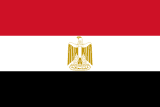
National flag: Egypt — FIFA World Cup 2026

Egypt Egypt World Cup 2026: Salah's Burden & Tactical Siege

The Pharaohs

What to look for?

Crushed beneath the weight of continental crowns, they carry the frantic hopes of millions. Yet, endless off-pitch noise and a desperate reliance on a single saviour threaten to derail them. They fight the ticking clock and their own suffocating caution. Watch a fiercely disciplined collective absorb endless pressure in the shade. Then, witness the sudden, lightning-fast strike down the right flank. The river is finally ready to flood.

Egypt: A Rival Guide

How do Egypt set up on the pitch?

Egypt operate from a compact mid-to-low block, relying on fast vertical transitions directed toward their wide forwards. The system carries an immense gravitational pull down the right flank to accommodate Mohamed Salah, while set-pieces serve as the great equaliser when open play stagnates. Their tactical baseline is inherently risk-averse, prioritising strict tempo control over expansive surges. The shape fluidly toggles between a 3-4-3 and a 4-3-3 depending on the immediate demands of the game state. A team built to survive the siege before launching the decisive counter-strike.
/ What formations and out-of-possession shapes do they use most?

The primary shape is a 3-4-3, which transitions into an aggressive 3-2-5 in possession through high-flying wing-backs, and settles into a 5-4-1 or 5-2-3 mid-block without the ball. When chasing a deficit, the structure pivots to a more orthodox 4-3-3. The defensive blueprint resembles a heavy iron gate dropped across the penalty area. Midfielders compress the central lanes. The wide forwards diligently drop to form a five-man barricade. A deliberate exercise in suffocating the opposition until the clock simply runs out.

/ Where do Egypt’s chances come from?

Attacking sequences are heavily channelled into right half-space isolations for Salah, complemented by rapid transition surges from Omar Marmoush. When those avenues close, the team relies on early crosses and meticulously drilled set-piece routines. The creative burden is shifted away from the midfield engine room to strike directly at the extremities. The central midfielders hold their deep positions. The ball is moved quickly to the touchlines. A minimalist approach that treats possession as a chore and the counter-attack as an art form.

/ What vulnerabilities show up under pressure?

Structural cracks frequently appear in the space vacated by the advanced left wing-back during defensive transitions. If the central corridor is blocked, possession degrades into predictable, sterile wing-to-box circulation. When forced to chase a game, the loosened structure becomes highly susceptible to late counter-attacks. The defensive system operates like a tightly wound spring that snaps if stretched too far. The centre-backs are left isolated in wide areas. The midfield fails to recover in time. Once the shell cracks, the soft underbelly is painfully exposed.

Mastermind:

Who is the chief architect of the Egyptian dugout?

Hossam Hassan — the nation's all-time top scorer turned head coach — is a fiery, patriarchal figure who anchors his side in a compact 3-4-3 that drops into a stubborn 5-4-1 without the ball. He prioritises wide-forward work rates, set-piece extortion, and the deep-rooted cohesion of a domestic core. When the scoreboard demands a response, he is entirely unafraid to strip away his holding midfielder to overload the front line. He does not build intricate passing carousels; he constructs barricades and waits for the counter-punch. A military-state pragmatist wearing a tracksuit.
What is his default structural shift when chasing a game?

The manager immediately shifts from a 3-4-3 to a 4-3-3, sacrificing a defensive midfielder for an extra attacker. The full-backs are ordered forward to create an aggressive 2-3-5 shape, drastically increasing the volume of crosses aimed at the target man. It is a blunt, overwhelming application of pressure rather than a subtle tactical recalibration. The footballing equivalent of throwing the kitchen sink through the front window.

How does he handle media scrutiny and public controversy?

Hassan adopts a highly confrontational tone, using press conferences as a pulpit to publicly shield his players and rail against scheduling injustices. He leverages heavy patriotic messaging to maintain authority and keep the dressing room insulated from the notorious Cairo pressure cooker. It is classic bazaar negotiation: creating maximum external noise to buy internal time and loyalty. A masterclass in weaponised grievance.

Does he favour selecting players from the domestic league?

Yes, he relies heavily on a core of home-based players to ensure strict adherence to role discipline and maintain camp cohesion. European-based stars are then rotated around this established Al Ahly and Zamalek spine. This approach guarantees that the team’s tactical foundation is built on pre-existing club loyalties and shared cultural shorthand. Trust is a currency minted strictly by the Nile.

“The Egyptian King”

Mohamed Salah

Right-sided talisman and roaming creator

Liverpool

Muscle issue on 18 March 2026; missed the March camp under short absence guidance, but expected fully available for the June window.

Drifts inside from the right half-space to orchestrate play, executes sudden diagonal runs, and acts as the ultimate transition finisher and penalty taker.

High-stakes tournament phases activate an ascetic, overriding sense of leadership and shot responsibility.

The signature left-footed stop-start feint and curling strike from the edge of the box.

“Marmoush”

Omar Marmoush

Left-sided forward and secondary striker

Manchester City

Knee ligament bruise in September 2025; fully available but operating under monitored load management.

Executes 20-to-30-metre diagonal carries, delivers early whipped finishes, makes runs beyond the central striker, and presents a direct free-kick threat.

Repeated physical fouls flip him into a ball-demanding takeover mode, turning structural discipline into a street-level brawl.

Explosive burst dribbles culminating in an early, low curl to the far corner.

“Mostafa”

Mostafa Mohamed

Reference number nine and set-piece target

FC Nantes

Provides back-to-goal link-up play, executes violent near-post darts on low crosses, and dominates aerial attacks in the penalty area.

Responds to public challenge or benching with an aggressive, highly physical escalation of his box movement.

An explosive first step across the centre-back on near-post delivery runs.

“Hamdy”

Hamdy Fathi

Holding midfielder in a double pivot

Instep issue in September 2025; has fully returned and is available for selection.

Acts as the screening and rest-defence anchor, dictates simple lateral switches, and makes late third-man underlaps when the game state opens.

Physical touchline duels sharpen his focus; he thrives in matches with clear, uncompromising foul-lines.

A fast, vertical pass immediately following an interception to spring wide runners.

/ What is Mahmoud Hassan’s (Trezeguet) status and role now?

Mahmoud Hassan operates as a left-sided inside forward and is fully available after recovering from a late-2025 hamstring strain. The Al Ahly-reared winger acts as the reliable second-wave finisher, ghosting in for back-post runs and curling efforts. He makes a living in the shadow cast by the blinding scrutiny on the opposite flank. A quiet beneficiary of the chaos created elsewhere.

/ How fit is Mohamed Abdelmonem after his ACL and what does he offer?

Mohamed Abdelmonem’s minutes are currently being managed following an anterior cruciate ligament injury in April 2025, but he remains the primary box protector. The OGC Nice centre-back combines front-foot lane stepping with a palpable aerial threat on attacking set-pieces. He is the elegant enforcer in a backline usually built on blunt trauma. A silk sheet thrown over a brick wall.

/ Who is the goalkeeper pushing for the No.1 shirt?

Mostafa Shobeir of Al Ahly is heavily challenging for the starting goalkeeper spot against a fit Mohamed El-Shennawy. The stopper has built his case on sustained clean-sheet runs, decisive low saves, and exceptionally quick restarts. In a nation that treats goalkeeping as a sacred, tournament-defining office, the battle for the gloves is pure domestic theatre. The young prince demanding the keys to the temple.

/ How is Ahmed Sayed (Zizo) used in this setup?

Ahmed Sayed functions as a hybrid number eight and ten on the right side, serving as the team's primary set-piece specialist. The Zamalek man provides the essential connective tissue, linking wing-back overlaps to the runners arriving in the penalty area. His right boot is a metronome of early crosses and dead-ball deliveries. The diligent postman operating in the shadow of royalty.

/ What does Ahmed Fatouh add at left back or left wing-back?

Ahmed Fatouh provides attacking width and high, early deliveries from the left wing-back position. Operating in a shared timeshare with Mohamed Hamdy, the Zamalek defender is deployed when the tactical script demands aggressive overlap rather than mere recovery pace. However, the turf behind him remains a heavily targeted corridor for opposition counters. A calculated gamble on the flank.

Egypt: Domestic Realities

/ Can Egypt finally win a World Cup match in 2026?

History offers zero wins across the 1934, 1990, and 2018 tournaments, but an unbeaten qualification campaign sets up a Group G schedule against Belgium, Iran, and New Zealand. The strategy remains anchored in a low-risk defensive base, sudden transition punches, and exploiting set-piece margins. The national expectation is suspended somewhere between civilizational pride and deep-seated fatalism. The manager sets up with a deep defensive block. The forwards stay ready for the counter. A seventy-year waiting room for a single, validating moment on the global stage.

/ Will Mohamed Salah be fully ready for the Belgium opener?

The talisman sustained a muscle issue on 18 March 2026, missing the subsequent friendlies, though medical guidance suggests he will be available for the June camp. The entire nation's blood pressure is currently tethered to a single hamstring in Merseyside. The medical staff issue reassuring daily bulletins. The Cairo press analyses every training photograph. It is the heavy burden of placing an entire country’s footballing salvation onto the shoulders of one ascetic finisher.

/ What is the contingency plan if Salah is ruled out?

The attacking gravity would shift toward Omar Marmoush, Mahmoud Hassan, and Ahmed Sayed, relying on a 4-3-3 shape with Mostafa Mohamed as the focal point. The system demands heavier service from the wing-backs and an increased reliance on set-pieces. Without the global icon, the clinical edge blunts into blunt-force trauma. The team crosses the ball more frequently into the box. The midfielders look for secondary balls outside the area. A frantic bazaar negotiation replacing a surgical strike.

/ Who partners Mohamed Abdelmonem at centre-back after recent injuries?

The selection revolves around Ahmed Hegazi’s return to fitness and the need to balance the right-to-left central defensive dynamic. Abdelmonem continues to lead the line while having his minutes carefully managed following an anterior cruciate ligament reconstruction. The secondary defender is tasked with covering the vast, terrifying empty tracts left behind the advanced wing-backs. They must track runners into the wide channels. They have to win the first header from crosses. A thankless patrol duty on the edge of the tactical abyss.

/ Why is the left wing-back position still unsettled?

The role fluctuates between Ahmed Fatouh of Zamalek and Mohamed Hamdy of Pyramids, balancing the need for attacking width against sheer recovery pace. Opponents have long identified the space behind the left flank as the prime real estate for staging counter-attacks. The coaching staff treats the position like a rotating political appointment based on the immediate threat level. One player is selected for his crossing ability. The other is chosen for his defensive positioning. A permanent structural headache masquerading as tactical flexibility.

/ Will the Seattle matchday designation controversy distract the squad?

The Egyptian Football Association has filed a formal complaint regarding the matchday designation, while the coaching staff attempts to insulate the squad ahead of the Iran fixture. The external noise is acknowledged, but the internal messaging strictly focuses on tactical preparation. It is a classic Cairo pressure-cooker scenario where off-pitch drama threatens to boil over. The hierarchy issues stern public statements. The players are instructed to remain in the hotel. A familiar exercise in weaponised grievance to maintain camp discipline.