Croatia (Vatreni) - National flag

Croatia National Football Team

Vatreni

What to look for?

Saltwater stinging their eyes, they carry the heavy aura of eternal giant-killers. They are the undisputed masters of the knockout marathon. Yet the ticking clock is merciless, threatening to finally outpace their weary legs. They fight the fading light with pure, stubborn craft. Watch them drag frantic opponents into deep, suffocating waters, killing the rhythm before a sudden, violent strike. The old guard is dropping the anchor one last time.

Team at a Glance

What do they want?

To prove a nation of four million can casually dictate the world's midfield tempo until the end of time.

What are they strong at?

Unbearable, unapologetic stubbornness, backed by an entire squad of midfield maestros who simply refuse to give you the ball.

What will they show?

Walking-pace passing sequences that violently explode into diagonal strikes, followed by an absolute masterclass in time-wasting dark arts.

Why are they as they are?

Navigating jagged coastlines and shifting empires teaches you to conserve energy and strike only when strictly necessary.

What is the chance of winning the title?

25%. They will absolutely reach the final if they can just drag every single knockout match into a penalty shootout.
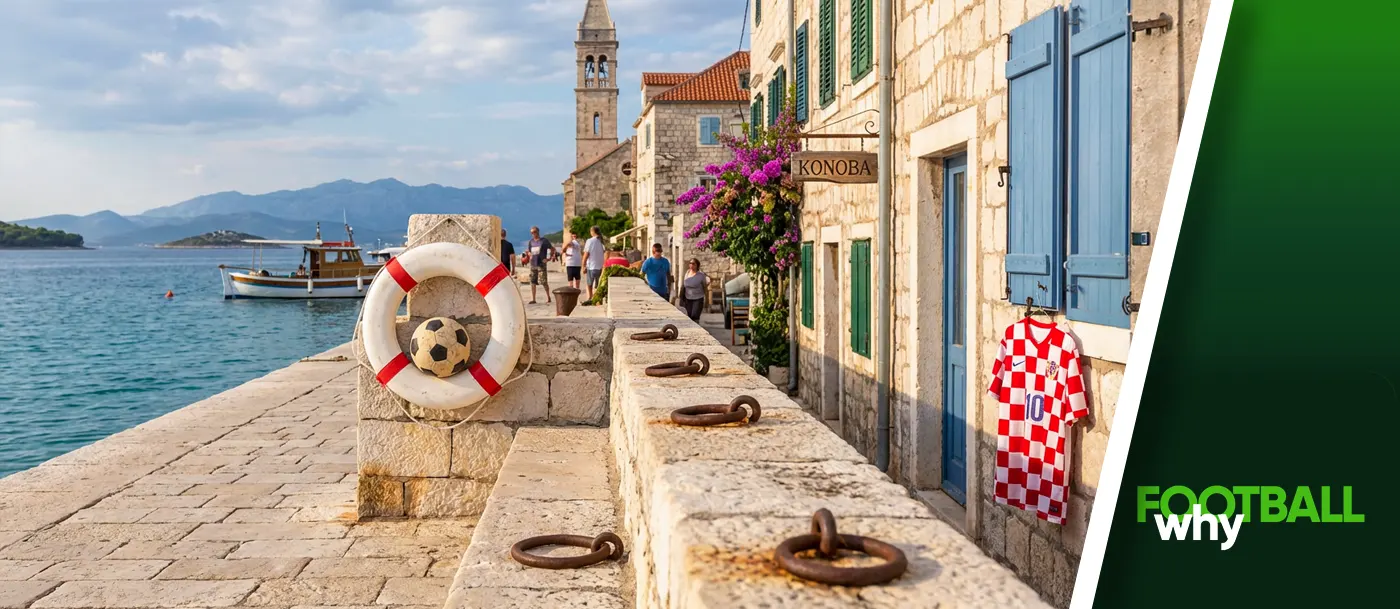
CROATIA | Structural Collision

Where it hurts?

Croatia: current status and team news Mending Adriatic Nets For A Heavy Catch

Watching the Croatian squad prepare for the World Cup feels akin to observing seasoned Adriatic fishermen quietly mending their nets on the docks while younger, louder crews speed past. Local supporters scanning the daily training reports murmur with a familiar anxiety: do the veteran legs still possess the pace to track rapid wingers, or will their sheer technical craft suffice?

On the training pitch, manager Zlatko Dalić actively toggles between tactical setups, running drills in a back-three system against elite opponents like Brazil to mask a thinned defensive line. This structural tinkering causes a mild identity whiplash in the Zagreb cafes, a mood further soured by loud administrative arguments over ticketing allocations.

The central concern, however, revolves around the physical durability of centre-back Joško Gvardiol. If his recovery stretches into the tournament, the entire defensive shape loses its physical anchor. The midfield veterans will be forced to drop ten yards deeper to cover the gaps, exhausting their legs prematurely.

In the centre circle, Luka Modrić continues to orchestrate possession, scanning his shoulders and pointing to open spaces under intense pressing. Mateo Kovačić drops deep to collect the ball, providing the necessary carrying thrust to evade incoming tackles and break the first line. Out on the flank, Ivan Perišić chalks his boots on the touchline, waiting to volley home sweeping diagonal switches. To survive a brutal opening fixture against England, Dalić has locked down a base camp in Alexandria, Louisiana, forcing the squad to acclimatise to the stifling southern heat early. Fans arriving in the stadiums expect to witness that familiar, stubborn composure. They watch intently to see if this golden generation can pull the ropes tight enough to drag one final, massive result to the shore.

The Headliner

Croatia: key player and his impact on the tactical system The Sovereign Compass Of The Midfield

A dropped shoulder, a sharp pre-scan of the turf behind him, and the incoming pressure simply evaporates. Luka Modrić dictates the geometry of the pitch through sovereign half-turns and disguised outside-of-the-boot diagonals, instantly unlocking the weak side of the opposition. He acts as the press-resistant hub of the Croatian system, constantly orchestrating three-man passing triangles in suffocating, tight spaces. The 2018 Ballon d'Or winner remains the absolute tactical compass for the squad, yet his veteran legs inevitably force the coaching staff into strict minutes management.

When he senses a refereeing injustice toward a younger teammate during knife-edge phases, a fiercely protective streak emerges, occasionally earning him a booking for dissent. Remove his measured passing from the pitch, and the team’s spacing discipline immediately frays, while their set-pieces lose their cerebral, calculated edge. He stands as living proof that a small nation can dictate the world's tempo, an evergreen craftsman whose endgame poise commands the quiet, absolute respect of the global footballing congregation.

The Wild Card

Croatia: dark horse and player to watch A Left- Footed Spark In The Adriatic Gloom

Stepping onto the pitch in a Croatian ecosystem historically dominated by right-footed maestros, Luka Sučić brings a jarring, asymmetric geometry to the midfield. The 23-year-old creator operates with an upright glide, his measured body language actively masking a sudden, flinty incision. He serves as the designated heir to the midfield throne, offering zone-14 passing knives and flat in-swinging set-pieces from the right half-space. This left-footed profile allows the team to manufacture a fresh attacking threat without overextending their defensive structure or funnelling every single creative burden through a veteran conductor.

This quiet poise carries a specific vulnerability. If a coach barks stern tactical restraints from the touchline, his appetite for risk visibly shrinks, dulling the exact vertical passes that make him dangerous. Defenders actively try to crowd his preferred zones, aggressively forcing him onto his weaker right foot and denying him the ball in the left half-space. He has already logged heavy top-five league minutes, establishing his baseline competence under pressure. Fans back home hope public doubt will only sharpen his ambition. They are waiting for the exact moment he shapes his body, opens his hips, and whips a match-defining, right-sided in-swinger into the penalty area on the global stage.

The Proposition?

Croatia : Tactical guide - how to identify their movements and game variations on the pitch The Cerebral Evolution Of A Possession Heavyweight

Zlatko Dalić faces the delicate task of engineering a controlled tactical evolution on the fly. The squad must navigate a demanding group and sustain their knockout viability by seamlessly integrating young legs like Luka Sučić alongside the timeless orchestration of Luka Modrić. A distinct tension shapes their approach: the struggle between a deep-rooted possession identity and the modern demand for rapid, front-line verticality. This is further complicated by an aging core and the structural risks of pushing a left-back high up the pitch.

Players deploy in a 4-2-3-1 formation, which leans heavily into a 3-2 base whenever they hold the ball. Joško Gvardiol generates the primary width by advancing aggressively down the left flank, while Ivan Perišić on the right fluidly alternates between holding the touchline and driving inside. Out of possession, they drop into a resolute 4-4-2 mid-block to deny central access.

What to look at: In the first 10–15 minutes, if the defensive block is compact and sitting 10–15 metres below the halfway line when the ball is central, the team is actively forcing wide circulation. This slows the game's rhythm and pre-loads their ability to execute far-side overloads later.

As the midfielders secure the ball, the team's shape cleanly shifts into a 3-2-5.

What to look at: Watch Gvardiol step high beyond the midfield line while the right-back, typically Josip Stanišić, tucks inside. The right centre-back slides wide to form a back three. This creates a 3v2 advantage against the initial press, baiting the opponent toward the near touchline before launching a sweeping switch to free the weak-side winger.

The entire system orbits around Modrić, who operates as a hybrid number 8 and deep-lying playmaker.

What to look at: When Modrić receives the ball facing forward in the right half-space, watch Andrej Kramarić check back while the right winger intentionally vacates the wide lane. This clears the inside-right channel, unlocking a diagonal pass to the advancing Gvardiol or a slip to a zone-14 runner, brutally isolating the opponent's full-back-centre-back seam.

To progress the ball into the final third, the team heavily relies on these half-space combinations to set up wide crosses.

What to look at: As Modrić or Mateo Kovačić crosses the halfway line and squares up, Perišić will invert while Gvardiol overlaps. The striker pins the centre-backs, generating a low cutback opportunity or a delayed edge-of-the-box strike for arriving midfielders like Lovro Majer or Sučić.

When the manager needs to secure a narrow lead, the players shift into pure survival mode.

What to look at: If the team is leading after the 70th minute, the block drops 8–10 metres and the pressing intensity evaporates. Full-back heights are strictly restrained as they sacrifice territory for absolute box density, managing the clock through set-pieces and throw-ins.

Pushing so much attacking weight down the left flank naturally exposes gaps.

What to look at: If the opponent successfully drags the defensive pivot wide and hits a quick diagonal switch into the right-back channel, the rest-defence spacing fractures. The centre-backs are suddenly facing a 2v2 with a late far-post runner arriving, risking a high-probability cutback.

Even with these transition fragilities, the squad remains a mesmerizing tournament force. Their supreme game-state literacy, anchored by Modrić's unflappable tempo control and a collective tactical intelligence, guarantees they are never truly out of a match.

The DNA

Croatia: football's importance and what we will see in their game at the 2026 World Cup The Patient Navigators Of The Deep Waters

In the knockout stages of the 2018 and 2022 World Cups, Croatia played extra time in five out of six matches, winning four of them via penalty shootouts. These marathon sessions are no mere coincidence. They represent the ultimate manifestation of a survivalist logic forged in a fractured, rugged geography.

Historically, navigating the jagged limestone coastlines and shifting imperial borders of the Balkans punished reckless soloism. Survival demanded conserving scarce resources, planning meticulous routes, and striking only when the environment offered a clear opening. On the pitch, this maritime and mountain frugality dictates a highly specific energy-management mechanism. Players rarely engage in exhausting, continuous high-pressing traps. Instead, they pass the ball in tight triangles at a walking pace around the centre circle, intentionally lulling the opponent to sleep while conserving physical exertion. Only when an opposing full-back steps out of line do they execute a sudden, violent diagonal switch. The team drifts quietly on the tide before abruptly turning the sail into a gale.

Coaches systematically manufacture this elite small-space intelligence. The youth academies at Dinamo Zagreb and Hajduk Split deeply imprint futsal mechanics onto their teenagers. Trainers demand perfect first touches on hard courts and strict positional awareness in confined areas before exporting these players to top European leagues. Yet, pure technical ability fails to explain their sheer tournament endurance.

The nation’s recent history, specifically the 1990s Homeland War, cemented a profound reliance on collective loyalty under fire. Inside the dressing room, this shared trauma establishes an unbreakable, veteran-led hierarchy. When the referee blows the final whistle before a looming penalty shootout, the senior players actively shield the younger squad members, stepping up to take the decisive kicks themselves. This shared assumption of risk prevents panic from fracturing the defensive line.

Furthermore, the domestic rhythm of a seasonal, tourism-driven economy — where locals must aggressively maximize the summer peak and consolidate cash during the quiet winter — mirrors their pragmatic game management. Once they secure a narrow lead, players readily grab shirts, commit tactical fouls, and take agonizingly slow restarts. They neutralize the game's rhythm to protect their advantage without a single hint of aesthetic guilt.

Life, much like a knockout match against a larger adversary, remains an endurance test best survived by sticking close to your people, trusting the old hands to hold the line, and knowing exactly when to drop the anchor.
Character