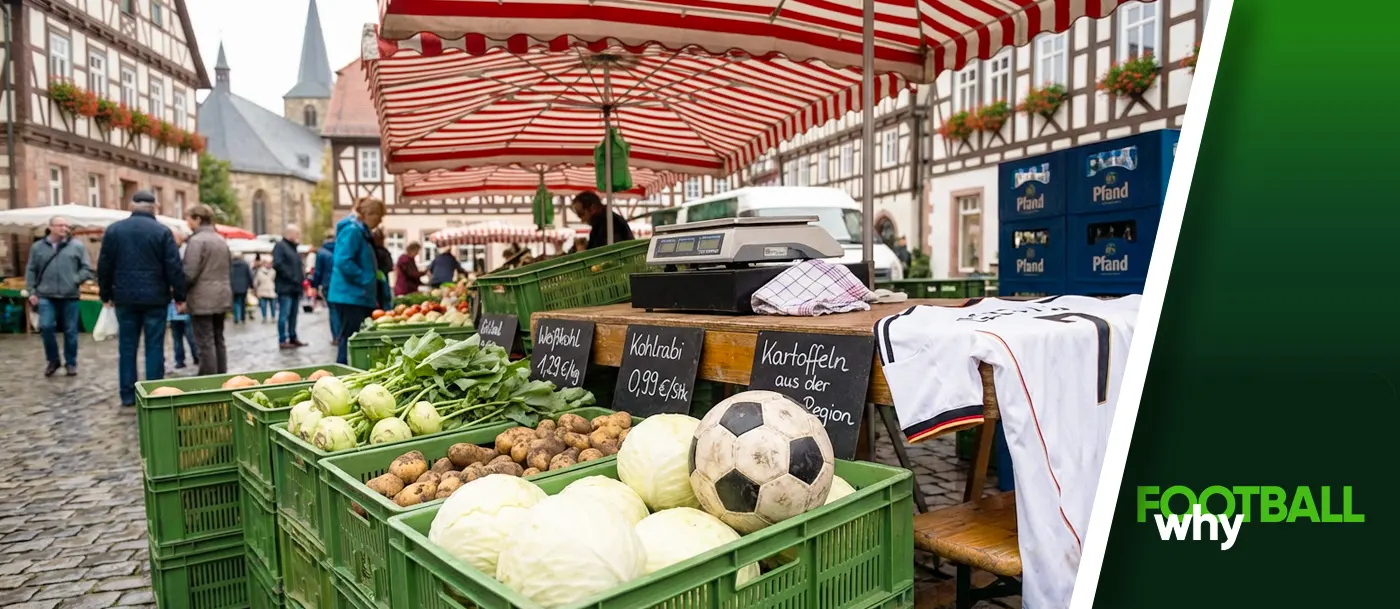
The weight of four stars presses heavily on a fractured machine. A relentless desire for mechanical control now wrestles with an explosive, high-risk generation eager to break the old moulds. Watch them suffocate the pitch, drowning opponents in relentless waves of high-octane pressure and sudden, needle-threading brilliance. The inevitable tournament predator is evolving, and the metamorphosis is breathtaking to witness.
Team at a Glance
What do they want?
To prove their shiny new attacking turbine can actually win trophies without the old defensive engine exploding.
What are they strong at?
Absolute procedural discipline. Plus a terrifying habit of producing generational playmakers who manipulate space like physics professors.
What will they show?
Suffocating, high-wire pressing. They will pin you inside your own penalty area until you simply surrender the ball.
Why are they as they are?
Post-war industrial reconstruction hardwired them to believe that predictable, systemic delivery always outlasts lone, chaotic flair.
What are their title chances?
18%. Highly probable, provided their breathtaking attacking momentum outscores their terrifying habit of leaving the back door wide open.
Where it hurts?
Germany: current status and team news
Brittle Decals On A
Certified Engine
Julian Nagelsmann’s squad arrives as a carefully assembled plastic kit, every microscopic decal smoothed down by institutional edict. Germany secured early qualification, allowing the staff to lock in a high-tempo attacking rhythm. Yet the glue holding the back line together feels nervously damp.
Manuel Neuer misses the Finland send-off with a tight calf, turning a routine precaution into a screeching system audit. The #NeuerDebatte instantly dominates domestic chatter, questioning whether an iconic, ageing goalkeeper can still anchor an aggressively high defensive line. The backup options face intense scrutiny.
Joshua Kimmich operates as the sole natural right-back, a load-bearing pillar in a dangerously asymmetric shape. If he steps inside to dictate play, the resulting void demands an immediate, flawless rotation from the centre-backs. The #RVProblem trends every time an opponent glances down that unprotected flank.
A chaotic shootout in Basel keeps the nation bracing for structural collapse. Fans desperately want the soaring flair of Jamal Musiala and Florian Wirtz, but fear the transition exposure. Every missed tackle revives the old debate about efficiency suffocating imagination and vice versa.
Watch them pour forward in the group stage, a beautifully complex engine revving slightly beyond its safe operating window. You will see a squad trying to outrun its own fragility. It is a thrilling, high-wire act of collective belief and sudden vulnerability.
The Headliner
Germany: key player and his impact on the tactical system
Precision Calibration in the Half-
Space
His shoulders sit low, hips remarkably loose, creating an illusion of casual slackness before a sudden, needle-threading acceleration. Jamal Musiala operates as the primary playmaker within the German tactical setup. When the collective tempo pushes too high, he provides the vital calm between the lines. Opposing defenders apply intense physical pressure, yet he remains entirely unbothered, using their momentum to calculate escape angles rather than arguing with officials. He is a highly press-resistant midfielder built to dismantle compact blocks through glide-dribbling and rapid wall-combinations. Without his ability to force defensive rotations in the left half-space, the national team’s progression jams and the attack becomes rigidly predictable. The primary risk lies in physical wear, with overuse potentially dulling his late-game edge. Yet, watching this dual-national prodigy seamlessly fuse improvisational spark with systematic discipline compels admiration for a generational technician quietly redefining his country's creative blueprint.
The Wild Card
Germany: dark horse and player to watch
The High-
Velocity Vertical Threat
Clocking sprint speeds north of 33 km/h, Maximilian Beier operates as the primary vertical threat stretching Germany's possession sequences. This lean, coiled sprinter offers a relentless pace that forces opposing defensive lines to drop deeper, inadvertently creating vital breathing room for the team's half-space playmakers. Without his lateral runs and near-post channel attacks, the national side risks compressing their play into congested central zones. The main concern surrounding his profile is a streakiness in finishing; under intense tournament pressure, his final action can occasionally become rushed. Smart opponents will attempt to neutralise him by deploying a deep block and applying early tactical fouls to deny his run-ups. If he manages to refine his composure in front of goal, this tireless forward possesses the exact kinetic profile to swing knockout matches on the grandest stage in North America.
The Proposition?
Germany : Tactical guide - how to identify their movements and game variations on the pitch
High-
Ambition Positional Play on a Defensive Tightrope
Germany arrives in North America with a burning mandate to rebuild their authority instantly. Julian Nagelsmann’s side must convert recent stability into a ruthless group-stage march, drowning out the domestic noise surrounding ticket furies and a glaringly unsettled goalkeeper hierarchy. The central tension involves balancing breathtaking, high-ambition positional play against a fragile rest-defence.
Nagelsmann deploys a fluid 4-2-3-1 that aggressively morphs into an asymmetrical 3-2-5. They play on the front foot, hunting the ball with an immediate counter-press to suffocate opponents.
What to look at: In the opening fifteen minutes, observe whether the back line pushes near the halfway line while the wingers tuck inside. If Kai Havertz steps onto a centre-back and Joshua Kimmich narrows his run, Germany is setting a suffocation loop, trapping the opponent in the half-spaces to force rushed clearances straight back into their possession net.
This dominance starts from the back. Kimmich acts as the tactical hinge, stepping inside to manipulate the first line of pressure.
What to look at: When the goalkeeper restarts play, note Kimmich checking inside while the right centre-back pulls wide. If the striker drops briefly, Germany is bypassing the press via a central overload, forcing a midfielder to jump and instantly opening a diagonal lane for a wall-pass.
The primary attacking vector is a heavy left-sided overload, driven by the high positioning of Maximilian Mittelstädt or David Raum, linking directly with Havertz and their creative hub.
What to look at: As the ball crosses halfway to the left, watch Havertz drift into the inside channel while Florian Wirtz ghosts between the lines. If the left-back sprints to the byline, expect a sharp cutback to the penalty spot or a disguised reverse slip to Wirtz.
The entire system naturally warps around the creative orbit of Jamal Musiala. The 'Bambi' of the DFB-Elf isolates defenders, using blindside runs from his teammates to clear his runway.
What to look at: When Musiala receives the ball on the left, watch Havertz sprint across the near centre-back. If the left-back pins his marker wide, Musiala is dragging a double-team to free up the opposite pocket for Wirtz to receive and turn.
Yet, the price for this suffocating width is steep. With the left-back incredibly high and Kimmich inverted, the rest-defence is stripped down to a precarious shape.
What to look at: If an opponent forces a quick switch and plays a first-time pass past the holding midfielder after a turnover, the German structure stretches into a desperate footrace. A massive lane opens between the centre-backs, yielding high-quality chances.
When the high-wire act falters or cognitive fatigue sets in during long-haul tournament matches, they switch to a gritty survival mode, bringing on targets like Niclas Füllkrug or the pace of Maximilian Beier.
What to look at: If the defensive block drops deep and the central midfielders start screening the edge of the box, Germany is trading possession for time, accepting throw-ins to reset their shape and burn the clock.
Despite the defensive tightrope, this German iteration is an exhilarating prospect. Their relentless energy, tactical fluidity, and sheer ingenuity in the half-spaces guarantee a spectacular, high-octane campaign.
The DNA
Germany: football's importance and what we will see in their game at the 2026 World Cup
The Federated Workshop and the High-
Variance Turbine
The crisp winter air hanging over the Munich arena, breath plumes rising during the anthems, the staccato claps from the organised fan blocks. Germany’s recent 4-3 thriller against Switzerland was a violent, beautiful collision of modern risk and ancestral habit.
Global spectators frequently anticipate the arrival of an emotionless, inevitable machine. However, the modern national side is built on a desperate historical need for collective reliability.
Walk into any local community football club — a Verein — on a rainy Tuesday night in Westphalia. The volunteer treasurer audits the boot-cleaning roster with the exact same solemnity as a corporate accountant checking quarterly margins. Deviating from the agreed duty is a fast track to social exile. Predictable delivery consistently outcompetes lone flair.
On the pitch, this manifests as an absolute devotion to process. When the team faces a sudden wave of pressure, they do not improvise a chaotic retreat. They compress their block, seeking the safety of rehearsed positional rotations. The holding midfielders physically check their shoulders, stepping into precise diagonal lanes to stabilise the rhythm.
Yet, a new generation of multicultural creators has injected a high-variance, data-driven attacking wave into this traditional structure. The domestic league has become a vast pressing laboratory, rewarding adaptive, front-foot football. The sight of a young playmaker threading a needle through a low block is genuinely breathtaking.
This aggressive momentum requires overcommitting bodies, exposing a chronic vulnerability to rapid counter-attacks. An unsettled goalkeeper hierarchy only amplifies the anxiety when the defensive transitions leak, while administrative conservatism often slows the necessary tactical renewals to fix these gaps.
To survive the resulting stress, the squad falls back on a deep-seated culture of emotional restraint.
Observe a master carpenter in a Bavarian workshop realising a joint has failed. He does not throw his hammer or scream at his apprentice. He steps back, exhales sharply, consults the blueprint, and recalculates the angle.
In late-game penalty shootouts or when chasing a deficit, the national team mimics this exact psychological reset. They throttle the tempo, relying on the captain’s voice rather than individual theatrics, turning cold composure into a lethal weapon. They trust the systemic fix over the hero's gamble.
Sometimes, the only way to navigate a crumbling plan is to trust the blueprint even harder, proving that true freedom is simply a perfectly executed protocol.